Cable Fire Ratings: UL, NEC & NFPA Guide
The letters printed on a fiber cable jacket — OFNR, OFNP, CMR, CMP — are not a property of the cable. They are the visible end of a chain with three links: a code decides where each type may be installed, a test standard defines how the fire behavior is proven, and a listing records who checked it. Buy the letters alone and you have bought a claim. Buy the chain and you can defend the installation in front of an inspector. This guide walks the whole chain for North American cable fire ratings, with the code articles, the test standards and the listing rules named where they can be verified — and a clear boundary around what a rating does not buy you. It sits inside our wider library on fiber optic standards and certifications.
Two scope notes before the detail. First, the National Electrical Code is adopted and enforced locally, so the edition in force in your jurisdiction may not be the current one, and the authority having jurisdiction (AHJ) decides what complies on a specific project. Second, this article describes requirements; it is not a code interpretation and it does not replace the edition your project adopted.
What "Cable Fire Rating" Actually Means in North America
Most explanations of cable fire ratings start with the letters. That is the wrong end. The letters are downstream of two other things, and the three move together.
Layer | Who owns it | What it decides | Where you check it |
|---|---|---|---|
Code — NFPA 70, the National Electrical Code (NEC) | NFPA publishes; states and local jurisdictions adopt and enforce | Where a cable type may be installed: air-handling spaces, risers, general use, ductwork | The NEC edition your jurisdiction adopted; NFPA's NFPA 70 page tracks the current edition and the enforcement maps |
Test standard — NFPA 262, UL 1666, UL 1685, UL 2556, UL 444 | NFPA and UL Solutions | How the fire performance is measured and what the pass criterion is | UL's wire and cable service pages and NFPA 262's standard page |
Listing — the UL mark and category | UL Solutions and other certification bodies | Who evaluated the product, to which standard, and under what follow-up | The product's listing in UL Product iQ, reached from UL's wire and cable application guide |
The practical consequence of that ordering is a rule people get wrong constantly: a cable is not "a plenum cable". It is a cable that may be installed in a plenum space, and the same reel may be perfectly legal in one location and a violation thirty feet away. NFPA 70 is the document that draws those lines; NFPA's own page records that it is "enforced in all 50 states" and that the current edition is 2026, with a reorganization of the code still in progress. Your project may be under the 2023 or 2020 edition, which is why the first question in any cable specification is not about the jacket — it is which edition your AHJ is holding you to.
This is also where the performance standards sit. A cabling design standard such as TIA-568 tells you what the link must do optically and electrically; it does not grant permission to install a cable in a ceiling void. Fire performance and transmission performance are two separate compliance streams that happen to travel on the same reel.
The Rating Letters on a Fiber Cable, Decoded
For optical fiber, the type designations come from the NEC's optical fiber article, and the Fiber Optic Association's reference for premises cabling states the relationship plainly: "All premises cables must be rated for fire retardance per NEC Article 770." Its designation table is the cleanest public version of the mapping.
Designation | Meaning | Where it may be used |
|---|---|---|
OFN | Optical fiber, non-conductive | General-purpose indoor use |
OFNG / OFCG | General purpose (the C variants are for conductive/armored constructions) | General-purpose indoor use |
OFNR / OFCR | Riser rated | Vertical runs between floors in a riser |
OFNP / OFCP | Plenum rated | Air-handling spaces (plenums) |
OFN-LS | Low smoke density | Where smoke emission is the controlling concern |
Copper uses a parallel family — CMX (limited residential), CM / CMG (general purpose), CMR (riser) and CMP (plenum) — under the communications article. OFNR is not CMR and OFNP is not CMP. They are different type designations in different NEC articles for different media, and a specification that says "riser rated" without saying for what is an invitation to a substitution argument. If you need the head-to-head comparison between the two fiber designations, that is a different question from this one; what matters here is that both live inside Article 770's structure rather than being self-standing certifications.
UL carries the same idea through a suffix system on the type designation. UL's application guide explains that cables covered by NEC Articles 722, 725, 760, 770, 800, 805, 820 and 830 "are investigated with respect to their application: plenum, riser, general use or limited residential use", and that the suffix identifies which:
- -P — plenum
- -R — riser
- no suffix, or -G — general purpose
- -X — limited residential use
Two more suffixes are worth knowing because they are routinely misread. -LS (now -ST1) means the entire construction complies with requirements for flame-retardant, limited-smoke wiring materials, evaluated per UL 1685 (the Standard for Vertical-Tray Fire-Propagation and Smoke-Release Test for Electrical and Optical-Fiber Cables) or UL 2556 (Wire and Cable Test Methods). And -LSHF points at a different property again — acid gas, acidity and halogen assessment, not flame spread. Low smoke and low halogen are not the same claim, and neither one is a substitute for the -P or -R rating that your installation location actually requires.
Who Tests It: NFPA 262, UL 1666 and the Tray Test
This is the layer the search results skip, and it is the layer that explains why the letters cost what they cost. A designation is not a marketing label; it is the output of a specific test apparatus with a specific pass criterion.
Plenum — NFPA 262. NFPA's own description of the standard is worth quoting for its scope: "Standard Method of Test for Flame Travel and Smoke of Wires and Cables for Use in Air-Handling Spaces", which "improves fire safety in air-handling spaces by presenting a test procedure to evaluate the potential for smoke and fire spread along cables and wires housed in a plenum or other air transport spaces". The current edition is 2023. In UL's services language, this is the "NFPA 262 plenum" test — the reason a plenum compound exists at all, and the reason UL runs a plenum cable-compound recognition program (QMTM2) to support NFPA 262 composition analysis.
One naming note on that test. The plenum method is also known across the trade as UL 910 — UL's safety test for flame propagation and smoke density in cables used in spaces transporting environmental air. A Steiner-tunnel test-equipment supplier documents both designations against the same horizontal-tunnel apparatus, which is why UL 910 and NFPA 262 appear interchangeably in cable literature. When you write it into a submittal, cite the current NFPA 262 as the test method and check which designation the project specification uses; the two names describe one tunnel, not two performance levels.
Riser — UL 1666. UL's own service description pairs the two: for communications cables, UL provides predictive modeling "to estimate performance for NFPA 262 plenum and UL 1666 riser tests". Riser ratings are earned in a vertical shaft test rather than in a horizontal air-handling arrangement, which is a fair proxy for the two very different failure paths — smoke carried through a building's air circulation versus fire climbing a shaft.
Tray and limited smoke — UL 1685 / UL 2556. These back the -ST1 / -LS suffix described above: flame propagation and smoke release on a vertical tray, with the limited-smoke requirements layered on. Note what this means for a specification that asks for "LSZH" or "low smoke": the property is real, but it is a different axis from the location rating, and a cable can carry one without the other.
Communications cables as a category — UL 444. UL describes its telecommunications cable testing as certifying "communications cabling types and categories, including plenum (CMP), riser (CMR) and general purpose (CM), with certification to UL 444, the Standard for Communications Cables". UL 444 is the product standard the type designations are built on.
Where the NEC Draws the Line
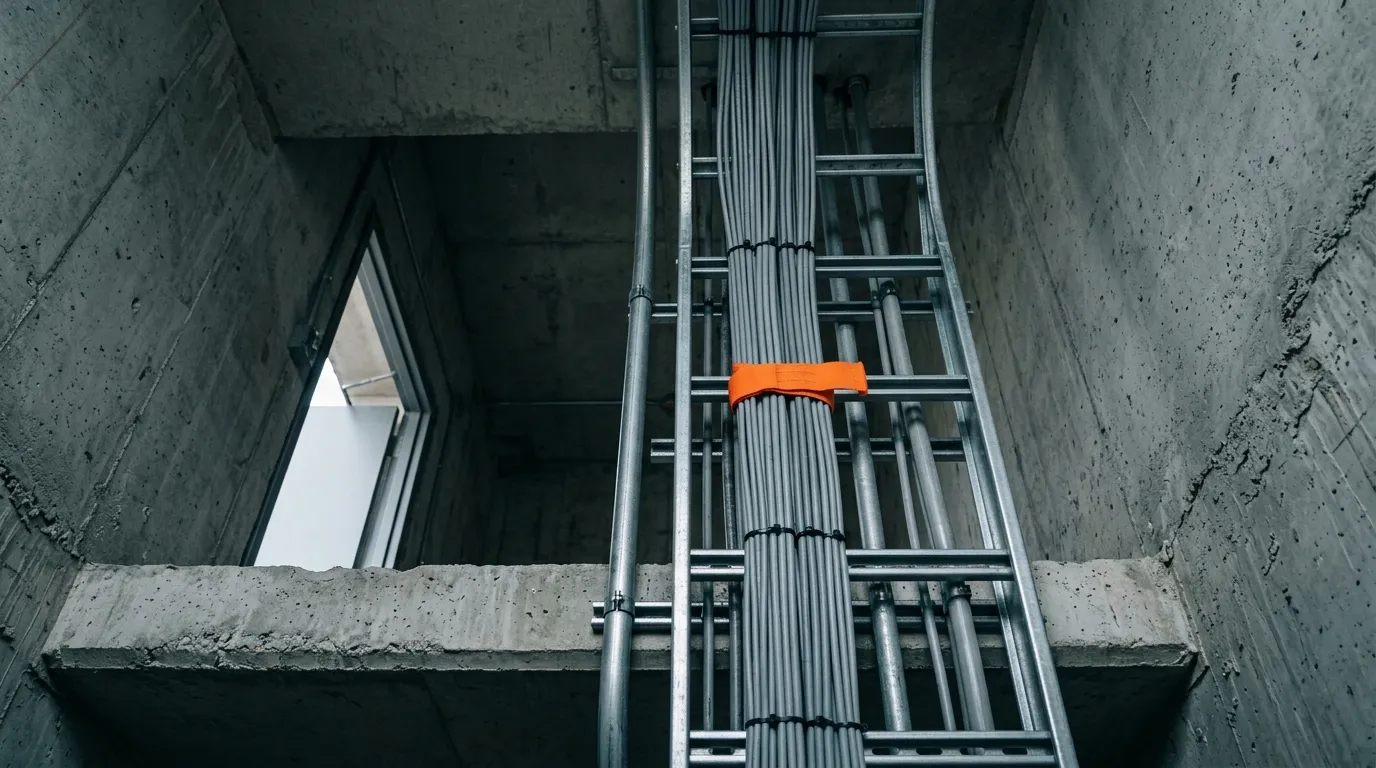
If you only remember one structural fact from this article, make it this one: the NEC's cable rules are organized by article per media, and by section per location.
Media | Governing article | Location rule lives in |
|---|---|---|
Optical fiber cables and raceways | Article 770 | Its installation sections, including a "(C) Other Spaces Used for Environmental Air (Plenums)" provision |
Communications cables and raceways | Article 800 | The equivalent installation section, with the same plenum heading |
Wiring in ducts, plenums and other air-handling spaces (all media) | Section 300.22 | The general requirement, whose part (C) is headed "(C) Other Spaces Used for Environmental Air (Plenums)" |
Two details about that table matter in practice. First, the general air-handling requirement in 300.22 is in Chapter 3 and applies across wiring methods, while Articles 770 and 800 carry their own per-media installation rules with matching structure. That is why the same physical location can be governed by more than one clause at once, and why citing only one of them in a submittal is a common gap. The clause numbering and headings above are those reproduced in the UpCodes code repository entry for 300.22(C); because NEC text is behind a registration wall at the publisher, this article states the article and section structure rather than paraphrasing clause language it has not read in full.
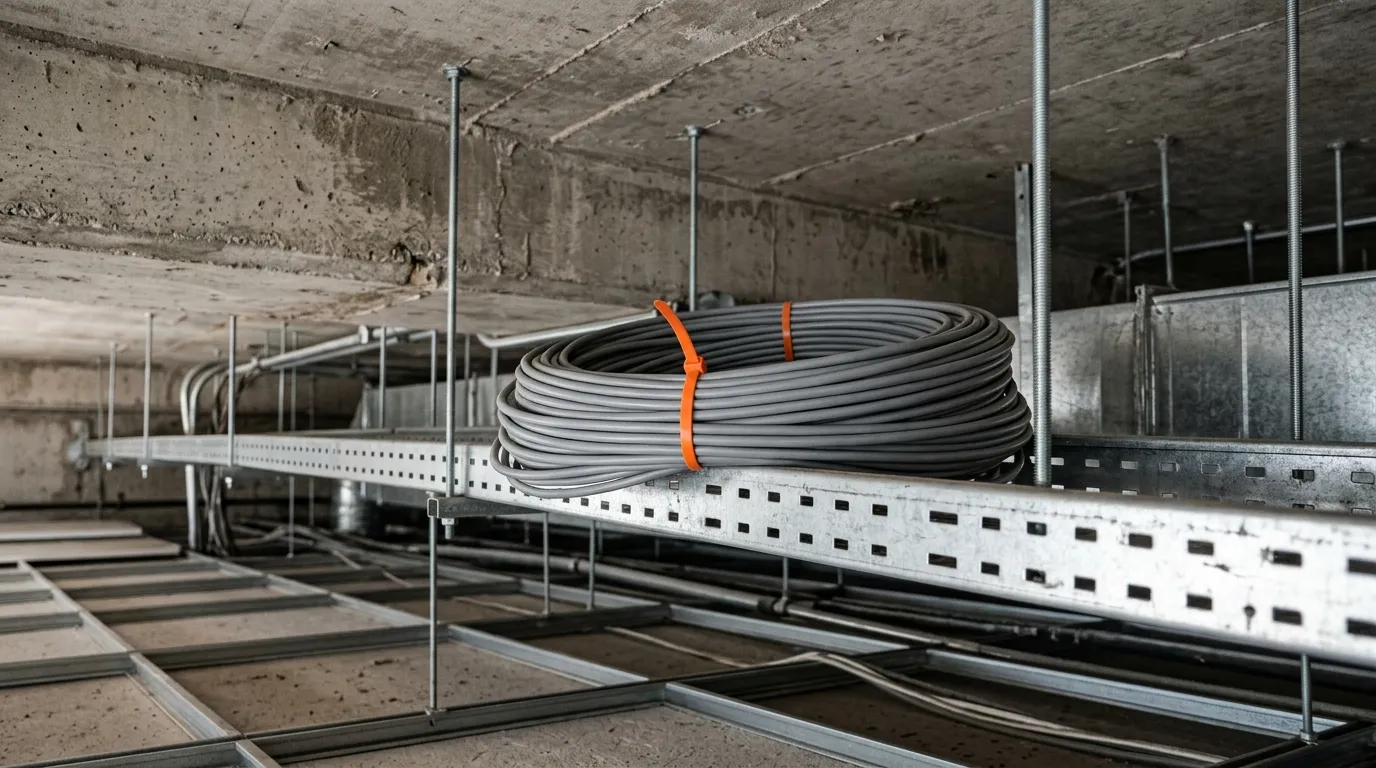
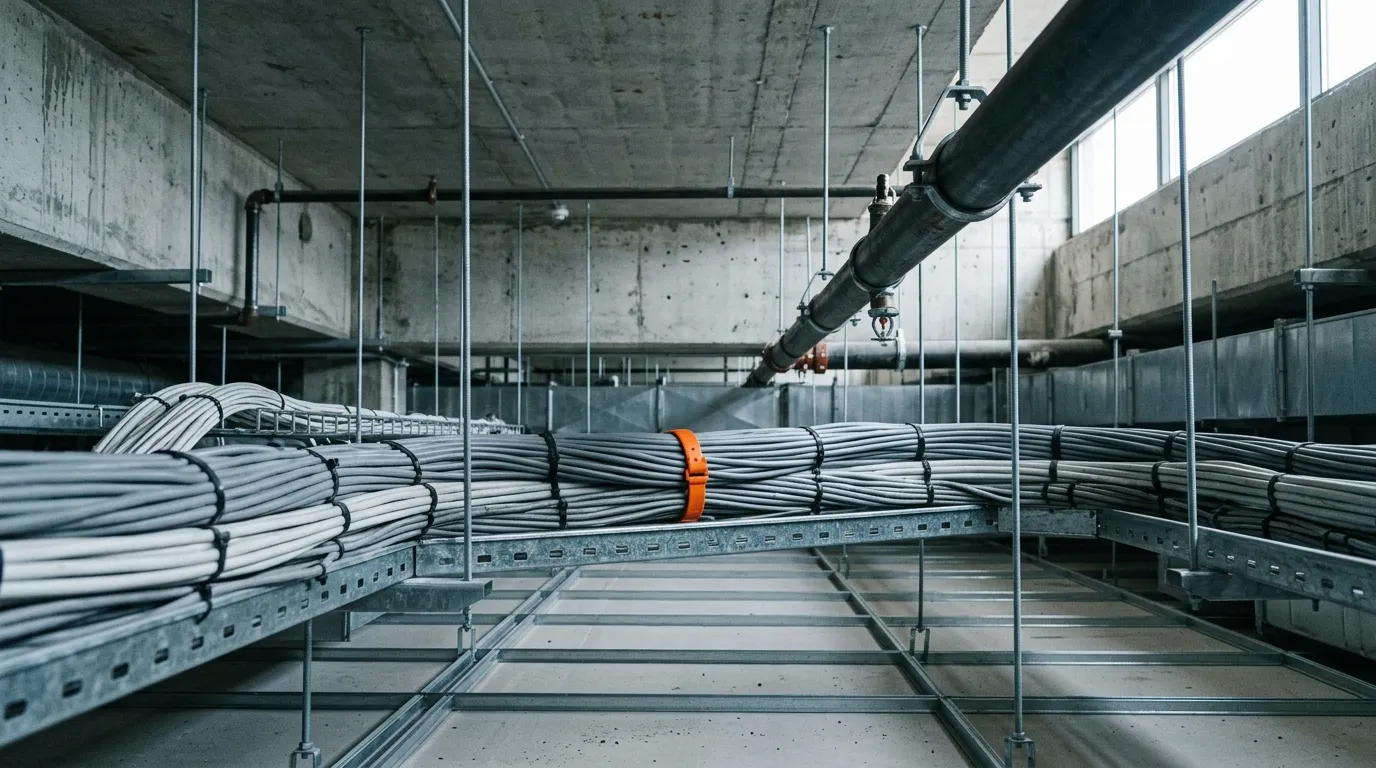
Second, the code's answer to "which cable may I run here" is a permission, not a preference. A riser-rated cable in a general-purpose area is permitted; a general-purpose cable in a riser is not. A non-plenum cable run through an environmental air space is the violation inspectors find most often, and it is usually not a cost decision — it is a routing decision made late, after the cable was already on site.
The related question that arrives with the code text is where the jacket's material question belongs. Low-smoke zero-halogen compounds, PVC and plenum-grade alternatives are a materials comparison governed by different requirements from the location ratings — the trade-offs are laid out in our guide to plenum, PVC and LSZH jackets.
Plenum, Riser, General Purpose: the Substitution Rule in Practice
The one operational rule to carry onto site is a one-way substitution. As Belden's engineering explainer on fiber cable ratings puts it, "A plenum cable can be used in a riser space, but a riser cable generally cannot be used in a plenum space." That single sentence is why contractors who work in buildings with both spaces often standardize on plenum cable and stop tracking two reels — and why shoppers who only compare the price per foot reach the wrong conclusion.
The trade-off is real on both sides. Plenum constructions use more expensive jacketing and subunit compounds because the test conditions and the smoke and flame requirements are more severe. In exchange, one cable can run continuously through mixed spaces without a transition point, which removes a junction box, two terminations and an inspection question. Riser constructions are typically more flexible and easier to handle, and they cost less per meter, but they buy you a route restriction you have to enforce in the field for the life of the building.
There is no third answer where the cable is concerned, and the substitution runs one way only. It is also worth keeping this rule separate from the regulatory layer that looks superficially similar: the European CPR euroclasses are a legal market-access classification for cable fire performance, a different system with a different logic, which we unpack in our guide to CPR cable classes. A cable that satisfies one system does not thereby satisfy the other.
Two Traps That Fail Inspections
Trap one: outdoor cable brought indoors. Outdoor cable is built for weather, not for fire performance, and the Fiber Optic Association's premises fiber reference is blunt about the consequence: "Cables without UL or other fire retardance markings should never be installed indoors as they will not pass building inspections!" It adds the practical limit most field crews know as the 50-foot rule — "Outdoor cables are not fire-rated and can only be used up to 50 feet indoors" — and the double-jacketed construction that solves it: a polyethylene outer jacket over a UL-rated indoor jacket, with the outdoor jacket stripped at the point of entry so the premises-rated cable is what continues indoors. Outdoor constructions and their armor options are covered in our guide to outdoor armored fiber cable types.
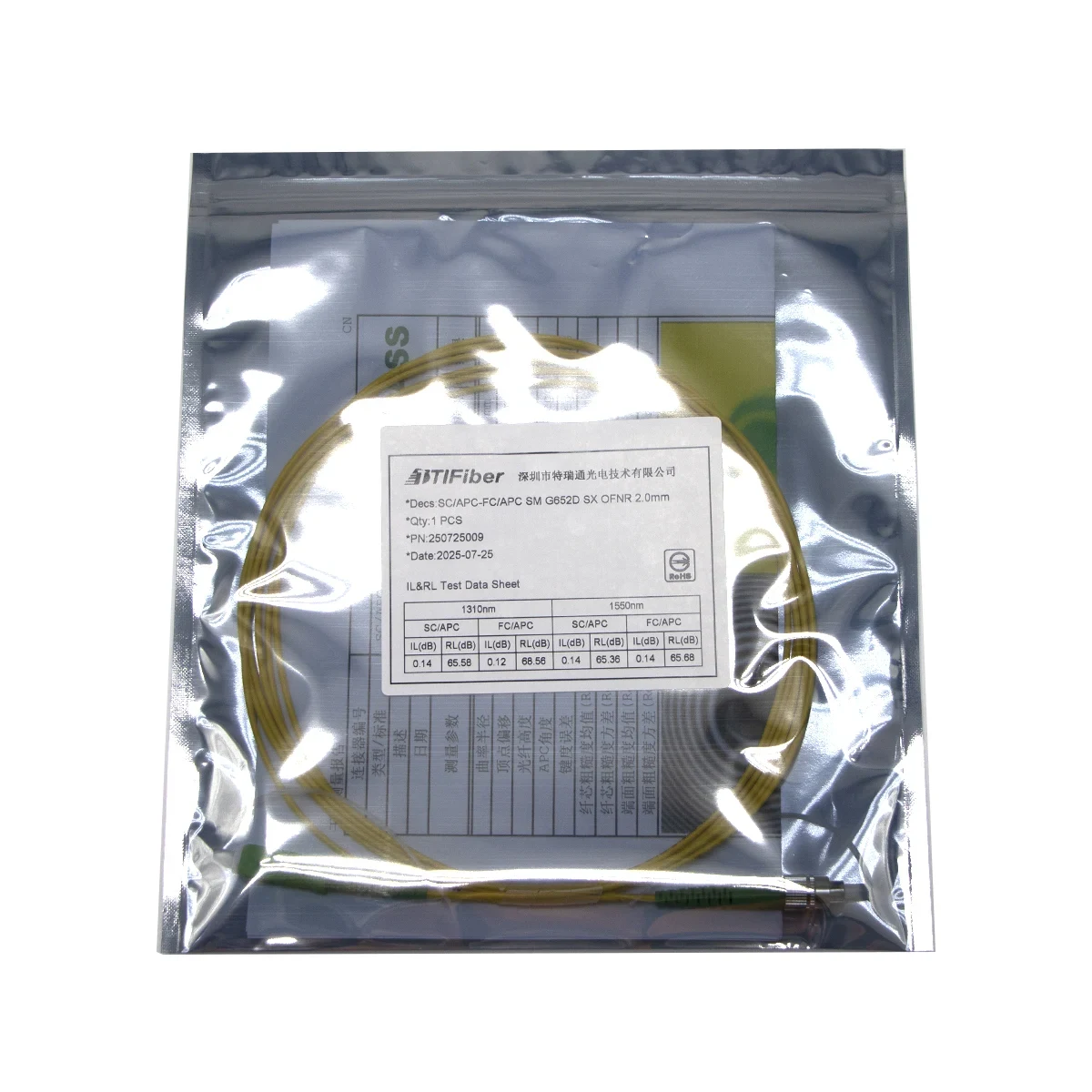
Trap two: trusting the mark you can read from the aisle. UL's application guide is unambiguous about which mark counts: the listing mark on the attached tag, the reel or the smallest unit container "is the only method provided by UL Solutions to identify these products manufactured under its Listing and Follow-Up Service", and surface-printing the UL symbol on the cable itself "is only a supplemental method of marking the product and should not be considered as evidence of UL Solutions coverage". The guide further records that holographic labels are required on, among other categories, optical fiber cable and communications cable, specifically to control marking and address counterfeiting. So the inspection-grade evidence is the label on the reel or box — which is also the thing that gets cut off and thrown away when a partial reel is re-issued on site.
What a Fire Rating Does Not Buy
Five boundaries, stated precisely, because each one is a place where a specification quietly assumes more than the rating delivers.
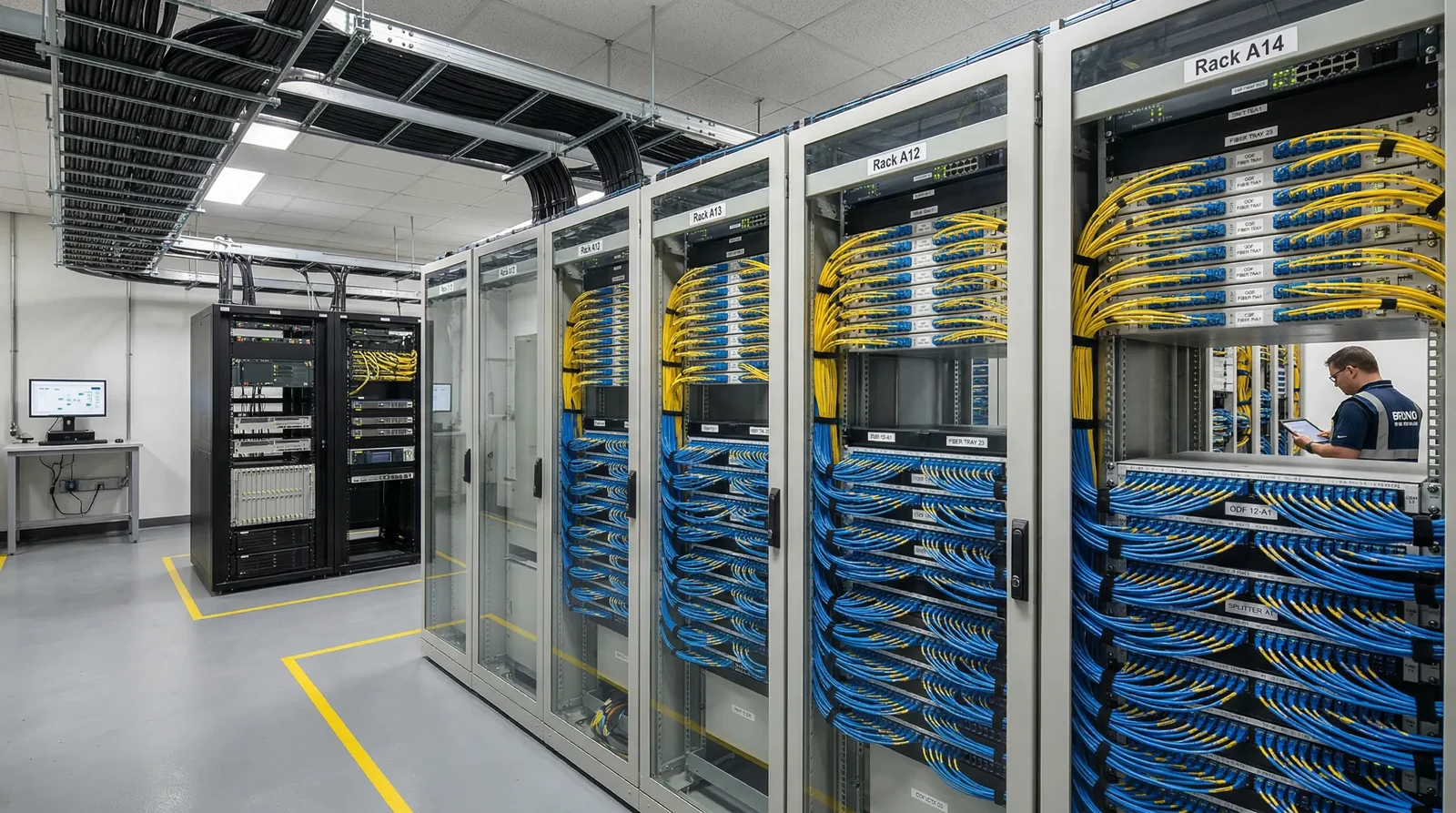
It does not firestop anything. A plenum-rated cable passing through a rated wall or floor assembly is still a penetration, and the assembly's fire resistance is addressed by the firestopping system and its own listings — not by the cable's jacket rating. The cable rating describes the cable's contribution to fire growth; the penetrated assembly is a separate compliance question.
It does not make a circuit survive a fire. Circuit integrity — the property behind cables marketed as "2-hour fire rated" — is a different requirement with its own test regime, aimed at keeping a circuit functional while exposed to fire. That is a performance claim about a system under fire conditions, not a statement about smoke or flame spread. If your project genuinely needs circuit integrity, it is a separate specification line with its own evidence, and the cable that carries it is not chosen by substituting a higher location rating.
It does not settle smoke toxicity. Low-smoke and low-halogen claims (the -LSHF and AG-style suffixes in UL's guide) exist precisely because flame spread, smoke release, acid gas and halogen content are separate measured properties. A cable can be strong on one axis and unremarkable on another.
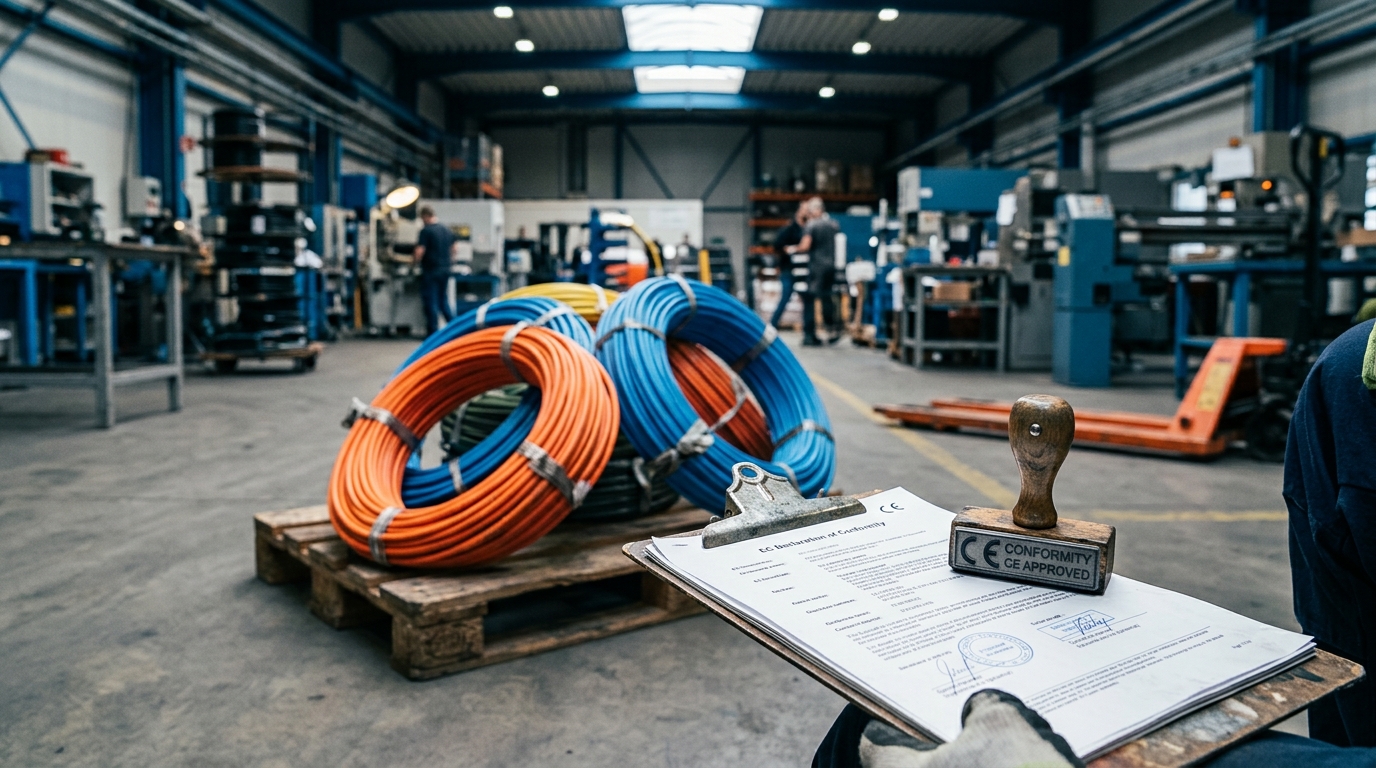
It is not market access, either. CE marking, RoHS substance restrictions and the European CPR classes are market-access requirements — conditions for selling a product in a jurisdiction — and they answer different questions from the North American location ratings. A cable can carry every mark in a supplier's certificate pack and still be the wrong type designation for the space it is being installed in; those are two separate compliance files.
It is not the same as an installation standard. This is where the planning question about NFPA 855 belongs. NFPA 855 is the Standard for the Installation of Stationary Energy Storage Systems — a different document with a different job. According to NFPA's own standard-development page for NFPA 855, the current edition is 2026 and the standard "provides the minimum requirements for mitigating the hazards associated with ESS". It is an installation standard for energy storage, not a cable listing or cable test scheme: where an ESS is installed, the cables still have to be the right type designations under the NEC articles above, and the room itself has additional requirements that live in NFPA 855 and its companions. Treating NFPA 855 as a cable approval — or, in the other direction, assuming a plenum rating answers an ESS installation requirement — are the two ways this gets confused. Industrial and harsh-environment cable selection, where these boundaries come up alongside mechanical and chemical requirements, is covered in our industrial fiber optic cable guide.
How to Specify and Verify Cable Fire Ratings
Start from the route, not the reel. Walk the path a cable will take, note every space it passes through, and the required designation falls out of the code table for the strictest space on the path. Then write these fields into the specification, because a supplier cannot answer a question you did not ask:
- The edition of the NEC your jurisdiction has adopted, and the article that governs the media you are installing — Article 770 for optical fiber, Article 800 for communications.
- The installation location for each segment of the run, named explicitly: air-handling space, riser, general purpose, duct.
- The required type designation in NEC terms (OFNR, OFNP, CMR, CMP) — and, if the run crosses media, the designation for each part.
- The suffix you expect on the product, including any limited-smoke requirement (-ST1 / -LS) stated as a separate line rather than assumed from the location rating.
- The listing requirement: listing mark on the tag, reel or smallest unit container, and the UL category the product should be listed under.
- The test standard you are asking to see evidence against — NFPA 262 for a plenum construction, UL 1666 for a riser construction, and UL 444 as the communications cable product standard.
- Whether the evidence is a type test on samples or data on the units you will receive, and whether a per-unit test record accompanies the delivery.
- The AHJ's acceptance path for the project — submittal, inspection or both.
Then ask the supplier five questions, all of which have a document behind them if the answer is real: which listing and which standard; whether the mark on the reel or box matches the listing; whether the ordered designation is printed on the product and its label; whether per-unit optical test data ships with the goods; and whether any claim about smoke, halogen or circuit integrity comes with its own test basis rather than being inferred from the location rating. Our guide to vetting a supplier certificate pack walks that evidence pack document by document.
Bottom Line
Three things are worth copying into your next specification. The letters are a location permission, not a product grade — the rating you need is set by where the cable runs, not by the budget. Ask for the test standard by name — NFPA 262 for plenum, UL 1666 for riser — because a supplier who can name them is a supplier whose evidence pack will survive a submittal. Verify the mark on the reel or box, not the print on the jacket, and keep the label with the partial reel.
Everything else follows the chain: code, test standard, listing. If the run crosses an air-handling space and you need a cable that carries the tighter of the two designations end to end, our LSZH fiber patch cords and assemblies are built for that conversation — and the specification questions above are the ones our engineers would rather answer before the cable is on the drum than after the inspection.