Plenum vs Non Plenum Cable: LSZH, PVC Guide
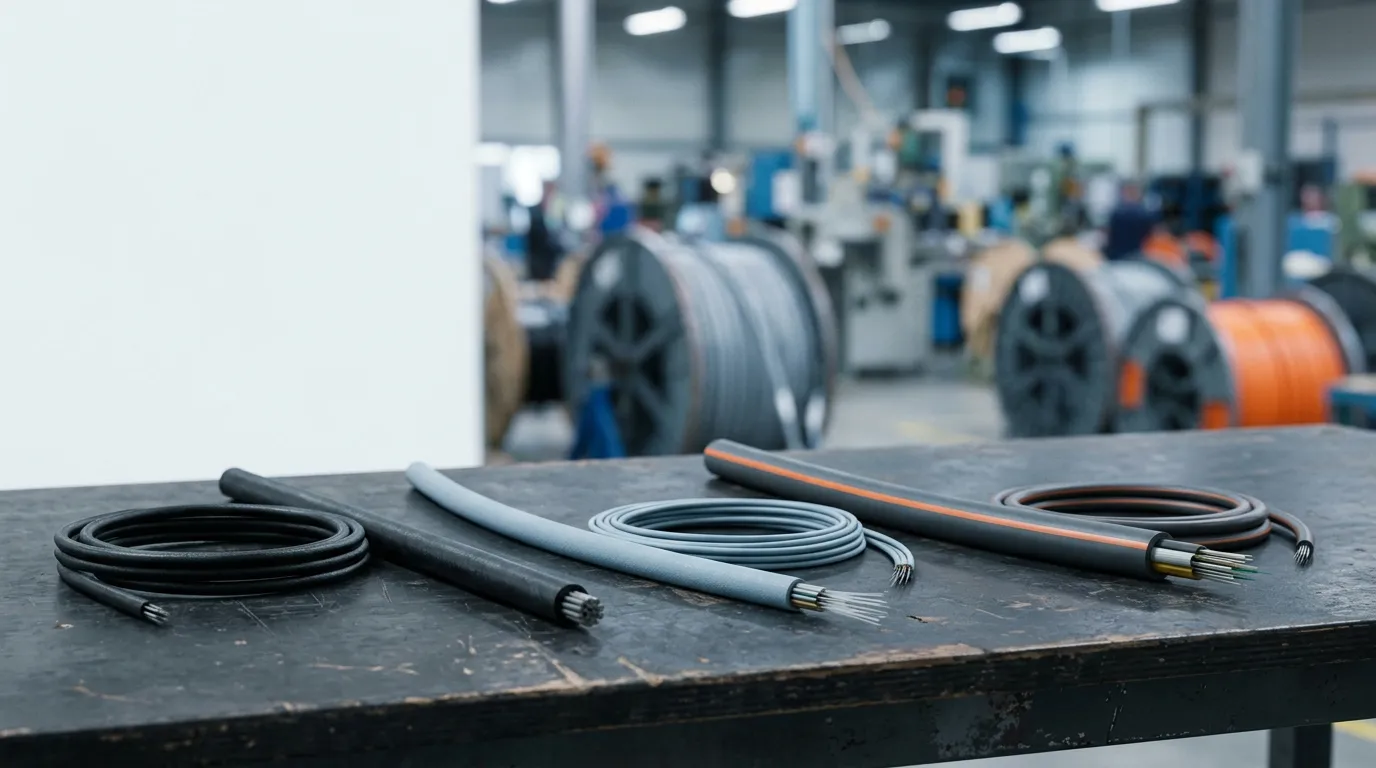
LSZH, PVC, and plenum-rated (CMP/OFNP) jackets are the three realistic options for indoor fiber optic cable — and "plenum vs non plenum" only captures two of them. If the cable runs through an air-handling plenum space, US code (NEC Article 770) generally requires plenum-rated fiber. If the project is in Europe — or occupant safety from toxic smoke is the priority — LSZH (low smoke, zero halogen) is often the better call. If neither applies, standard PVC keeps cost down. This guide compares all three on fire ratings, smoke toxicity, cost, and the code questions that actually decide the purchase.
What "Plenum" Means — and Why It Matters for Fiber
A plenum is an open airspace used for HVAC air circulation — most often the gap above a suspended ceiling or below a raised floor. Return air moves through that open space without ductwork, which means a fire in a plenum can push smoke and flame through an entire building in minutes. For that reason, materials installed in plenum spaces face the strictest fire requirements in US building practice: NFPA 262 defines the Steiner tunnel test for flame travel and smoke, and NFPA 90A governs what can be installed in air-handling spaces. As Wikipedia's plenum cable overview puts it, plenum-rated cable exists because non-plenum cable that catches fire releases toxic fumes straight into the air circulation system.
The same logic applies to fiber as to copper. Fiber doesn't carry current that can ignite a jacket, but the jacket itself is still a fuel source in a fire, and optical fiber cables have their own ratings under NEC Article 770 (OFNP, OFNR, and OFN). If you're planning a campus backbone, an office floor, or any in-building network, the jacket spec is part of the building's fire safety, not an afterthought — the rest of this structured cabling guide assumes you're starting from that position.
The Three Jacket Families: LSZH, PVC, and Plenum-Grade
Every indoor fiber cable you can buy has one of three jacket families, and they answer to different rulebooks.
PVC (polyvinyl chloride) is the default, general-purpose jacket. It's inexpensive, flexible, and available everywhere — but when it burns it produces heavy smoke and hydrogen chloride gas, which turns into hydrochloric acid on contact with moisture. That's the "toxic fumes" caveat you'll see in every non-plenum discussion.
LSZH (low smoke, zero halogen) replaces halogenated compounds with halogen-free formulations. When an LSZH jacket burns it emits far less smoke and no halogen gases, which makes it the standard for public buildings, tunnels, transit, and any enclosed or poorly ventilated space where people need to see an exit and breathe during evacuation. Wikipedia's LSZH explainer covers the chemistry; the key point for buyers is that LSZH is a material property, tested against IEC standards rather than US cable ratings.
Plenum-grade is a fire-performance class, not a single material. Plenum cables typically use low-smoke PVC or a fluoropolymer such as FEP to pass the Steiner tunnel test, earning the CMP marking (copper) or OFNP marking (fiber). They're designed to limit flame spread and smoke in air-handling spaces, and they're the most expensive option.
One common confusion: jacket material and cable construction are different axes. A tight-buffered distribution cable and a breakout cable can both come with LSZH or plenum-rated jackets — tight-buffered vs loose-tube construction is about how the fibers are protected inside, not what the outer jacket is made of.
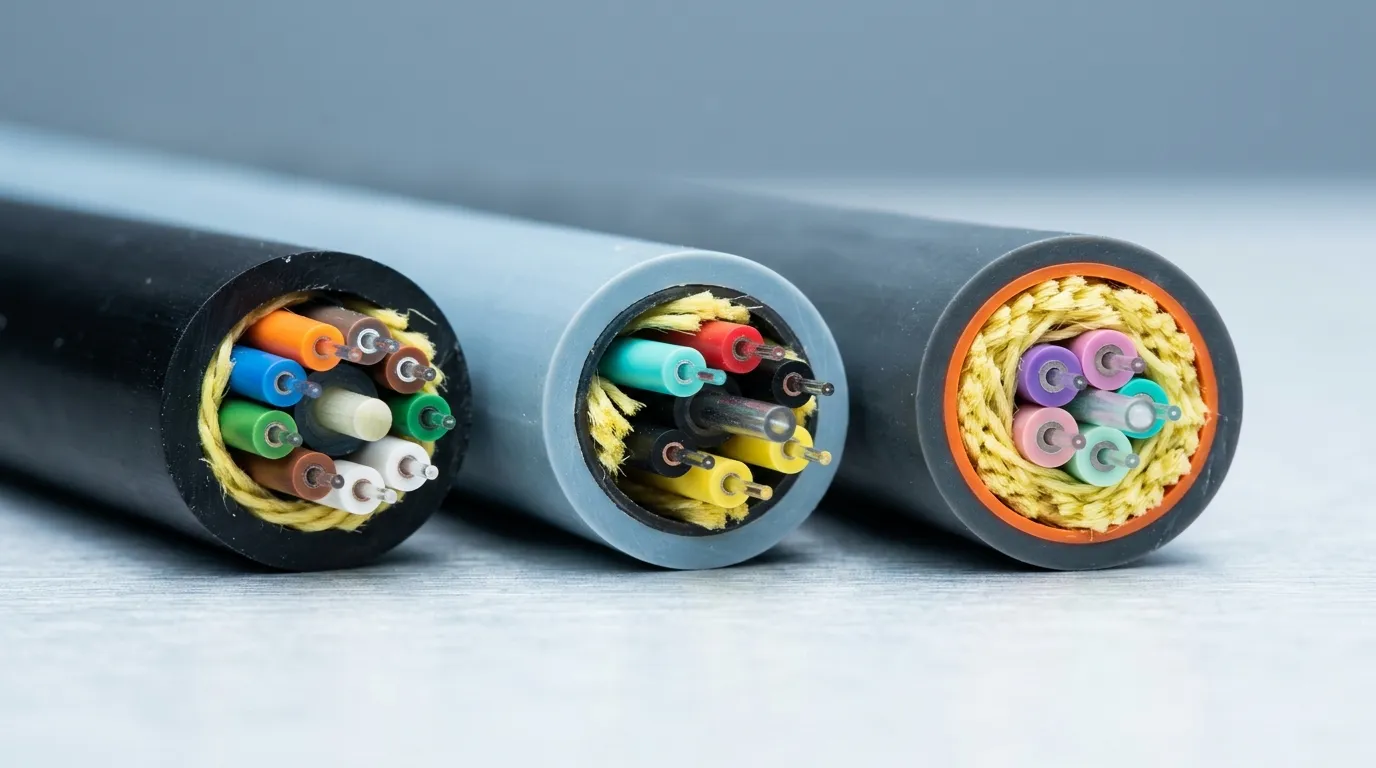
Cable cross-sections: the jacket is the outer layer, and each family uses different compounds to balance flame, smoke, and cost.
Fire Ratings and Test Methods: NEC, UL, IEC, and CPR
This is where "plenum vs non plenum" gets precise, because the rating alphabet maps to specific tests.
US — NEC Article 800 (communications cables): FS Community's jacket rating guide is a solid reference for the ladder: CM (general purpose, tested to UL 1581), CMR (riser, tested to UL 1666 for vertical flame spread between floors), and CMP (plenum, tested to UL 910, the same Steiner tunnel method as NFPA 262). Each step up adds flame and smoke performance — and price. Belden's cable ratings overview explains the same hierarchy from a manufacturer's perspective.
US — NEC Article 770 (optical fiber): fiber cables use the OFN family of markings. As documented in Wikipedia's optical fiber cable article, the ratings are OFNP (non-conductive, plenum), OFNR (non-conductive, riser), and OFN/OFNG (general purpose), with conductive (OFC) variants for cables that include metallic members. Plenum-rated fiber is marked OFNP; riser-rated fiber is OFNR.
International — IEC: LSZH cables are validated against the IEC 60332 series (flame propagation), IEC 60754-2 (halogen content), and IEC 61034 (smoke density). These tests answer different questions than the US ladder: not "how far does flame travel" but "how much halogen and smoke does the jacket release when it burns."
Europe — CPR: since 2017, cables installed permanently in EU construction must carry a Euroclass reaction-to-fire rating under the Construction Products Regulation. The classes for cables — B2ca, Cca, Dca, Eca, and Fca — are set out in Commission Delegated Regulation (EU) 2016/364 and tested to EN 50575. Our separate CPR cable classes guide walks through what each class means, and indoor vs outdoor CPR ratings covers where each applies.
Rating system | LSZH | PVC (general) | Plenum-grade |
|---|---|---|---|
US fiber marking | None (material property) | OFN / OFNG | OFNP |
US test basis | IEC 60332 / 60754-2 / 61034 | UL 1581 | UL 910 / NFPA 262 |
EU CPR class | Typically Dca–Cca (EN 50575) | Eca | Dca–Cca (varies) |
Flame spread | Low | Moderate | Lowest (≤5 ft in Steiner tunnel) |
Smoke / halogens | Low smoke, zero halogen | Heavy smoke, HCl | Low smoke, may contain halogens |
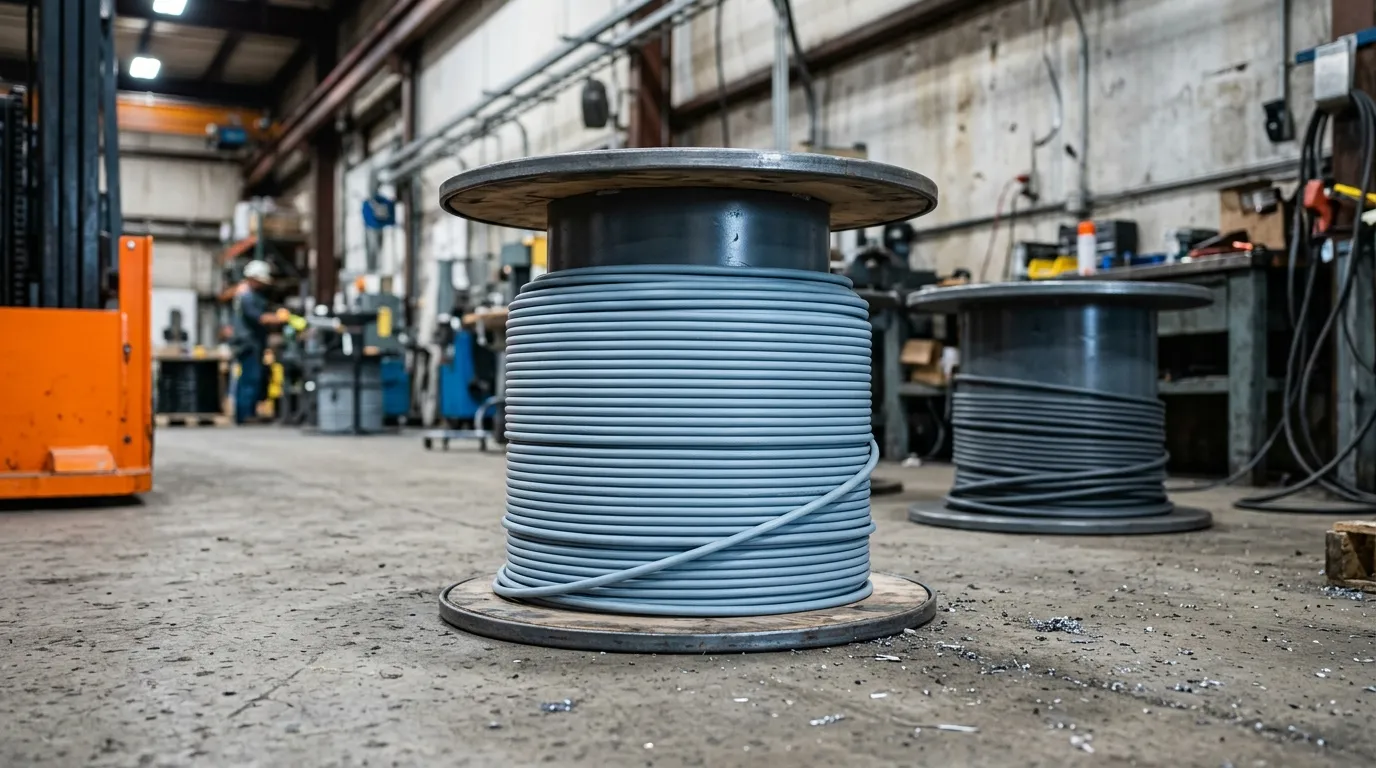
Jacket print markings are how you identify the rating on the reel — OFNP for plenum, OFNR for riser, and LSZH where the jacket compound is halogen-free.
Smoke and Toxicity: The Trade-Off Most Guides Skip
Search results on plenum vs non plenum all mention "toxic fumes," but few explain the chemistry, and that's where the LSZH case lives.
PVC is roughly 50% chlorine by weight. When it burns, that chlorine forms hydrogen chloride gas — which becomes hydrochloric acid in the lungs — plus soot that turns escape routes black in seconds. Smoke inhalation, not flame contact, is the leading cause of fire deaths, which is why low-smoke and low-toxicity performance matters in enclosed spaces.
Two distinctions keep coming up in real projects:
- Low smoke ≠ halogen-free. Plenum-rated jackets are often called "low smoke PVC" — they limit smoke volume to pass the Steiner tunnel test, but they can still contain halogens. A plenum cable and an LSZH cable are answering different questions.
- LSZH is a material, not a US rating. An LSZH jacket can still be tested and marked OFNP/OFNR if the compound passes the US tests. In practice, many plenum-rated fiber cables use halogen-free compounds precisely because they perform well in both regimes.
The honest trade-off: LSZH compounds generally cost more than plain PVC and can be slightly stiffer, and halogen-free jacketing alone doesn't guarantee plenum-class flame performance — the two properties are tested separately. That's why the next section matters.
Cost and Practicality: What the Plenum Premium Buys You
The classic line in older articles is that plenum cable costs "significantly more" than non-plenum. That's still directionally true, but the gap has narrowed over the past few years as low-smoke compounds became commodity materials — recent distributor comparisons describe the difference as "slight" rather than dramatic for typical runs. Treat any single percentage as indicative: fiber cable pricing moves with core count, jacket type, and order volume, so the right move on a real project is to price both options for your specific BOM.
The practical differences go beyond price:
- Plenum-grade (FEP/fluoropolymer or low-smoke compounds): highest flame and smoke performance; stiffer jacket in some constructions; ≈1.3–2× the cost of PVC (indicative).
- LSZH: moderate premium over PVC (≈1.1–1.3×, indicative); better smoke/toxicity profile; widely stocked by cable manufacturers serving EU and public-sector projects.
- PVC: lowest cost (baseline), most flexible, ubiquitous; the liability is smoke and HCl in a fire, not day-to-day performance.
For fiber specifically, the cost question is usually small relative to the install — termination, pathway, and labor dominate an indoor cabling budget. A quick sanity check keeps the premium in perspective: a 300 m plenum-rated distribution cable run might carry a 30–60% jacket premium over the PVC version, which in absolute terms is a small fraction of what that same run costs once racking, patch panels, splicing, and labor are on the invoice. Skimping on the jacket to save that fraction, then failing an inspection in a plenum space, is the expensive direction of this decision. When in doubt, confirm the space classification and the applicable code edition with the local Authority Having Jurisdiction (AHJ) before ordering.
Plenum vs Riser vs General Purpose: Where Each Rating Applies
The US ratings form an application map, not just a quality ladder:
- Plenum spaces — the ceiling void above suspended ceilings and the void under raised floors, where return air flows without ducting. This is where OFNP/plenum-rated cable is required. How do you know a space counts? The practical tells: it's an open void that connects to the HVAC return path, and it's not separated from that path by ductwork or fire-rated construction. On commercial drawings, the mechanical engineer or the AHJ can confirm it — when you can't be sure, defaulting to plenum-rated is the safe (and code-common) choice.
- Riser spaces — vertical shafts and pathways that run between floors. OFNR/riser-rated cable is designed to keep fire from migrating floor to floor, tested to UL 1666.
- General use — within walls, in conduit, and in spaces with no special air-handling exposure. OFN/CM cable is the budget baseline here.
One HVAC question that trips people up: "is plenum necessary in HVAC?" — the "plenum" in plenum cable refers to the air-handling space itself, which is part of the HVAC return path. The requirement attaches to the space, not to the HVAC equipment. And the same three-tier logic applies to copper: if you're running Cat6 in the same pathways, "plenum vs non plenum cat6" follows exactly the same CMP/CMR/CM rules.
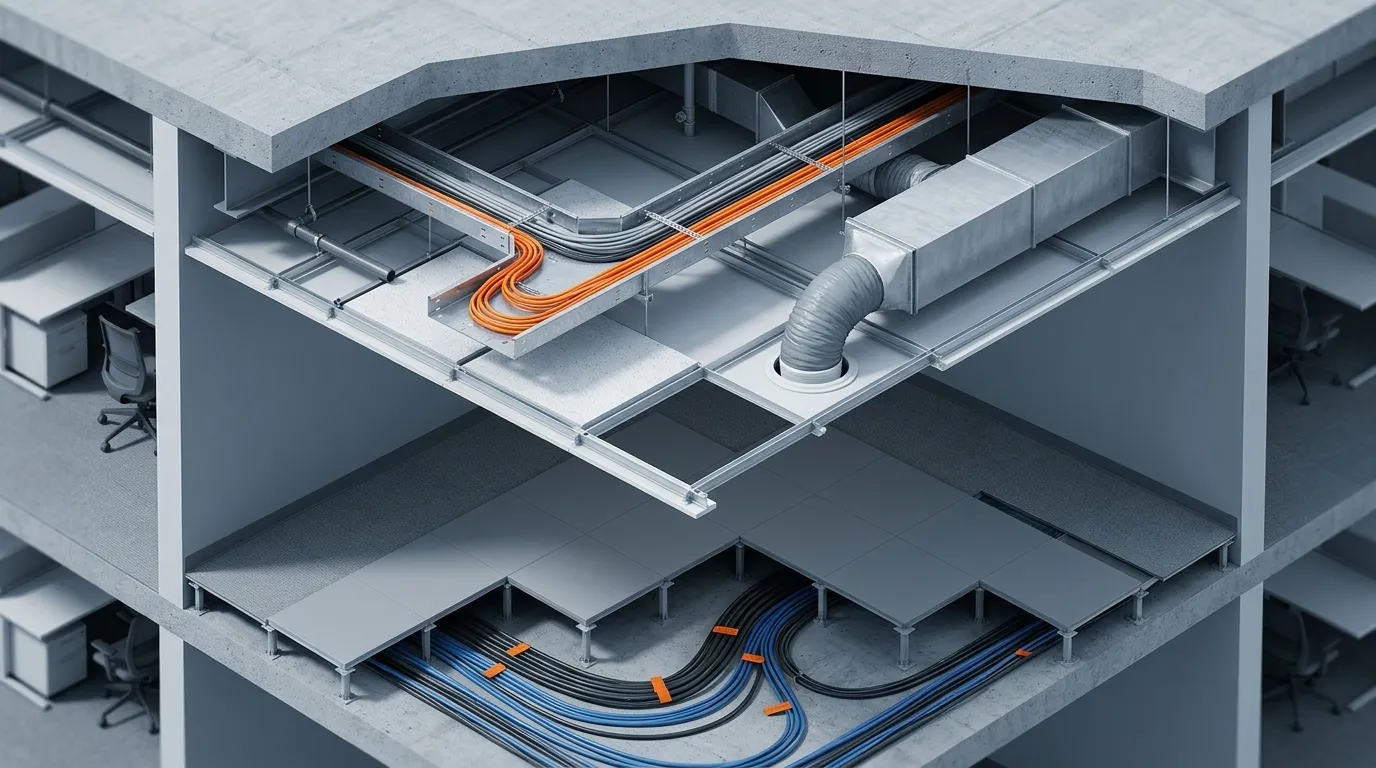
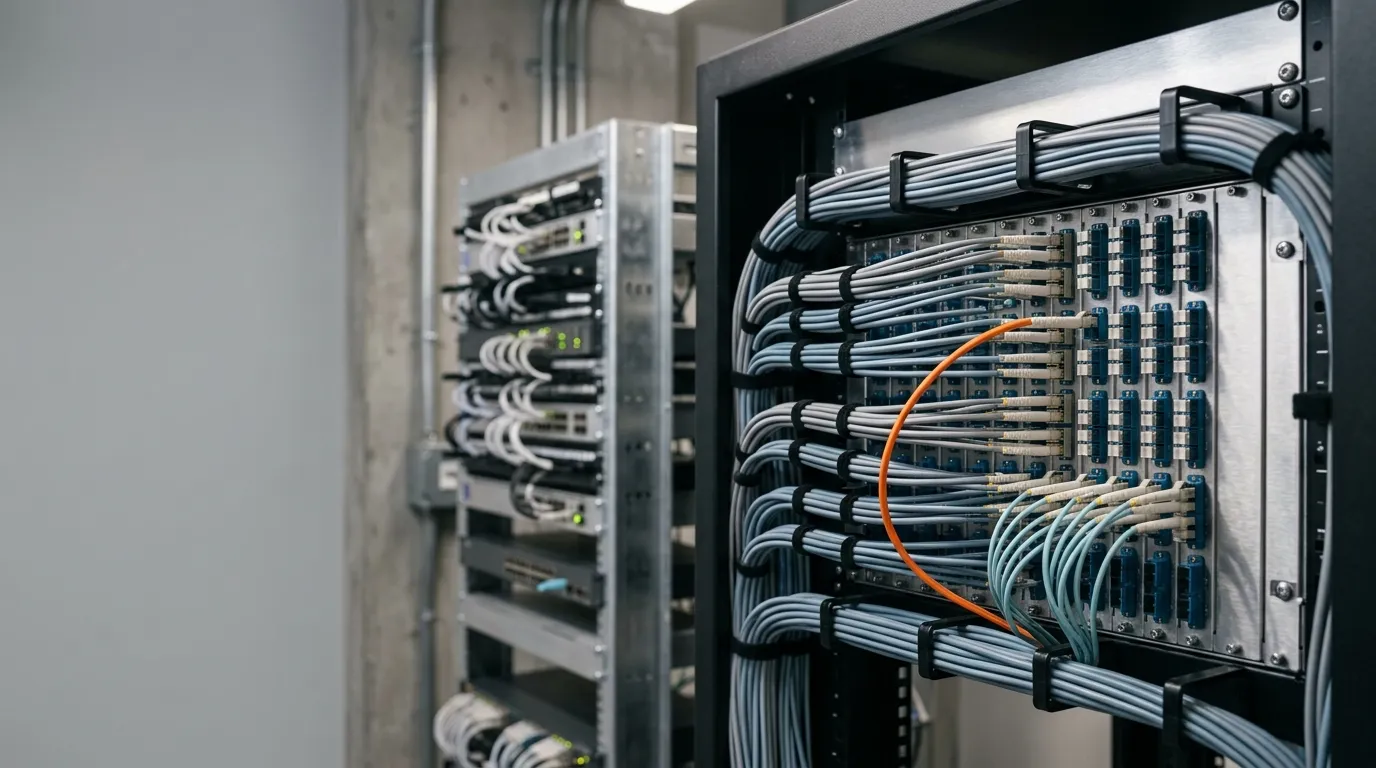
The ceiling plenum: an open air-handling space where smoke can travel the whole floor — the reason plenum-rated cable exists.
Quick Comparison: LSZH vs PVC vs Plenum
Dimension | LSZH | PVC (general) | Plenum-grade (OFNP/CMP) |
|---|---|---|---|
What it is | Halogen-free, low-smoke compound | Standard general-purpose jacket | Fire-rated jacket for air-handling spaces |
Smoke on fire | Low | Heavy | Low |
Halogens | None | Yes (HCl) | Possibly (low-smoke PVC) |
Flame test basis | IEC 60332 / 60754-2 / 61034 | UL 1581 | UL 910 / NFPA 262 |
Code context | EU public buildings, tunnels, transit | General indoor, US/EU | US plenum spaces (NEC 770/800) |
Relative cost | ≈1.1–1.3× PVC | Baseline | ≈1.3–2× PVC |
Best for | Occupant safety, enclosed spaces | Cost-sensitive general runs | Code-mandated air-handling spaces |
How to Choose: A Decision Path for Your Project
Work through these four questions in order, and the jacket picks itself:
- Does the space have an air-handling classification? If the cable runs through a ceiling or floor plenum and local code (in the US, NEC Article 770) requires plenum-rated fiber — buy OFNP. This is not optional, and the AHJ is the final word on the space classification.
- Is smoke toxicity a real occupant risk? Enclosed risers, tunnels, transit facilities, hospitals, schools, and public buildings in Europe (where CPR Euroclass and halogen-free preferences are common) point to LSZH. This is where "plenum vs non plenum" fails as a framework — LSZH isn't on either side of that binary.
- Can the same cable satisfy both? Often yes. OFNP-rated fiber with an LSZH-type compound exists, giving you plenum compliance plus halogen-free smoke performance — the right spec for a data center or hospital ceiling void.
- Budget and supply? If none of the above applies — a locked closet, an office wall, a short patch run — standard PVC does the job at the lowest cost, and it's the easiest to source.
When you've made the call, the practical procurement question is whether your supplier actually offers the jacket option you specced. TTI Fiber's indoor fiber optic cable range covers the three families: simplex and duplex cords and distribution cables in LSZH or PVC jackets, with distribution cables available in riser (OFNR) and plenum (OFNP) rated versions, breakout cables rated for riser and plenum use, and LSZH jackets tested to IEC 60332 and IEC 61034 — all cut to length from 1 m to 2 km for contractors and integrators. For the network-level picture — how these in-building runs connect campuses and buildings — see our campus fiber network design guide.
FAQ: Plenum, Non-Plenum, and LSZH Questions
How can I tell if a space is plenum? A plenum space is an open void connected to the HVAC return-air path — typically above a suspended ceiling or below a raised floor, without ductwork separating it from the air stream. On a drawing, look for return-air openings into the ceiling void; in the field, ask the mechanical engineer or the AHJ. When in doubt, treat the space as plenum and use plenum-rated cable.
When should I use plenum cable? Whenever the cable enters an air-handling plenum space and the applicable code requires it — most US commercial ceilings and raised floors qualify. Plenum cable is also permitted in non-plenum spaces, so using it everywhere is never a code violation, only a cost one.
What are the disadvantages of plenum cable? Cost is the main one — plenum-rated jackets carry a premium over general-purpose PVC, and fluoropolymer jackets can be stiffer. There's no performance downside in normal operation; the trade-off is purely budget versus fire safety.
Is plenum cable required in HVAC spaces? The requirement is tied to the air-handling space itself (the ceiling/floor plenum that is part of the HVAC return path), not to HVAC equipment. If the cable runs through that open air path, plenum rating applies; in ducted or fire-separated pathways it generally doesn't.
Is LSZH the same as plenum-rated? No. LSZH describes the jacket compound (halogen-free, low smoke, tested to IEC 60754-2 and IEC 61034). Plenum-rated describes passing the US Steiner tunnel test (UL 910 / NFPA 262, marked OFNP). A cable can be both, either, or neither — check both markings on the spec sheet.
Do I need plenum cable in my home? Usually not. Residential attics and wall cavities are rarely classified as plenum spaces under US codes, so general-purpose (CM/OFN) cable is typically acceptable. If your local inspector says otherwise, follow their call.
Fire ratings and code requirements vary by jurisdiction and code edition. Verify the applicable standard and space classification with your local Authority Having Jurisdiction before finalizing a cable specification. Standard references cited here were current as of August 2026.