AON vs PON: Two Fiber Access Architectures

AON vs PON is really a question about where you put the electronics and who pays for them. An active optical network (AON) runs a dedicated fiber from each subscriber back to a powered switch. A passive optical network (PON) shares one feeder fiber across many homes through unpowered splitters, and keeps powered equipment at the two ends only. Ask what a passive optical network is and the one-line answer is this: a fiber access network that divides light instead of switching it, so nothing between the central office and the customer needs electricity.
That single choice cascades into fiber counts, cabinet power, fault domains, and the number of ports you buy at the central office. It also decides how far a link can run, because a splitter spends the same optical budget that distance would otherwise use. The rest of this article is the arithmetic and the site conditions that turn it into a decision.
One clarification first, because three different audiences search these letters. Here, AON means an active optical network — the fiber access architecture also sold as Active Ethernet. It is not Activity-on-Node, the project-management network diagram, and it is not Aon plc, the insurance broker. If you arrived for either of those, this page will not help. If you are choosing between an AON network and a PON for a real build, the comparison below is the one you need.
AON (active optical network) | PON (passive optical network) | |
|---|---|---|
Signal distribution | Point-to-point: one fiber per subscriber | Point-to-multipoint: one feeder, split in the field |
Active equipment in the field | Yes — aggregation switches at remote nodes | None; power only at the OLT and the customer premises |
Optical budget spent on splitting | None | 3 dB per doubling of the split |
Fault domain | The single subscriber's link | Every subscriber behind the shared splitter |
Fiber per subscriber at the feeder | 1 | 1/32 to 1/128 of a fiber |
Typical fit | Business parks, campuses, long rural runs, dedicated bandwidth | Dense residential FTTH, greenfield estates, multi-dwelling buildings |
The One Structural Difference That Decides Everything
Strip away the vocabulary and both architectures do the same job: get light from one point to many homes without running a dedicated cable to every door. They differ in the mechanism.
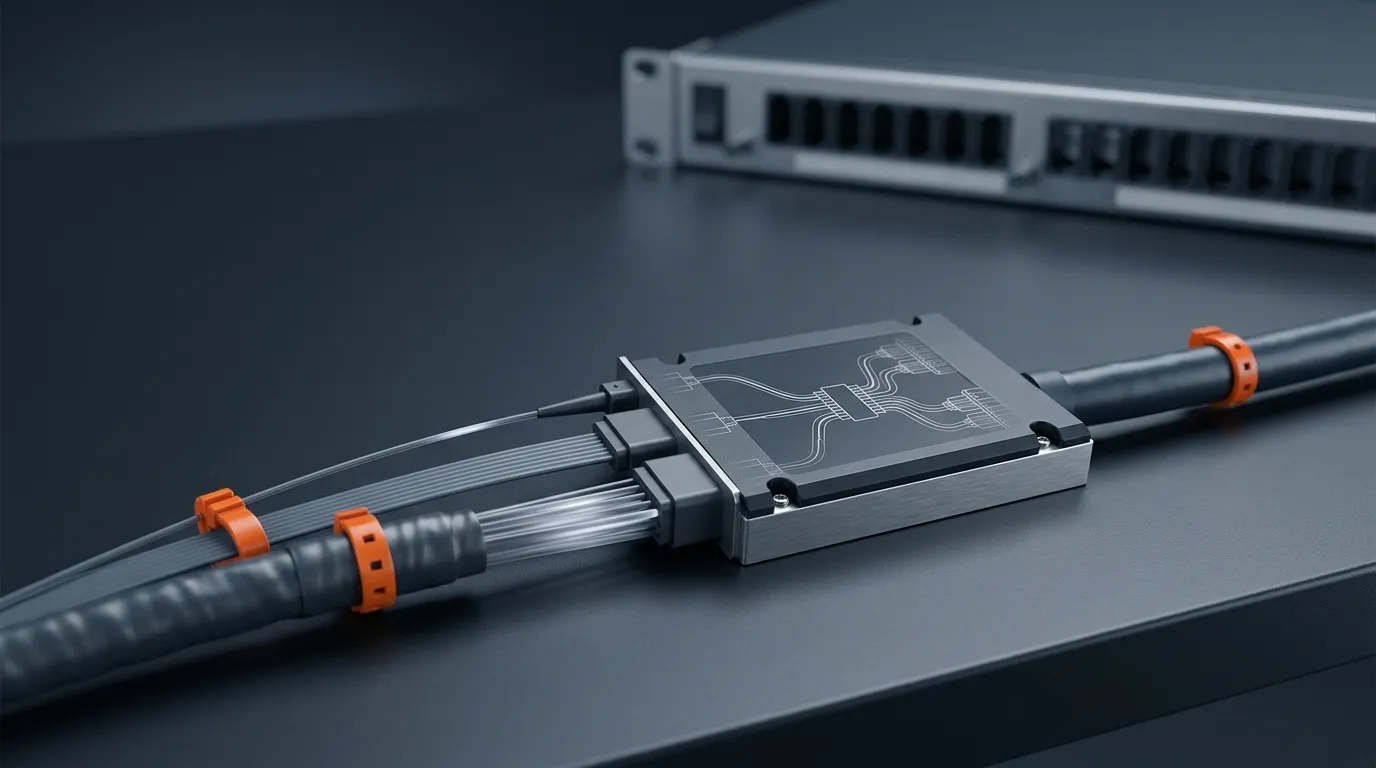
PON is point-to-multipoint. A single fiber leaves the optical line terminal (OLT) at the central office, reaches a passive optical splitter somewhere in the street, and divides into 8, 16, 32, 64 or 128 branches. The splitter is a light divider: it does not amplify, it does not switch, and it has no power supply. Whatever total power enters is shared among the outputs.
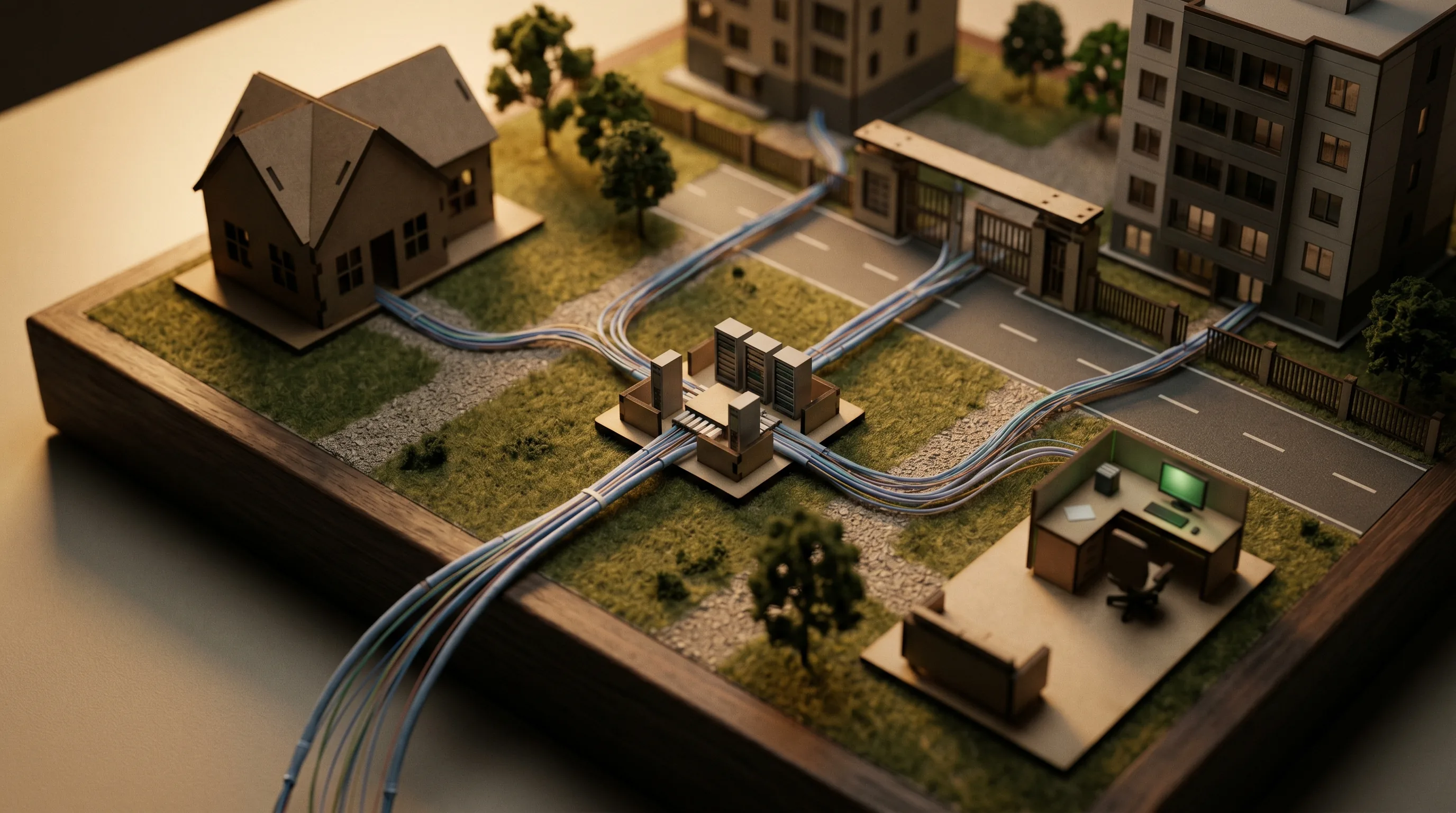
AON is point-to-point. Every subscriber gets an individual fiber and terminates it on an aggregation point that contains powered switching equipment.
Everything else in this comparison is downstream of that. A splitter means one feeder fiber serves dozens of customers, so the cable plant is small; it also means those customers share the splitter's bandwidth and its failures. A dedicated fiber means the opposite on both counts, plus you now need power wherever the aggregation point sits. Five consequences, and every one of them shows up in a bill of materials:
- Fiber count. PON multiplies one feeder strand into many subscribers. AON does not.
- Power. PON needs none in the distribution network. AON needs mains or batteries at every remote node.
- Reach. A splitter consumes optical budget that distance could have used. A PON therefore reaches less far than a point-to-point link on the same optics.
- Bandwidth isolation. A dedicated link cannot be affected by a neighbor's peak-hour traffic. A split link can.
- Fault domain. A break on the shared feeder takes down everyone behind it. On a dedicated link, it takes down one customer.
How an AON Works: Dedicated Fiber, Powered Aggregation
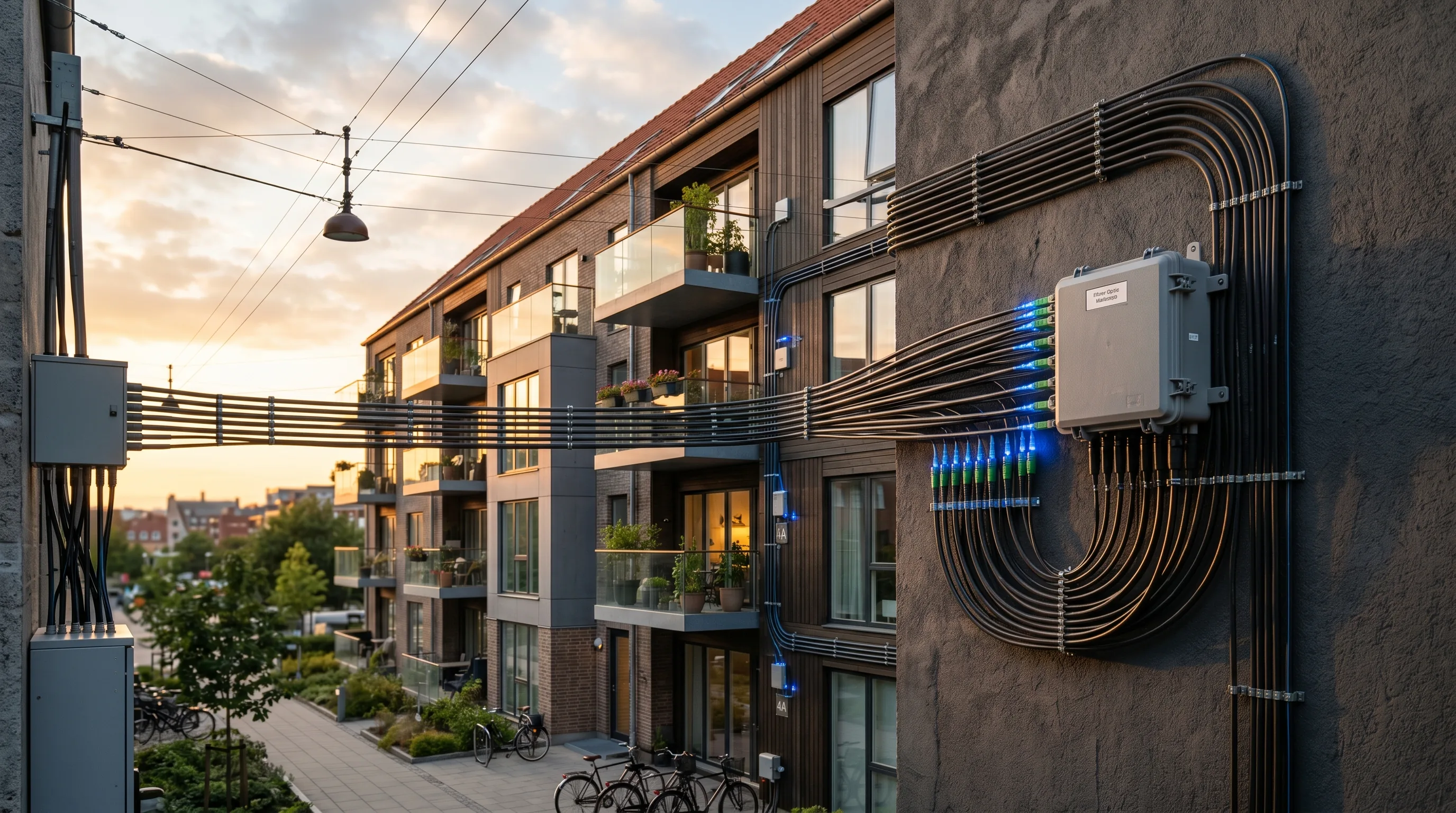
In an AON, the access network looks like a smaller version of a campus network. Each subscriber has a fiber that terminates on an aggregation switch — often a Layer 2 or Layer 3 box in a street cabinet, a business park riser, or a building's distribution room. The switch decides which packets go where, and Ethernet framing keeps the equipment interoperable across vendors, so operators can size ports per customer and add capacity by adding line cards rather than re-engineering the outside plant.
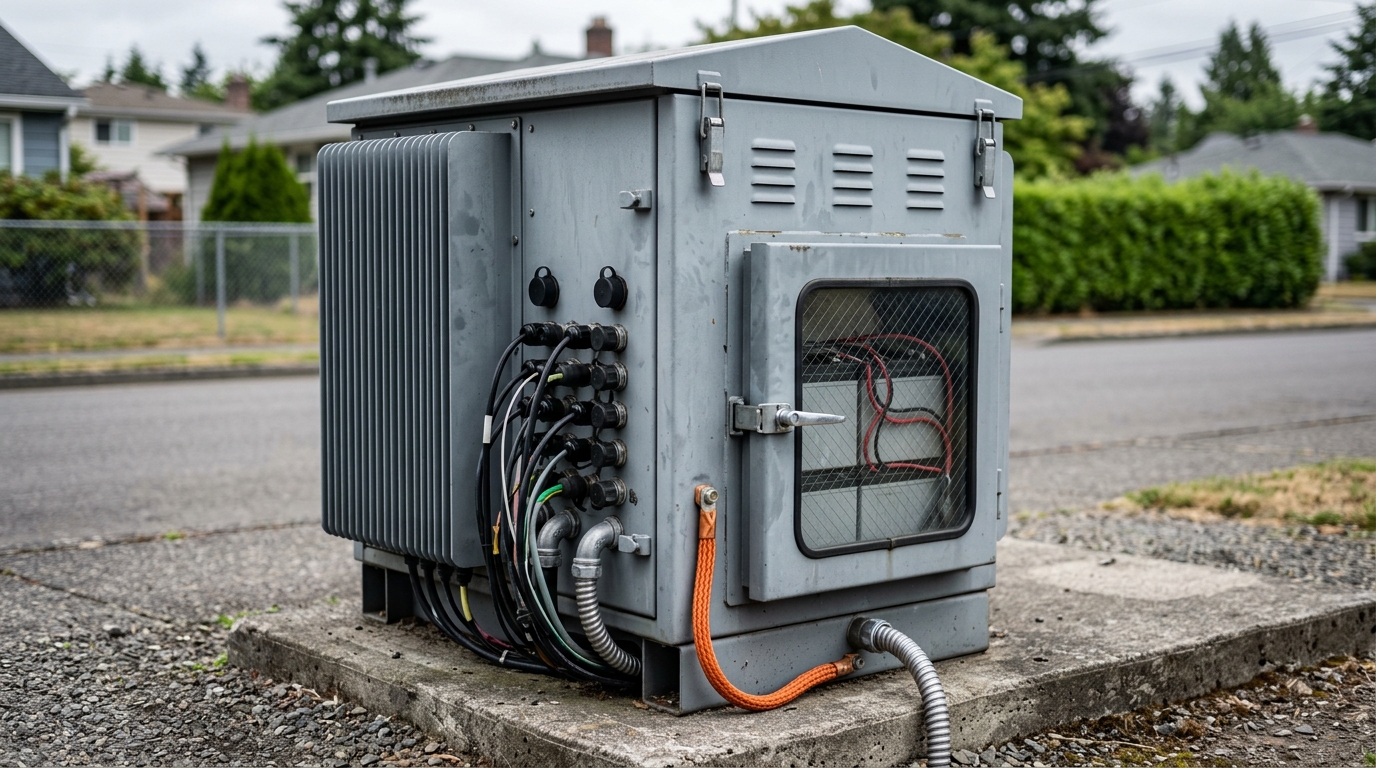
That flexibility is real, and so is its shape in your cost model. A dedicated fiber per subscriber means the feeder cable, the duct, and the splice closures all scale with customer count rather than with geography. It means every aggregation point needs an enclosure that can house powered equipment, a power feed that somebody pays for monthly, and — where the mains are unreliable or the cabinet is a long way from a supply — a battery string with a defined replacement interval.
The pleasant side of the trade is operations. Because each subscriber's link is independent, a fault is a single-customer event, and a technician sent to the cabinet can tell from the port which route is involved. There is no splitter in the path to blur an OTDR trace, and no need to coordinate a truck roll that might interrupt a neighbor.
If your AON is a campus or industrial network rather than a residential access network, the design questions shift to riser topology, distances between buildings, and the electrical environment. Our guide to designing fiber across a multi-building campus covers those, including where point-to-point backbones stop being economical.
How a PON Works: One Feeder Fiber, Passive Splitting
PON runs on three mechanisms worth knowing, because they explain both its economics and its limits.
Splitting. The OLT port feeds a splitter, and each output feeds a customer's optical network terminal (ONT) or optical network unit (ONU). In a centralized deployment the typical single-stage ratio is 1:32; cascade two 1:8 stages and one port serves 64 subscribers. In practice splitter modules are available up to 1:128, and a 1:128 module can push a single OLT port toward a couple of thousand connected devices when the whole shelf is counted (Cisco documents the standard ratios; PPC walks through the 1:128 case). This is the entire reason PON wins dense routes: the passive optical network architecture turns one strand into dozens of connections using a part that costs less than a meter of trench.
Sharing. One fiber carries traffic in both directions using wavelength-division multiplexing, with downstream traffic time-division multiplexed and upstream traffic arbitrated by time-division multiple access, so each ONT transmits only in its assigned slot. Sharing also means every ONT can see the downstream stream addressed to the others, which is why encryption rather than physical separation is what protects subscriber privacy on a PON. Cisco's PON explainer documents both mechanisms in detail.
Where power sits. Nowhere in the field. Powered components exist at the central office and at the customer premises, and that is what removes the cabinet, the battery, and the monthly electricity bill from the outside plant.
The supporting hardware is standardized and interchangeable: the OLT aggregates traffic and drives the feeder; the splitter divides it; the ONT converts it back to electrical service at the premises (Adtran). The split ratio, though, is a design variable rather than a fixed property — see PLC splitter configurations for how module types map to street cabinets and closures, and when a powered splitting stage is worth it if you are weighing a powered splitting stage instead.
AON vs PON Across the Dimensions That Change Your BOM
Fiber count and cable plant
Feeder cables in an FTTx network architecture commonly run from 48 to 288 cores into a splitter or distribution point. On a PON, that one cable fans out to hundreds of subscribers through splitters, and the cable you pull is largely independent of how many customers eventually sign up. On an AON, subscriber count drives fiber count — a 100-home street means 100 strands back to the aggregation point, in the same duct, through the same closures, plus the additional splice traffic that each strand implies.
That difference is where the "PON is cheaper" claim comes from, and it is a real effect. It is also why the honest version of the comparison is not "cheap versus expensive" but "spend the money on cable and ports, or spend it on splitters and cabinet power". If you are assembling quantities for a tender, the discipline of building a bill of materials against a route survey applies to both architectures; only the line items move.

Power and cabinets
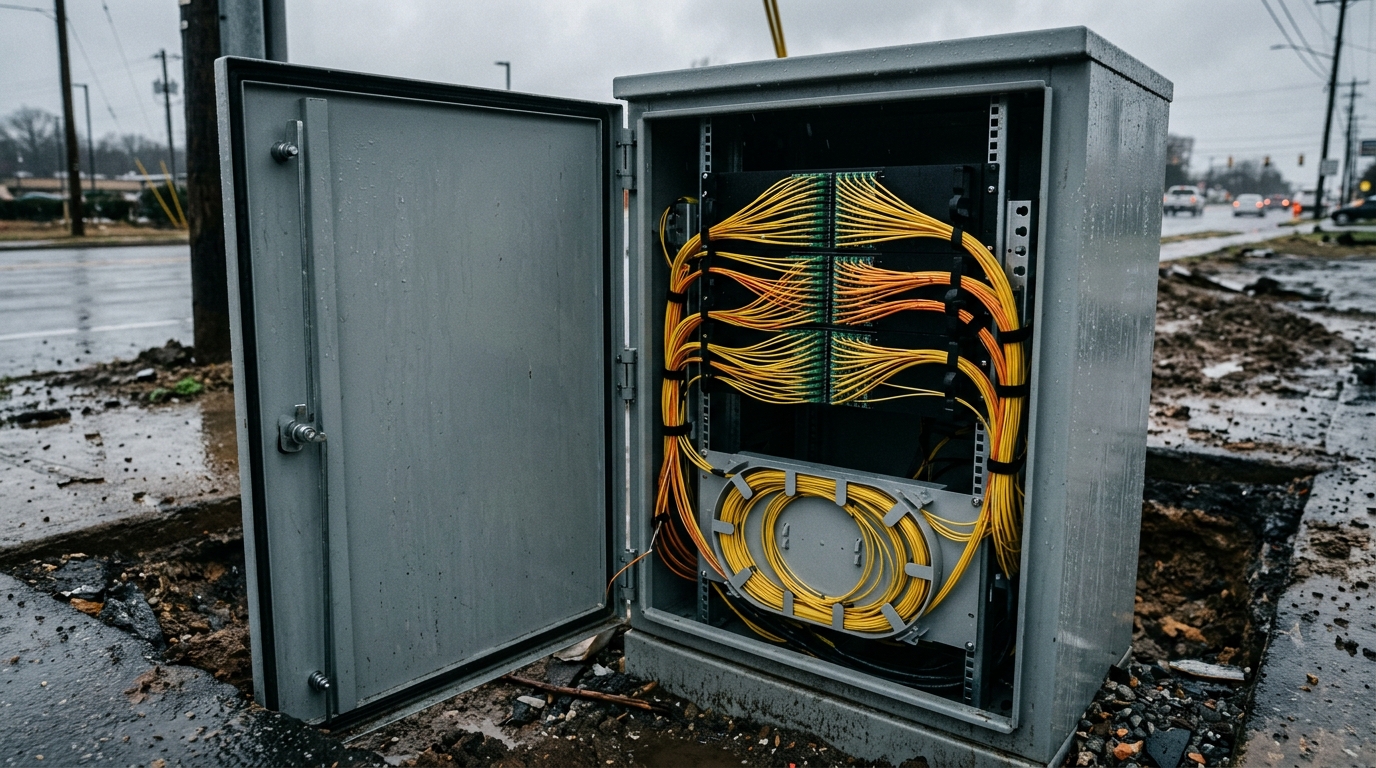
PON: no field power, no batteries, no cooling, no electricity contract for the street furniture. Enclosures still need to be weatherproof and correctly IP-rated for the location — a sealed passive cabinet is not a maintenance-free cabinet, and water ingress or UV degradation will still cost you a truck roll. The difference is that nothing in it fails because the power supply failed.
AON: every aggregation point is a powered site. Mains availability, a protected feed, battery autonomy sized to your outage history, thermal management in summer, and surge protection in exposed locations all become design inputs rather than afterthoughts. Sites without a viable power feed push their own answers into the design — a different node location, a hardened enclosure, or a switch to a passive architecture on that branch. This is usually the point at which a purely financial comparison of the two technologies stops being the deciding argument.
Reach and optical budget
A splitter spends the same budget that fiber length spends. A single-stage 1:32 split costs roughly 16.25 dB before the first meter of cable is counted, against about 13 dB for a 1:16 stage — and at 0.35 dB per kilometer for single-mode fiber at 1310 nm, that 3 dB difference is several kilometers of reach. The next section works the numbers properly.
AON has no splitter in the path, so the full budget is available to one link. That is the mechanical reason point-to-point access runs further than the same transceivers would manage behind a splitter, and the reason reach claims in this comparison are always budget outcomes rather than fixed properties of either architecture.
Bandwidth per subscriber
A PON port's line rate is shared. GPON offers 2.488 Gbps downstream and 1.244 Gbps upstream across everyone on that port (ITU-T G.984.2), which for 32 subscribers on a well-oversubscribed estate is fine and for 32 subscribers each running symmetric backup is not. XGS-PON moves to 10 Gbps symmetric per port (ITU-T G.9807.1), and a further generation is already specified, even though 25G and 50G deployments remain limited today, as PPC's PON overview notes.
On an AON, the port rate is per subscriber by construction. That matters less for a household streaming video than for a business buying a committed rate, a mobile small cell needing fronthaul-like latency, or an estate where a handful of customers will always consume an order of magnitude more than the rest. If your roadmap is a faster PON rather than more fiber, our walkthrough of matching the PON standard to your upgrade path covers what each generation changes.
Fault isolation and operations
This dimension is usually scored in favor of AON, and for good reason: a dedicated link fails in isolation, and the port tells you which customer's route to test. On a PON, a break on the shared feeder or a faulty splitter takes out every subscriber behind it, and a splitter in the cable path makes the trace harder to read — light comes back from every branch at once.
The counter-argument is operational scale. A PON has fewer active elements to monitor and no field power to maintain, and modern PON management exposes per-ONU state, so many faults surface as a single subscriber losing registration rather than an outage the operator has to hunt for. Budget for the shared-failure scenario either way: a PON route wants spare capacity in the feeder and a splice plan you can re-enter, while an AON route wants enough aggregation ports for quick re-termination.
Upgrade path and standards
PON upgrades on a standards cadence. The GPON family is defined in the ITU-T G.984 series (G.984.1), XGS-PON arrived as a 10 Gbps symmetric standard on the same optical distribution network, and the higher-speed PON series is already specified (ITU-T G.9804.1) but is still being deployed. That means an existing fiber plant keeps its value across generations, provided you left budget and splitter headroom in the design.
AON upgrades on optics rather than standards. When you control both ends of a point-to-point link, a rate increase is a transceiver change at the two endpoints, which is why Active Ethernet remains attractive wherever per-customer contracts are the product. What holds it back in access networks is not the optics — it is the fiber count and the field power that a large residential footprint demands. If the acronyms FTTB, FTTH, FTTC and FTTP are crossing your desk at the same time, the FTTx naming conventions are worth ten minutes before you scope anything.
The Optical Budget Math Behind "20 km vs 100 km"
Ask how far each architecture reaches and you will get confident, unsourced numbers: PON about 20 km, AON 70 to 100 km. The numbers are in the right region, but they are outputs, not inputs — and treating them as rules leads to designs that fail acceptance testing.
Every passive element in the path subtracts from one link budget: the transmitter's output power minus the receiver's minimum sensitivity. Splitting is the largest single line item in a PON. The theoretical split loss is 10 × log₁₀(N) per output port, and real modules add excess insertion loss on top of it:
Split ratio | Theoretical split loss | Typical excess insertion loss | Total per port |
|---|---|---|---|
1×2 | 3.01 dB | ~0.1 dB | ~3.1 dB |
1×8 | 9.03 dB | ~0.5–0.8 dB | ~9.7 dB |
1×16 | 12.04 dB | ~0.8–1.2 dB | ~13 dB |
1×32 | 15.05 dB | ~1.0–1.5 dB | ~16.25 dB |
1×64 | 18.06 dB | ~1.5–2.0 dB | ~20 dB |
Those figures are the ones our own splitter loss breakdown tabulates, and any comparison that skips them is missing the largest single line item in the link budget: one doubling of the split costs about 3 dB, which is one halving of received power on every branch.
Distance is the other consumer. Single-mode G.652D fiber is specified at no more than 0.35 dB per kilometer at 1310 nm and 0.21 dB/km at 1550 nm, and TIA-568 puts a recommended ceiling of 0.75 dB on each mated connector pair and 0.30 dB on each fusion splice. Our optical budget calculator walks the whole chain — fiber attenuation, connector pairs, splices, splitter, power penalty and a repair margin — and reports the system performance margin so you can see whether a link closes before anyone pulls cable.
Put the numbers together and the "20 km" convention stops looking arbitrary. Moving from a 1:16 to a 1:64 stage costs about 7 dB. At 0.35 dB/km that is roughly 20 km of reach handed back at 1310 nm, or about 33 km at 1550 nm — before a single extra splice is counted. A splitter ratio choice is a distance decision. What this arithmetic gives you is the reach a split ratio change buys or costs, not an absolute span for either architecture — that number still depends on the optics, the splice count and the cable actually installed.
AON plays the same game with one row removed. There is no splitter, so the entire budget is available to a single link, and reach is set by the optics at each end plus the fiber between them. Where a PON link will not close, an AON can extend further on the same fiber; if even that is not enough, both architectures can be extended with active in-line equipment, which reintroduces field power and the maintenance that comes with it. That trade — reach bought with powered equipment — is the whole reason the hybrid deployments in the next section exist.
When PON Is the Right Answer — and When It Is Not
PON is the default when these hold:
- Subscribers are dense and mostly residential, so one feeder fiber can serve 32, 64 or 128 of them.
- There is no dependable power at the distribution points, or getting it would cost more than the fiber it saves.
- The traffic mix is downstream-heavy — streaming, browsing, video calls — so a shared 2.5 Gbps or 10 Gbps port per group is not a constraint in practice.
- You want the outside plant to be as inert as possible: no fans, no batteries, no thermal load on the pole.
- The build has to scale with take-up rather than with the map, so cost per home passed falls as penetration rises.
It is the wrong answer when the site says otherwise. If a customer genuinely needs committed symmetric capacity, a shared port is a negotiation you will keep having. If a route runs to scattered premises kilometers apart, splitting saves you very little fiber while still costing you the same dB, and the budget arithmetic above will tell you so before you commit. If the operator's field organization is thin, a passive network's advantage in maintenance is real but smaller than the arguments claim — splitter faults are rare, expensive and awkward. And if the plan depends on the field cabinets being climate-sealed for two decades, that is an enclosure specification decision, not an architecture one.
When AON Is the Right Answer — and What It Costs You
AON wins on these conditions:
- Customers are businesses, public bodies, or mobile sites buying a defined rate, latency or availability.
- Distances are long and density is low, so the cable you would save by splitting is not the expensive part.
- Field power exists or can be provided at the aggregation points without a disproportionate project.
- The operator wants per-customer control at Layer 2 or Layer 3 — policing, VLANs, service demarcation — rather than per-port scheduling.
- The site has to be expanded in small, predictable increments, and ports are easier to add than splitters are to relocate.
And here is what that costs, stated plainly. Fiber count scales with subscribers, so the duct, closures and splicing labor scale with them too. Every aggregation point becomes a powered asset with a failure mode that a passive cabinet does not have: mains outages, battery replacement cycles, thermal stress and surge exposure. The central office end of the network also needs a port per customer rather than a port per 32 customers, and that port count is what most often turns a comparison in favor of PON once the residential density gets high enough.
Hybrid Networks: How Real Deployments Mix Both
The useful question is rarely "which one" but "which one, where". Two patterns recur.
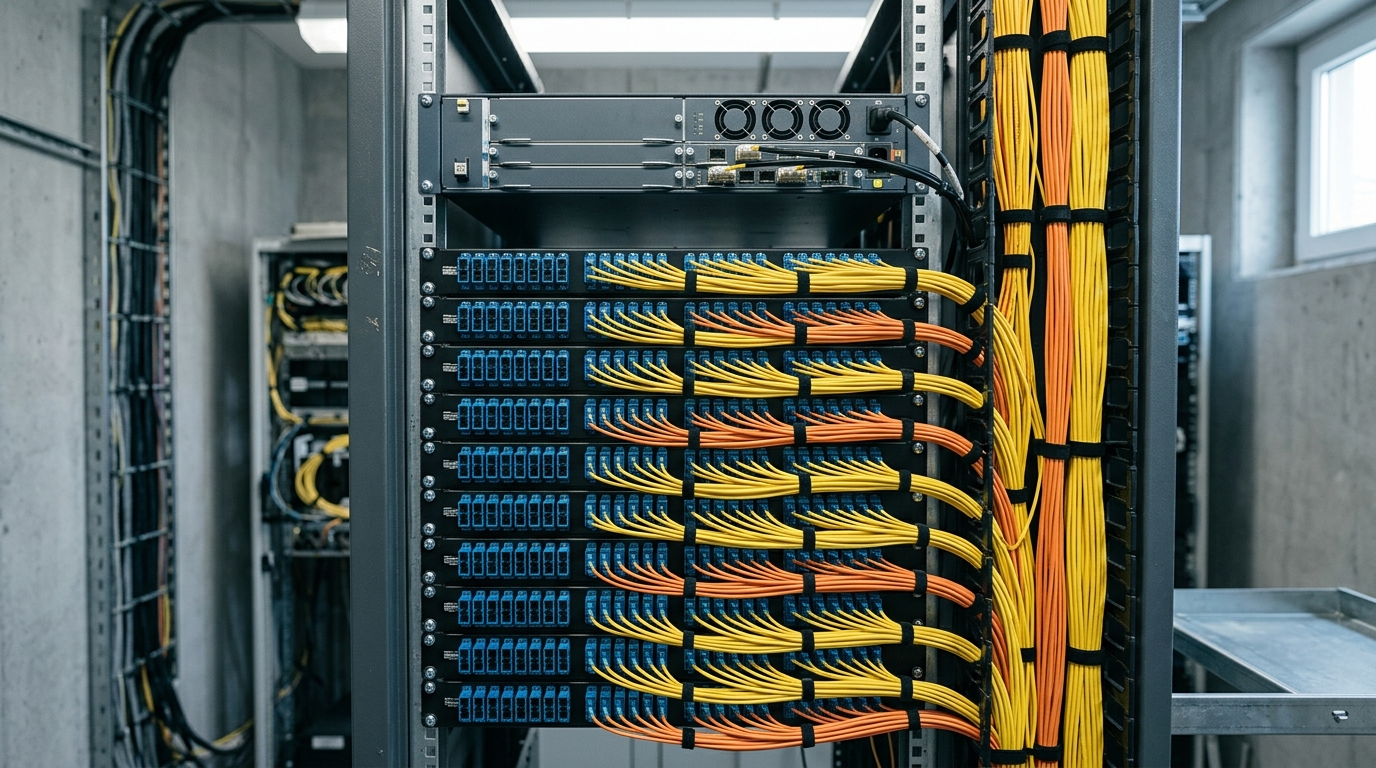
A PON plant with point-to-point overlays. Residential FTTH is built as PON because that is what the fiber economics support, and business premises on the same route are served with dedicated point-to-point links from the same cabinet or a nearby handhole. The passive ODN does the heavy lifting for the mass market, and a handful of AON links carry the contract-grade services. The feeder route and closures are shared; the splitter and the dedicated strand coexist on the same distribution point.
Reach extended with active equipment. When a route is longer than the budget allows, a reach extender — an optical amplifier or regeneration stage in a powered enclosure — pushes the PON further. The architecture is still PON, but the extender is a powered field asset, so the "no power in the network" advantage is spent precisely where it was needed. That is a legitimate engineering answer, and it is the honest boundary of the passive-versus-active distinction many comparisons draw. If your spans are aerial, check that your cable choice matches the mechanical and grounding conditions before you optimize for dB — that conversation usually starts with cable for overhead spans that cannot be grounded.
The rest of the series lives in our last-mile access library, which collects the outside-plant, splitting and termination topics that this comparison touches but does not cover in depth.
A Selection Checklist for a New FTTH or Campus Build
Work down the list; each line assigns one decision.
- Density. Fewer than roughly 16 premises per distribution point over a long route → price the point-to-point option properly, because splitting saves little.
- Power at the node. No dependable supply and no budget for battery autonomy → PON, unless a reach extender is already planned.
- Committed bandwidth. Any customer contract with a guaranteed symmetric rate → AON or a dedicated overlay, not a shared port.
- Budget headroom. Decide the split ratio only after computing reach with the splitter's loss included. A ratio chosen for port count alone is the most common design error in this field.
- Fault strategy. Write down what happens on a shared-feeder break and how long restoration takes. If that number is unacceptable, that branch wants point-to-point.
- Fiber count versus cable cost. Compare the dedicated-fiber option against the split option on the same route survey, including duct, closures and splicing labor.
- Upgrade path. If the ten-year plan is a faster PON generation, leave splitter headroom and budget margin now rather than re-engineering the ODN later.
- Enclosure standard. Either architecture leaves enclosures in the field for decades. Specify them for the actual location, not for the average one.
The Passive Layer You Fund Either Way
Whichever side of this comparison your project lands on, the passive layer is the part both architectures buy: feeder and distribution cable, splitters, closures and distribution boxes, drop cable, and the terminal boxes inside the premises. The difference is quantity and placement — a PON concentrates spend in splitters and low-count feeders, an AON concentrates it in cable and enclosure volume — and that is the calculation worth taking to a supplier.
TTI Fiber manufactures that layer rather than the active equipment on either end, which is why we can quote both scenarios from the same catalog: outdoor cable from 48 to 288 cores, PLC splitters across the 1:8 to 1:64 range, sealed closures and distribution boxes for the street end, and pre-connectorized drop cable with tested insertion loss below 0.3 dB for the field end. If you are costing a route, our FTTH and FTTx passive components are organized by position in the network — central office to premises — so quantities can be pulled against the same architecture map you used above.
FAQ
What does AON stand for?
In fiber access, AON stands for active optical network: a point-to-point architecture where each subscriber has a dedicated fiber terminating on powered switching equipment. The same letters appear in project management as Activity-on-Node (a scheduling network diagram) and as the name of an insurance broker, which is why search results for these letters mix three unrelated subjects.
What is a PON in telecom?
A passive optical network is a fiber access network that splits one feeder fiber across many subscribers using unpowered optical splitters, with powered equipment only at the service provider's end and the customer premises. It is the dominant architecture for residential fiber broadband because it removes active equipment — and its power and maintenance — from the distribution network.
What is the difference between an ONT and a PON?
They are not alternatives. PON is the network architecture; an ONT (optical network terminal, also called an ONU) is the device at the customer's premises that terminates the PON link and converts the optical signal back into electrical service for the home or business. One PON serves many ONTs.
Are PON and GPON the same thing?
No. PON is the architecture; GPON is one standard that implements it, specified in the ITU-T G.984 series at 2.488 Gbps downstream and 1.244 Gbps upstream per port. EPON, XGS-PON and higher-speed systems are other implementations of the same passive architecture, and several can share one optical distribution network.
Which is cheaper, AON or PON?
It depends on density, and the direction of the saving matters more than the total. PON removes field power, batteries and cooling, and multiplies one feeder fiber into dozens of connections, which is why it usually wins in dense residential areas. AON removes splitting loss and field cabinets but pays for one fiber and one central-office port per subscriber, which is why dedicated links become competitive exactly where subscribers are few and far between — and why a mixed design often costs less than a commitment to either.