Indoor vs Outdoor CPR Cable Ratings Guide
Indoor vs Outdoor CPR Rating: the 30-Second Answer
Ask ten people what an "indoor vs outdoor CPR rating" is and you will get answers about cardiopulmonary resuscitation, climbing grades, and cable jackets in roughly equal measure. If you are here for the cable answer, here it is in one table.
Requirement | Indoor runs | Outdoor-only runs | Indoor/outdoor (dual-rated) |
|---|---|---|---|
Fire rating (CPR Euroclass) | Yes — Dca, Cca, or B2ca typical | No — outside CPR scope | Yes — one Euroclass for the whole cable (Dca or Cca common) |
UV resistance | Not needed | Required | Required on outer sheath |
Water blocking / moisture | Not needed | Required (gel-filled, APL/PSP barriers) | Required |
Mechanical protection | Basic | Required (armor, crush, rodent) | Depending on path |
Compliance documents | DoP + CE marking | None under CPR | DoP + CE marking |
The rule behind the table: CPR follows the building wall, not the product category. Inside the wall, a fiber optic cable is a construction product and needs a declared Euroclass plus the paperwork that goes with it. Outside the wall — in a duct, direct-buried, or strung between poles — the same cable is outside plant, and what it needs is UV stability, water blocking, and mechanical toughness, not a fire class. A cable that crosses both zones has to satisfy both sides at once, which is why dual-rated indoor/outdoor constructions exist in the first place.
If you only remember one sentence: indoor cable is chosen by its fire rating, outdoor cable by its environment rating, and the cable that does both is a different product from either.
Why "CPR Rating" Means Different Things Indoors and Outdoors
CPR stands for the Construction Products Regulation — originally (EU) No. 305/2011, replaced from 2026-01-08 by Regulation (EU) 2024/3110, the market-access law that governs construction products placed on the European market. Declarations of Performance issued under 305/2011 remain valid during the transition. For cables, the harmonised standard is EN 50575, and since July 2017 any cable intended for permanent installation in construction works must carry a reaction-to-fire classification — a Euroclass — backed by a Declaration of Performance and CE marking.
Notice what the regulation does not say. It does not say "outdoor cables need a Euroclass." It does not say "indoor cables need one." It asks one question: is this cable permanently installed in a construction work? The European Commission's CPR overview and the industry's own guidance are consistent on this point — the boundary is the building's external fire barrier, not a category in a product catalogue.
That single question produces the asymmetry that confuses everyone:
- A cable that runs entirely outside — underground duct, direct burial, aerial span — is not permanently installed in a building. No Euroclass is required, and asking a supplier for one will get you a refusal or a document that does not mean what you think it means.
- The moment that cable crosses the wall and runs through a riser, ceiling void, or equipment room, the indoor portion is subject to CPR. You need a declared Euroclass at whatever class the national building code demands, plus the DoP and CE marking to prove it.
- A cable designed to do both — enter the building and keep running inside — must be classified as a whole. There is no "outdoor half exempt" reading.
We have covered the scope boundary in detail in our outdoor CPR scope guide — including the EN 50174-2 condition that lets you terminate an unclassified cable within 2 m of the penetration point, and the grey areas around civil engineering works. This article focuses on the practical question: what rating do you actually specify on each side of that wall.
Indoor Runs: the Euroclass Is the Spec You Actually Buy
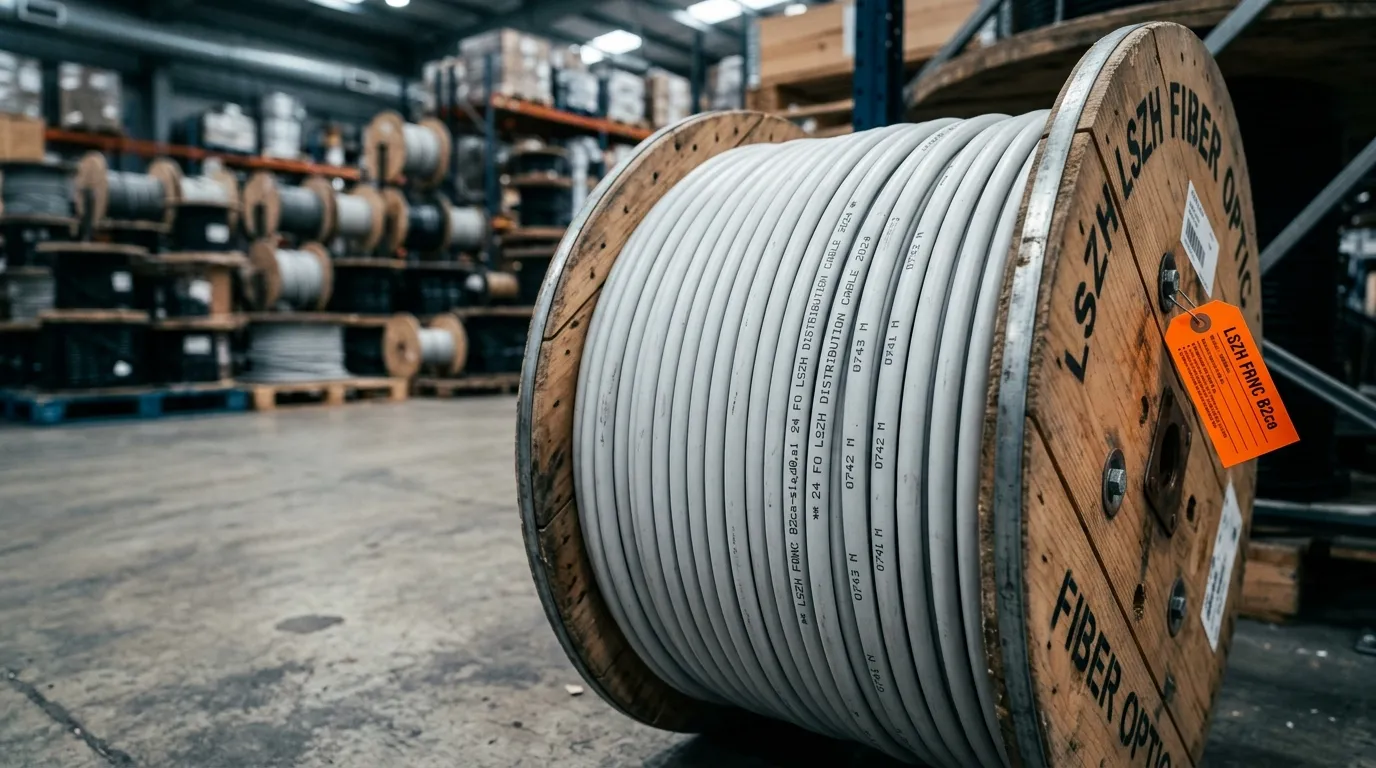
Inside a building, the Euroclass is the number on the datasheet that decides whether your cable passes inspection. The seven classes defined by EN 50575 — Aca, B1ca, B2ca, Cca, Dca, Eca, Fca — collapse into three you will actually buy for fiber optic cabling.
Dca is the working baseline. It passes the EN 50399 fire test with flame spread ≤ 2.0 m and total heat release ≤ 70 MJ. Most fiber optic cables sold for standard commercial and residential indoor use sit at Dca, and it is commonly the minimum your specification should accept for non-critical areas.
Cca is the safety-conscious default. Same test, tighter thresholds (THR ≤ 30 MJ), which makes it the class most often required for public buildings, escape routes, and multi-occupancy housing under national building codes. If your project is in Germany, the Model Building Regulation effectively pushes escape and rescue routes toward Cca or better.
B2ca is the high-performance tier — flame spread ≤ 1.5 m, THR ≤ 15 MJ, peak heat release ≤ 30 kW. Hospitals, high-rise risers, underground transport, and data centers with sensitive electronics are where you see B2ca-s1,d1,a1 specified.
The suffixes matter as much as the main letter. Smoke (s1/s2/s3), flaming droplets (d0/d1/d2), and acidity (a1/a2/a3) describe what happens after ignition, and most fire deaths come from smoke, not flame. For a corridor or riser where people evacuate, s1 and d1 are not optional extras; for a room full of switching gear, a1 keeps corrosive acid gas off the electronics. The Europacable guide to CPR cable classification walks through the full class ladder and what each suffix measures.
One confusion to clear up before you spec: LSZH is not a Euroclass. Low Smoke Zero Halogen is a jacket material property; the Euroclass is the tested reaction-to-fire performance of the finished cable. A cable can be LSZH and still carry only a Dca or Eca class — and a plenum-style LSZH jacket does not automatically beat a well-designed PVC at the same class. Read the class, not the brochure. For the full breakdown of all seven classes and their test thresholds, see our CPR cable classes guide.
Outdoor Runs: No Euroclass — a Different Set of Hard Requirements
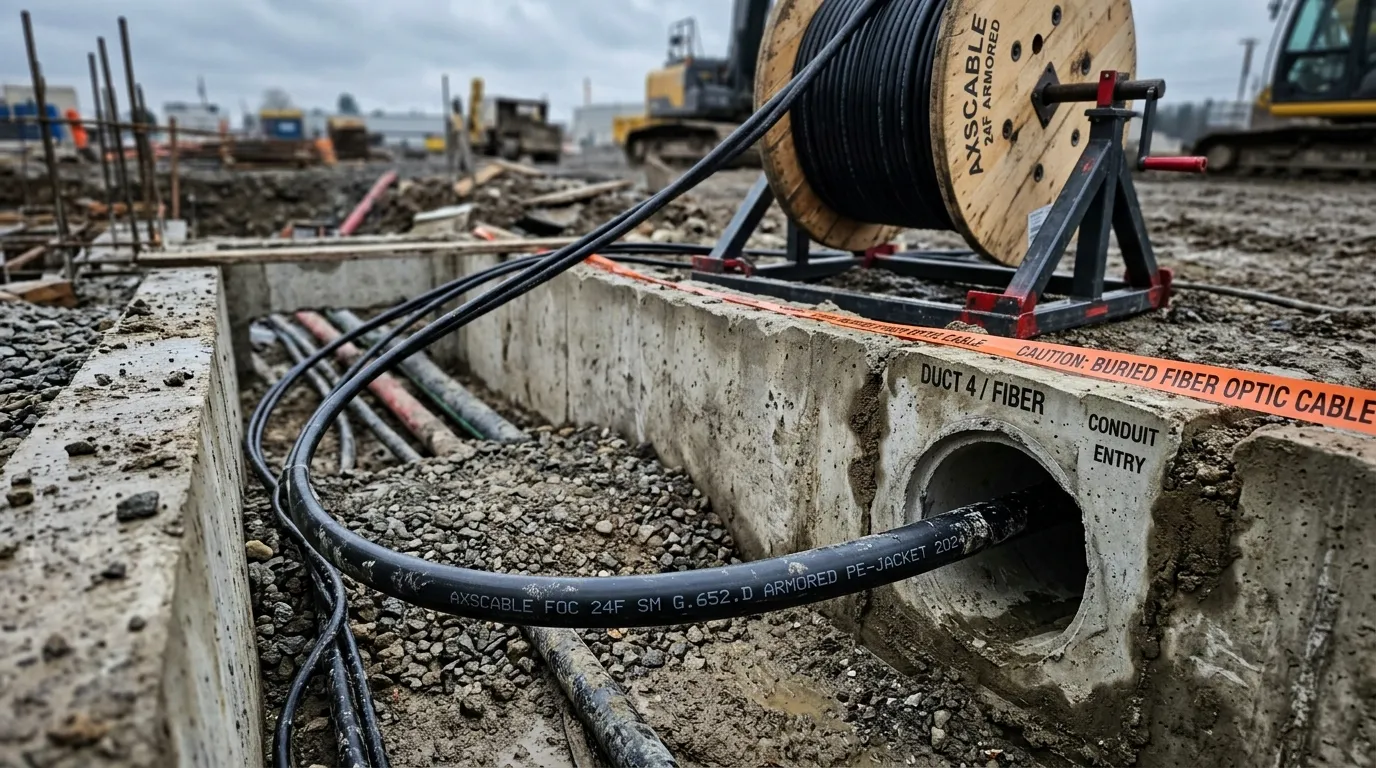
Step outside the building and the entire rating language changes. The outdoor portion of the network is not regulated by CPR, but it is regulated by physics: sunlight, water, temperature swings, and anything with teeth.
UV resistance. A polyethylene sheath that sits in direct sun for twenty years needs UV-stabilised compounds, or it cracks and lets water in. This is why outdoor cables use UV-stabilised PE or AT sheaths and why an indoor cable's PVC or LSZH jacket — perfectly fire-safe — fails outdoors within a season or two.
Water blocking. Outdoor fiber is gel-filled or dry-blocked, and long-run cables add an APL (aluminium-polyethylene laminate) or PSP (plastic-steel-plastic) moisture barrier between the core and the sheath. Water ingress is the number one long-term killer of outdoor fiber: it freezes, expands, and micro-bends the fibres until attenuation climbs past spec.
Mechanical protection. Duct, direct burial, and rodent-prone routes call for armour — corrugated steel tape, steel wire, or FRP plus glass yarn barriers. An outdoor cable is a civil-engineering product as much as a telecom product.
Temperature. Outdoor cables are rated for the full environmental range of the deployment region — cold enough to stiffen the sheath in a Nordic winter, hot enough to soften it on a rooftop in summer.
None of these appear in a Euroclass. An "outdoor rated" cable may carry no fire class at all, and that is correct: it is not a construction product if it never enters a building. That is why the two rating systems coexist without talking to each other. For the full outdoor deployment picture — aerial, duct, direct burial, and the cable types for each — our outside plant cabling hub is the place to start.
Indoor vs Outdoor at a Glance: the Comparison Matrix
Put the two worlds side by side, and the differences are clean:
Dimension | Indoor cable | Outdoor cable |
|---|---|---|
Governing requirement | Reaction to fire (CPR Euroclass) | Environmental durability (UV, water, temperature) |
Fire class | Dca / Cca / B2ca (+ s/d/a suffixes) | None required (outside CPR scope) |
Jacket material | LSZH or PVC, flame-retardant | UV-stabilised PE / AT, often over APL/PSP barrier |
Core design | Tight-buffered or distribution | Loose tube, gel-filled or dry-blocked |
Water protection | Not required | Required (moisture barrier, water blocking) |
Mechanical | Light (pulling tension only) | Heavy (armor, crush, rodent, burial) |
Documentation | DoP + CE marking | No CPR documentation |
The overlap zone is where the confusion starts: an indoor cable with a great Euroclass fails outdoors within months, and an outdoor cable pulled 40 metres up a riser because it was already on the drum is a genuine compliance violation. Neither rating "wins" — they answer different questions about the same cable.
Dual-Rated Cable: One Construction That Satisfies Both Sides
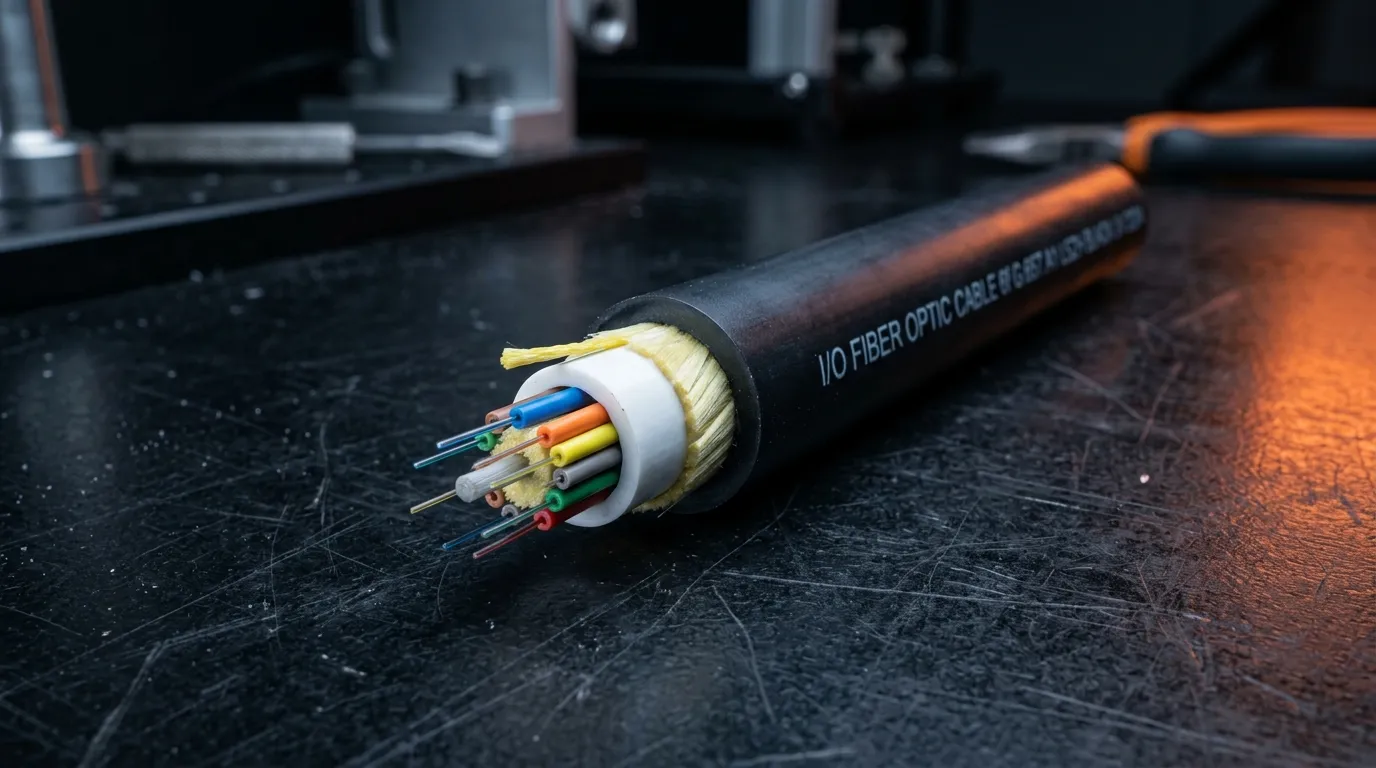
When a fiber run enters a building and keeps going — an FTTH drop into a flat, a campus link into an equipment room, a data center feed off a street cabinet — you can splice outdoor to indoor cable at the wall, or you can buy one cable that is rated for both. The dual-rated construction exists to make the second option safe, and its anatomy is remarkably consistent across manufacturers:
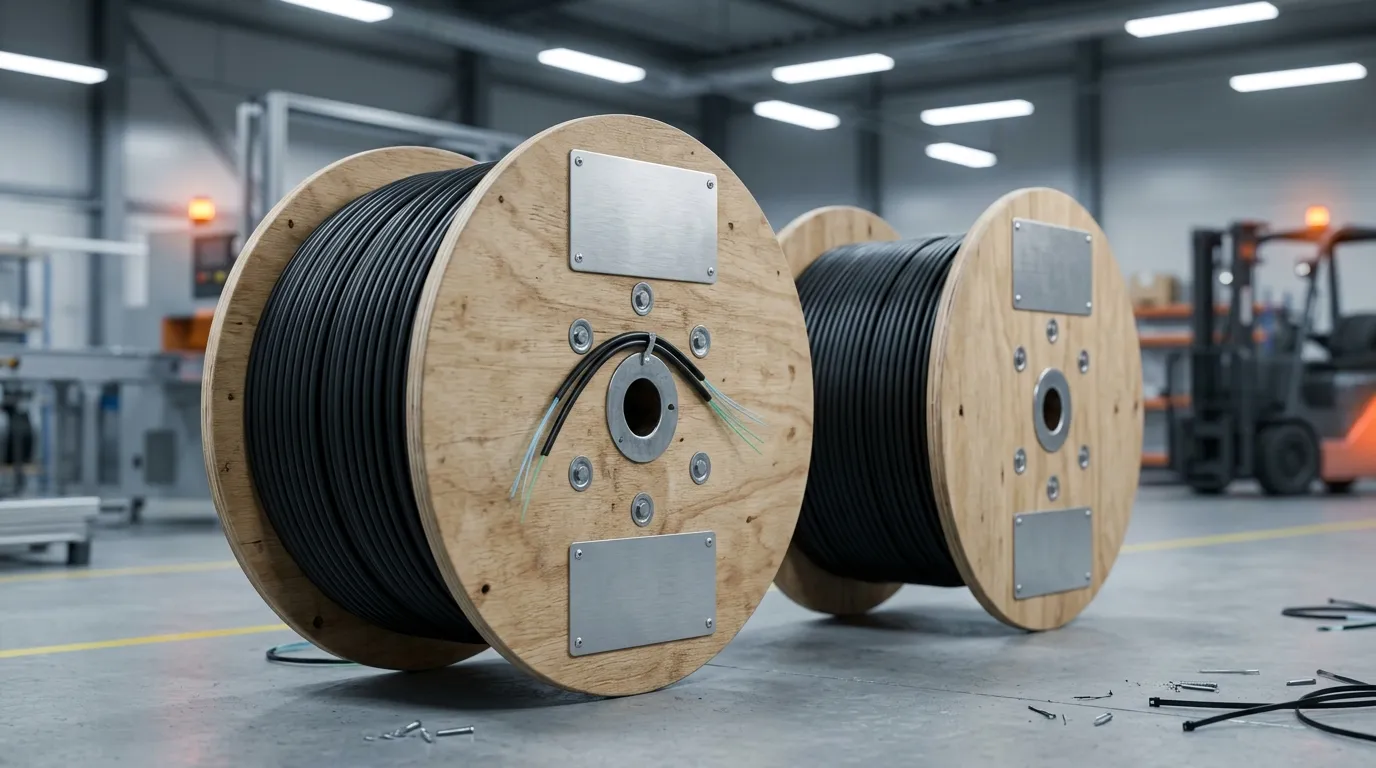
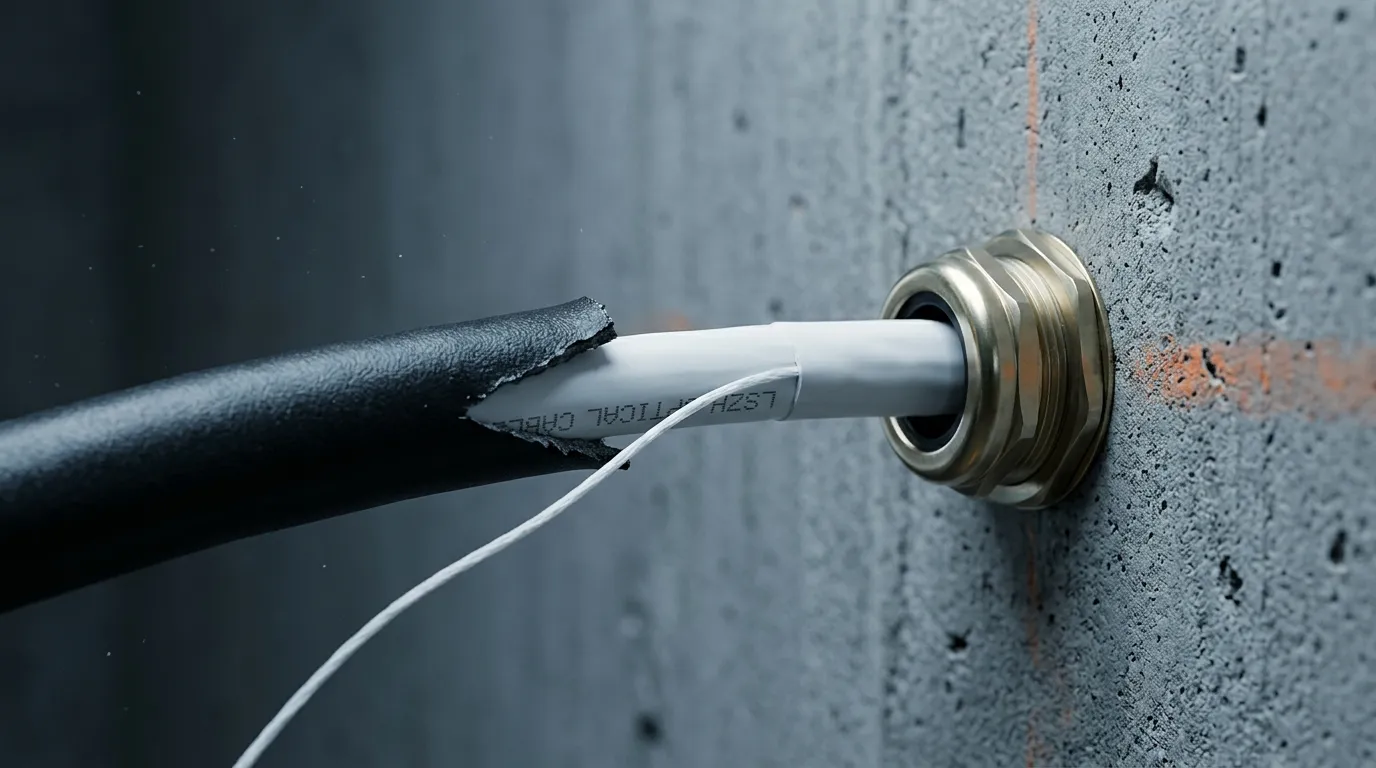
- An outer sheath that carries the outdoor duties: UV-stabilised black PE or AT, water-blocked, tough enough for the exposed run.
- An inner cable that carries the indoor duties: an LSZH jacket with a declared Euroclass, so the portion inside the building is a compliant construction product.
- A ripcord between the two, so the installer strips the outdoor sheath at the wall and continues the inner, indoor-rated cable into the riser without a splice.
One detail specifiers miss: the Euroclass applies to the whole cable as sold, not just the inner jacket. A dual-rated cable carries one classification — commonly Dca or Cca, with B2ca available for high-risk buildings — and the DoP covers the entire construction. If a supplier offers you "indoor/outdoor" cable without a Euroclass on the datasheet, check whether it is actually intended for permanent indoor installation or only for outside plant that happens to be routed through a building.
Because the two halves are specified differently, buying dual-rated means checking both halves: the Euroclass for the indoor side, and UV/water ratings for the outdoor side. TTI Fiber's indoor fiber optic cable range covers LSZH and PVC constructions with IEC 60332 flame and IEC 61034 smoke compliance, and our outdoor fiber optic cable range carries the UV-stabilised PE/AT sheaths, gel-filled loose tubes, and APL/PSP moisture barriers the exposed side needs — which is exactly why the same factory can pair them into a dual-rated build for a project that needs one cable end to end.
FTTH Drop Cables: the Most Common Indoor/Outdoor CPR Decision
The single most common place this decision gets made is the FTTH last mile. A drop cable leaves a distribution point, runs along a facade or across a pole span, enters the subscriber's flat, and terminates at the ONT — one cable, two regulatory worlds, in a product that has to be cheap enough to deploy by the tens of thousands.
The industry answer is the indoor/outdoor universal drop cable, and the ratings you will actually see on it follow the pattern above. A typical universal drop carries a Dca class (Dca-s2,d2,a1 is a common published example), a UV-stable outer sheath, and LSZH construction, with a ripcord so the installer converts it from outdoor to indoor-rated at the wall. Where the drop runs through escape routes or high-risk risers in multi-occupancy buildings, step up to Cca or B2ca per the national code.
Two more things make FTTH drops specific. First, bend performance: the cable is stapled along walls and around corners, so the fibre inside should be G.657A2-class bend-insensitive — the ITU-T G.657 recommendation defines the bend-loss limits that make 10 mm bend radii survivable. Second, termination cost: pre-connectorised drops with factory-installed SC/APC or LC/APC connectors eliminate field splicing, which matters when you are deploying thousands of units. Our FTTH drop cable range covers flat, round, and self-supporting figure-8 constructions with exactly these options — G.657A1/A2 fibre, LSZH or PVC jackets, and pre-connectorised variants.
Buyer's Checklist: Five Questions Before You Order
Before you commit to a cable for a project that crosses the building wall, run these five checks — they are the difference between a clean inspection and a re-pull:
- Which side of the wall does the run actually live on? Pure outside plant needs no Euroclass. Any permanent indoor portion does. If both, you need dual-rated cable or a transition.
- What Euroclass does the national building code demand for this building type? Escape routes and public buildings push toward Cca/B2ca; standard commercial and residential can sit at Dca. Do not let "Dca is common" become "Dca is always fine."
- Is there a Declaration of Performance, and does it cover this exact product? The DoP is the legal document behind the CE mark. A datasheet that says "fire retardant" is not a DoP. Under the recast CPR in force since 2026-01-08, the equivalent is the single "declaration of performance and conformity" document — either form remains valid during the transition.
- Does the outdoor half have the environmental ratings the path needs? UV for exposed runs, water blocking and armour for duct/burial, rodent protection where it applies. The Euroclass tells you nothing about any of this.
- Who is liable if the class is wrong? The party placing the product on the market declares the intended use — make sure your supplier's declared intended use matches your installation, not a marketing description.
For the wider compliance picture — UL, CE, RoHS, and REACH alongside CPR — our standards & certifications series covers the full set. One nuance worth knowing from that series: cables inside prewired conduits and plug-in systems must still be CPR-classified, because those systems are designed to be installed inside buildings — Nexans' CPR guidance states this explicitly. And if you are being pushed toward an unclassified outdoor cable for an indoor run, our outdoor CPR scope guide's AVCP section explains how to test a supplier's claim before you accept a shipment.
FAQ
Does outdoor fiber optic cable need a CPR rating? No — if it is permanently installed outside a building (duct, direct burial, aerial), it is outside the scope of EN 50575 and needs no Euroclass, DoP, or CE marking under CPR. It needs UV, water, and mechanical ratings instead.
What is the minimum CPR class for indoor fiber optic cable? Eca is the legal floor for cables placed on the EU market for permanent installation — it passes only the single-cable vertical flame test. In practice, specifiers buy Dca as the working minimum, Cca for public buildings and escape routes, and B2ca for high-risk or high-occupancy installations.
Can I run outdoor cable indoors? Only if it carries a declared Euroclass for the indoor portion — i.e., it is a dual-rated indoor/outdoor cable. A pure outside-plant cable pulled into a riser is a compliance violation, not a workaround.
Is LSZH the same as CPR? No. LSZH is a jacket material property (low smoke, zero halogen); CPR is a tested reaction-to-fire classification. An LSZH cable still needs the correct Euroclass for its installation pathway.
What class do FTTH drop cables usually carry? Indoor/outdoor universal drop cables are commonly declared at Dca (for example Dca-s2,d2,a1), stepping up to Cca or B2ca where building codes require it for escape routes or high-risk risers.
Need a dual-rated cable with the documentation to back it? Tell us the building type and the path — we will confirm the Euroclass, UV, and water ratings before you order.