How to Choose Mining Fiber Optic Cable
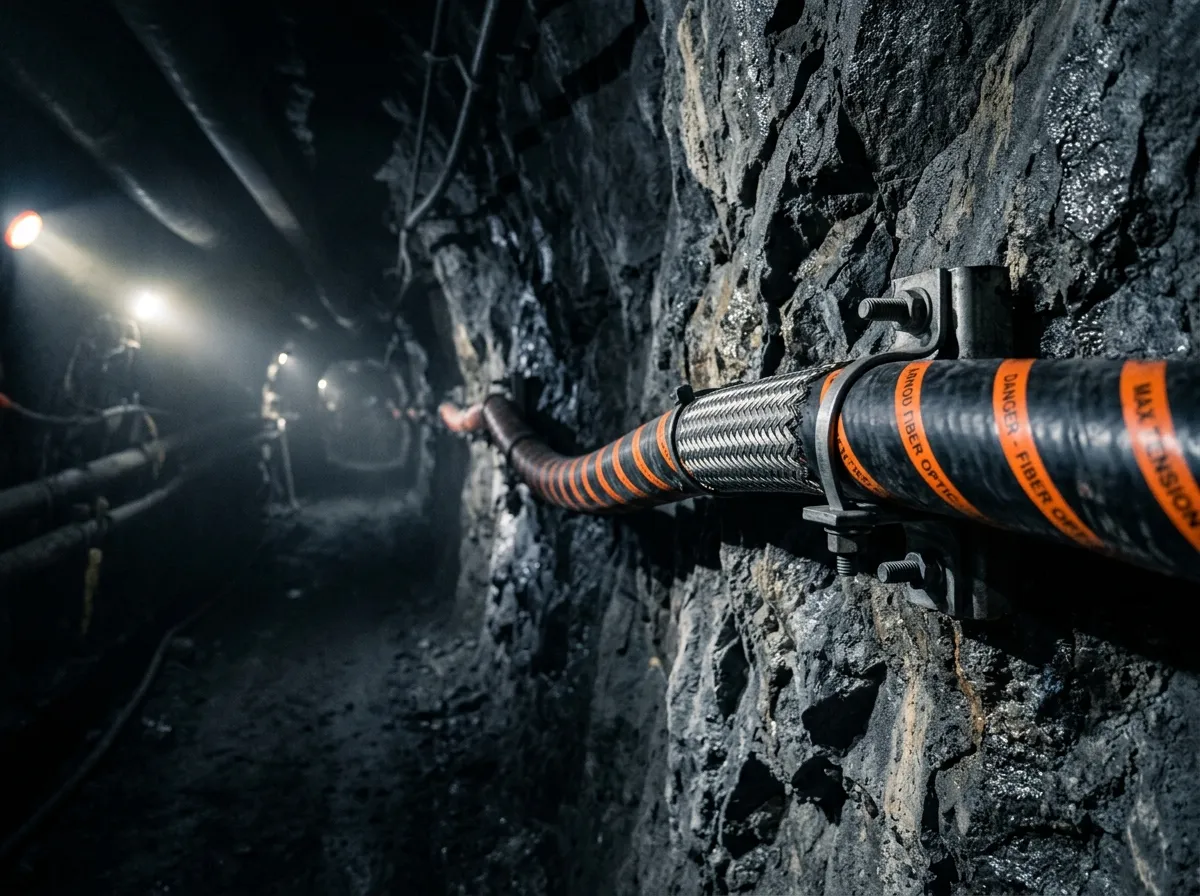
A mine network is a brutal place for cable. Crushing loads from roof falls, standing water, abrasive dust, and high-voltage power runs that would make a copper link useless within months. Pick the wrong fiber optic cable and you are not just replacing it — you are shutting down production while a crew re-pulls it through the drift.
The good news: the choice is systematic, not mysterious. Work through five decisions — environment, certification, construction, fiber count and type, and installation — and you can write your own spec sheet in under an hour. This guide walks through each step, using the standards and construction options that actually apply to mining, from underground coal operations to surface quarries.
Before You Spec: Why Mines Run on Fiber (and Where Copper Still Fits)
Mines switched to fiber for three concrete reasons: electromagnetic interference, distance, and spark safety.
Underground mines are packed with high-voltage feeders and variable-frequency drives. Copper data cabling near that equipment picks up noise that destroys signal integrity. Fiber optic cable is dielectric — no metallic conductor to couple with the interference — which is why leading mining cable vendors lead with it. It also runs distances copper cannot: a single-mode link covers kilometers between shafts without a repeater, while twisted-pair tops out well under 100 meters. And because the glass and most cable elements carry no current, fiber is the natural choice in gassy or dust-explosion zones where a spark could be catastrophic — Corning's look at fiber in unusual places notes the same reasoning for extreme environments generally.
Copper still has a place inside equipment and for short, shielded machine links — but for the network backbone, monitoring loops, and long control runs, fiber wins on every axis that matters in a mine. If you are still running copper between shafts and control rooms, the upgrade path is clear.
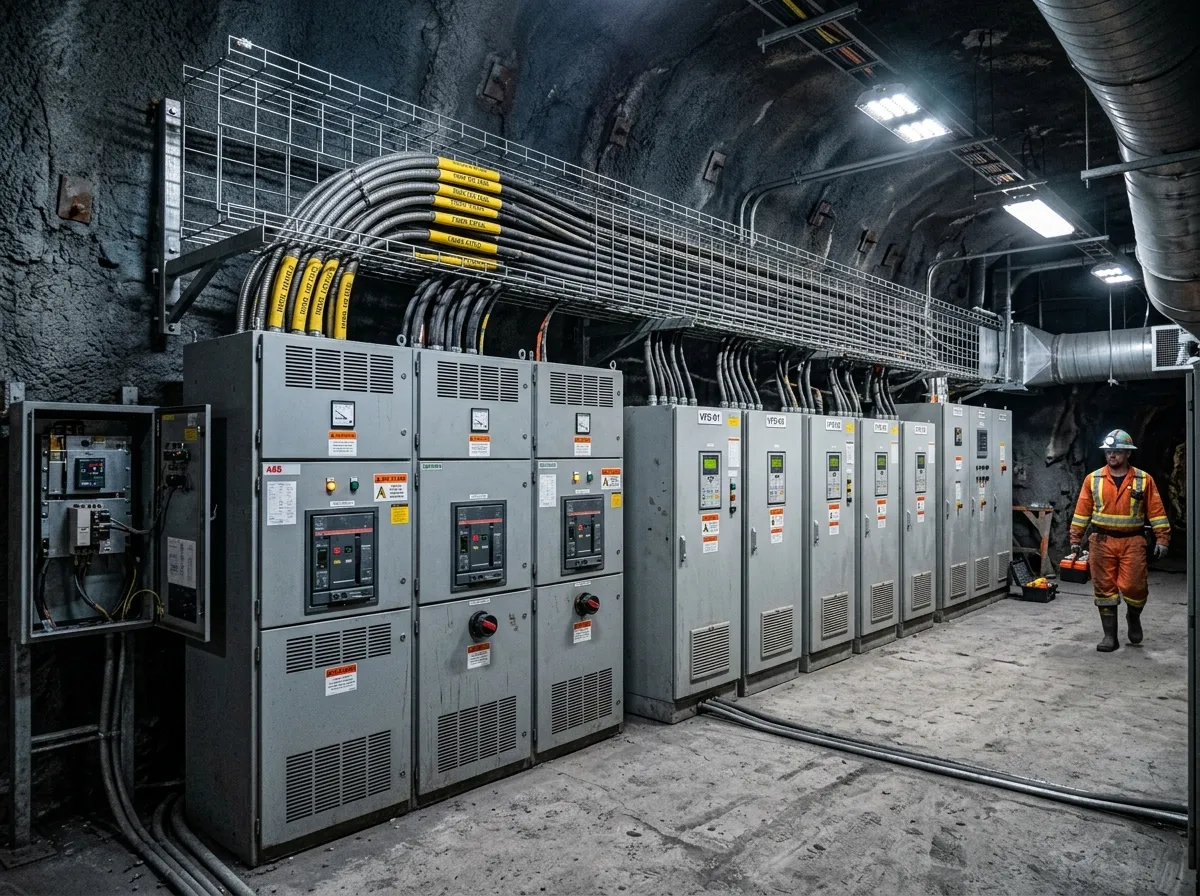
Underground mine electrical equipment is the main reason fiber replaces copper: high-voltage feeders and VFDs radiate noise that copper data links cannot tolerate.
Step 1: Map Your Mine Environment and Cable Route
The cable follows the route, not the other way around. Before looking at any datasheet, write down where this cable will live:
- Underground vs. surface. Underground drifts and shafts mean water, roof falls, and cramped pulls. Surface sites add UV exposure, temperature swings, and possible aerial spans.
- Wet or dry. Standing water in sumps and wet drifts is common. Wet routes force water-blocked or gel-free designs.
- Moving or fixed. Cable that gets reeled, dragged, and repositioned (longwall moves, temporary monitoring) needs flexible, armored, often breakout-style construction — not a stiff distribution cable.
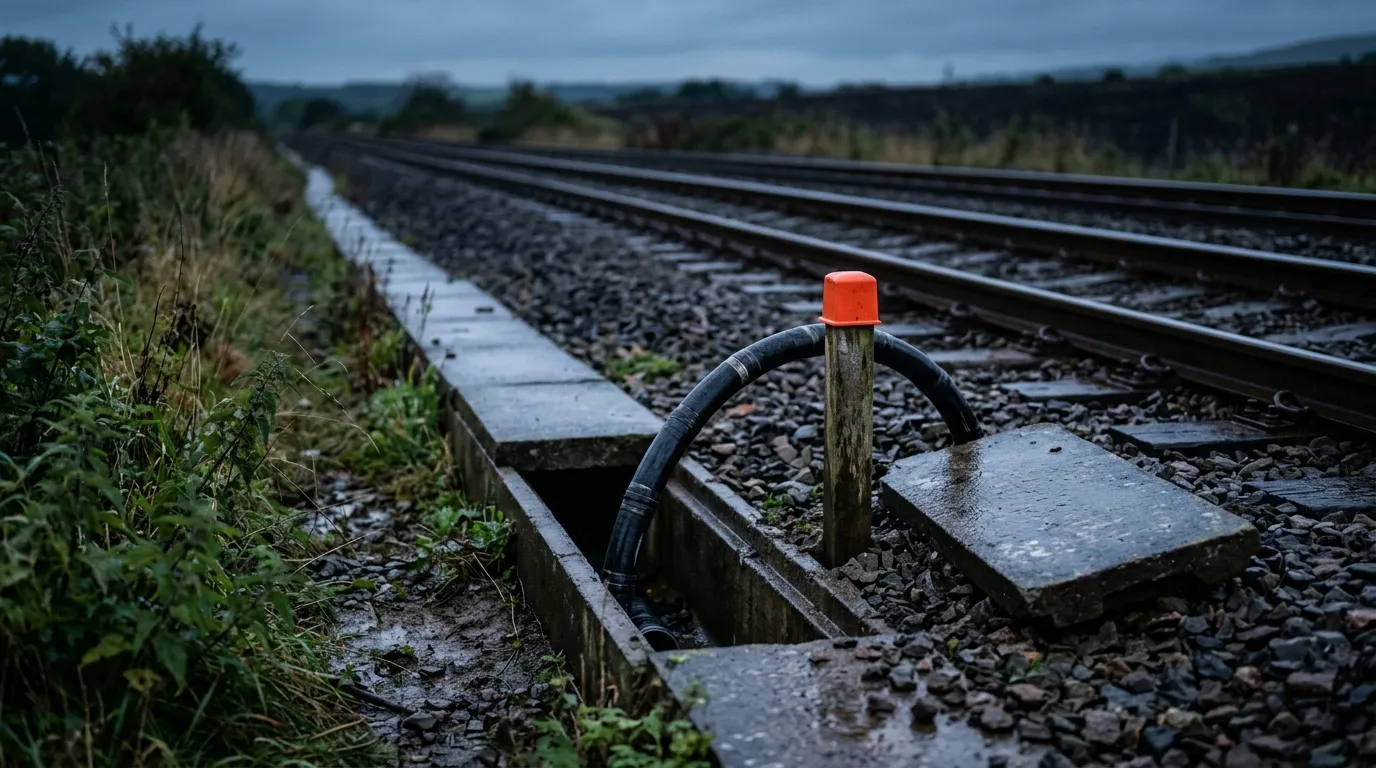
- Aerial sections. Surface runs across open ground are often aerial, where all-dielectric self-supporting (ADSS) cable avoids the cost of messenger wire and grounding. Our underground fiber optic cable guide covers the buried and ducted side of the same decision.
Mines are also adopting reeling and deployable systems so crews can relocate fiber as the working face advances — a practice Mining.com's coverage of deployable fiber systems highlights as a way to keep pace with moving operations. If your network gets dismantled and reinstalled every few months, factor that into every choice below.
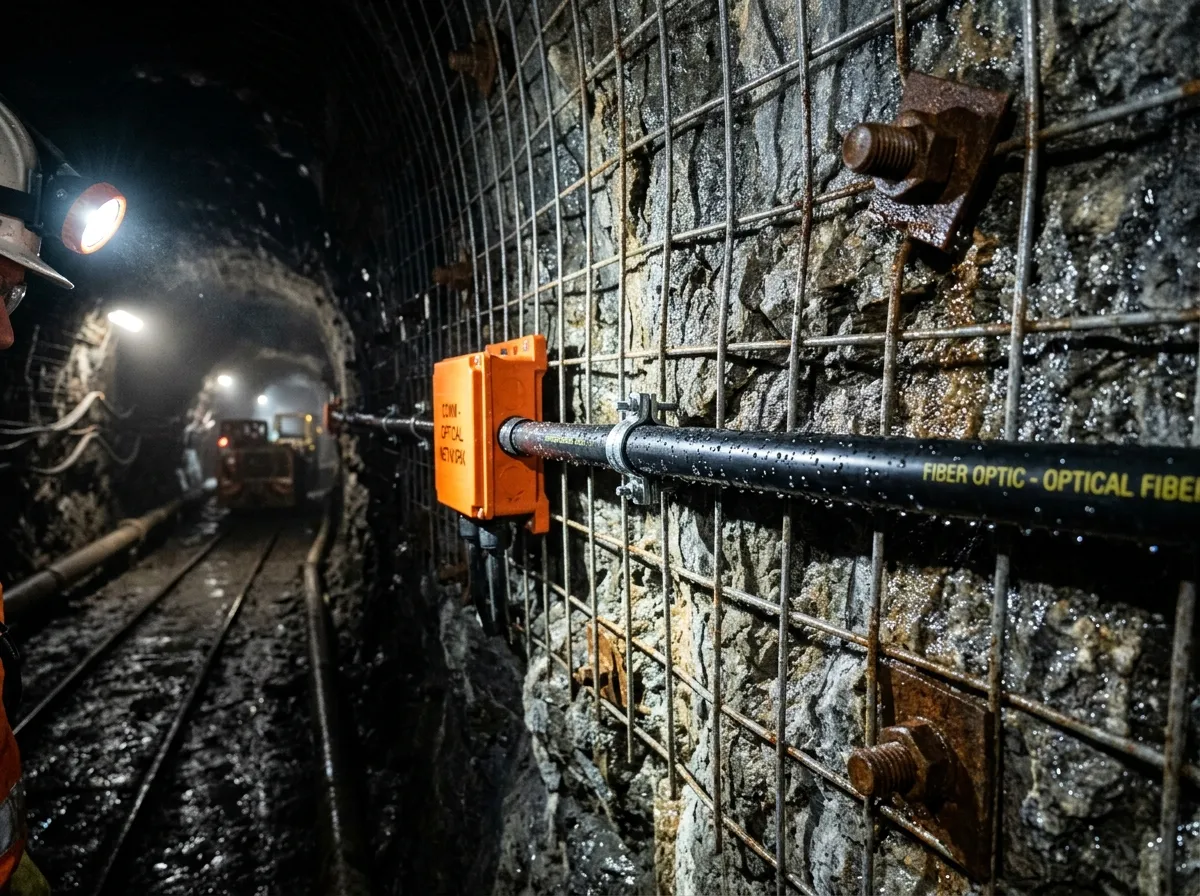
Route survey first: wet drifts, moving equipment, and aerial spans each point to a different cable construction.
Step 2: Match the Cable to the Certifications Your Mine Must Meet
Certification is the least negotiable step, and the one where regional rules diverge most. The three systems you are most likely to hit:
Region / context | Certification or regime | What it drives in the cable |
|---|---|---|
USA — underground coal & metal/nonmetal mines | MSHA (Mine Safety and Health Administration) requirements, incl. post-MINER Act communications upgrades | Flame-retardant, survivable constructions; "MSHA-rated" cable families from vendors |
China — coal mines | Coal Mine Safety (MA) product safety mark | Flame-retardant sheath, anti-rodent protection; the de-facto benchmark for Asian mining cable |
EU / international — fire performance | IEC 60331 fire-resistance, EN 50200 circuit integrity, LSZH / halogen-free jackets, CPR classes | Fire-rated construction, low-smoke zero-halogen materials |
In the U.S., the MINER Act (Mine Improvement and New Emergency Response Act, 2006) pushed mines toward continuous monitoring and reliable emergency communications — which is exactly the class of MSHA-rated fiber optic cable AFL builds for mining: flame-retardant jackets, rugged loose-tube or breakout constructions, and the ability to survive repeated pulls. Note the terminology: "MSHA-rated" is a manufacturer designation for cables designed to meet the demands of MSHA-regulated mines, not an MSHA product certification.
In China, coal mine communication cable carries the MA safety mark, required for products used in coal mines under the national mine safety regulator (the MA scheme has been administered by China's mine-safety authority; as of 2026, oversight sits with the National Mine Safety Administration). As Honecable's explainer on mining fiber cable standards notes, coal mine cable performance requirements effectively became the industry benchmark for other mine types too. If you source for Chinese or Asian operations, MA-compliant, flame-retardant constructions are the baseline.
For fire performance generally, look for cables that meet IEC 60331 (circuit integrity under fire) and low-smoke zero-halogen (LSZH) jackets — in a confined drift, toxic smoke kills faster than flame. Bitner's mining fiber optic cable range is a useful example of how these properties are specified: halogen-free materials, oxygen index above 29, fire resistance to IEC 60331, and fire-integrity to EN 50200. European buyers should also confirm the cable's CPR fire class, which we break down in our guide to outdoor fiber cable CPR ratings.
Step 3: Choose the Construction: Tight-Buffered, Loose Tube, Breakout, and Armor
With the environment and certifications fixed, the construction decisions collapse into four questions.
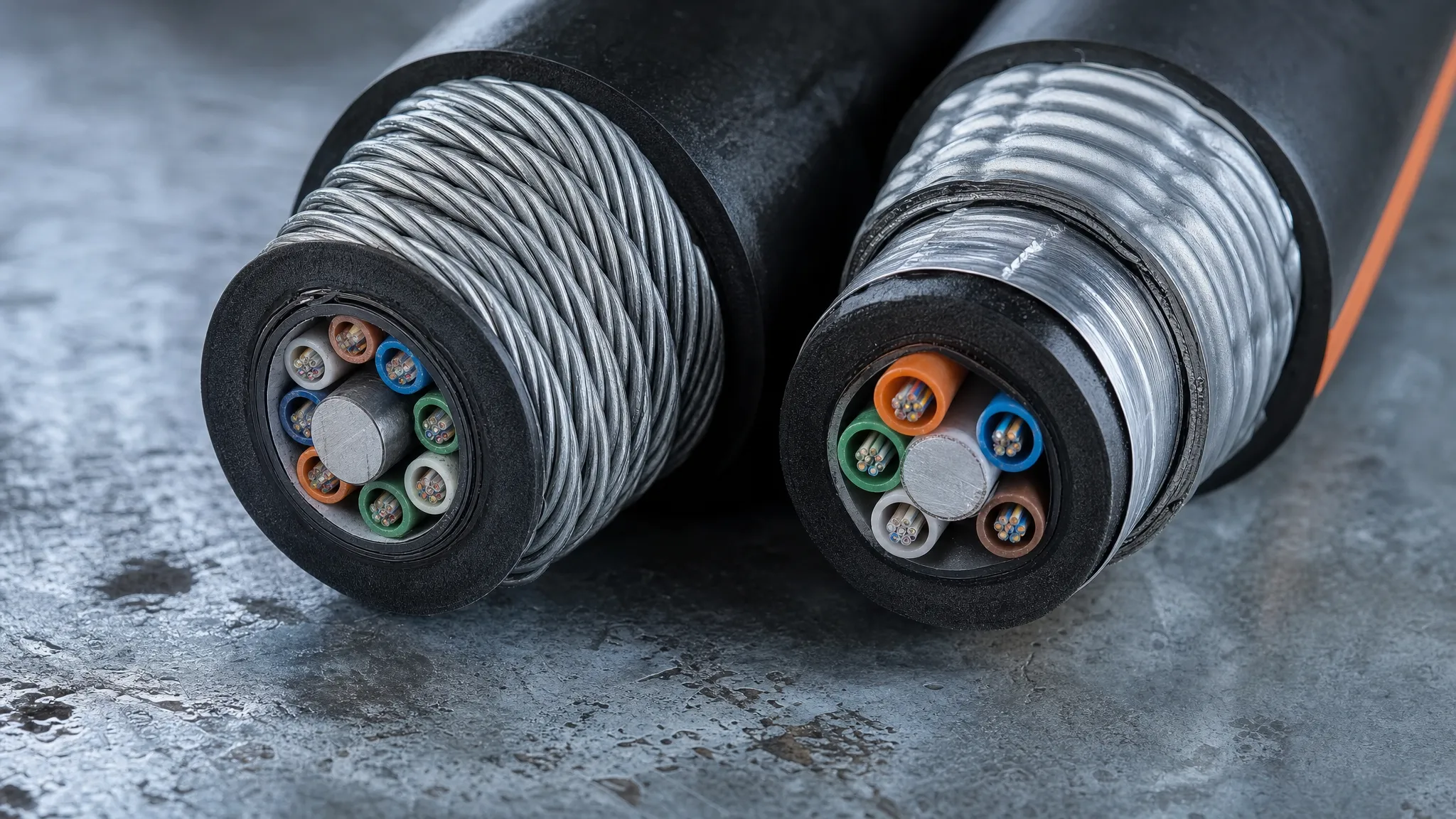
Tight-buffered or loose tube? Tight-buffered cable has a protective coating bonded directly to each fiber — small, flexible, easy to terminate, ideal for short indoor-style runs and equipment rooms. Loose tube cable lets fibers float inside gel- or water-block-filled tubes, which handles temperature swings and crush better — the workhorse for long underground and outdoor runs. The differences, including when each breaks, are covered in depth in our tight-buffered vs. loose-tube comparison.
Distribution or breakout? Distribution cable packs many fibers in one jacket — efficient for long backbone runs. Breakout cable wraps each fiber in its own jacket (often with aramid strength members) so you can terminate individual fibers directly — OCC's B-Series breakout mining cables and AFL's breakout offerings exist precisely because mines need rugged, connector-friendly cable near equipment and in reeling applications.
Armored or not? Underground mining is where armor earns its keep. Steel tape armor adds crush resistance for direct burial and duct; steel wire armor (SWA) adds tensile strength for vertical shaft runs; interlocked armor suits short rugged links. For wet or rodent-prone areas, armor plus water-blocking is the reliable pairing — see our armored fiber optic cable types guide for the full comparison. If a metallic element is a problem (lightning-prone surface routes, or strict dielectric requirements), aramid-reinforced all-dielectric designs cover most of the same needs.
Water, temperature, and vermin. Wet mines demand water-blocked cable — either gel-filled or modern gel-free dry water-blocked designs that keep termination clean. Specify the operating temperature range against your site's extremes (underground stays mild, surface sites can swing hard). And in mines, rodents are not a joke: anti-rodent sheaths and armor are standard on coal mine cable for a reason.
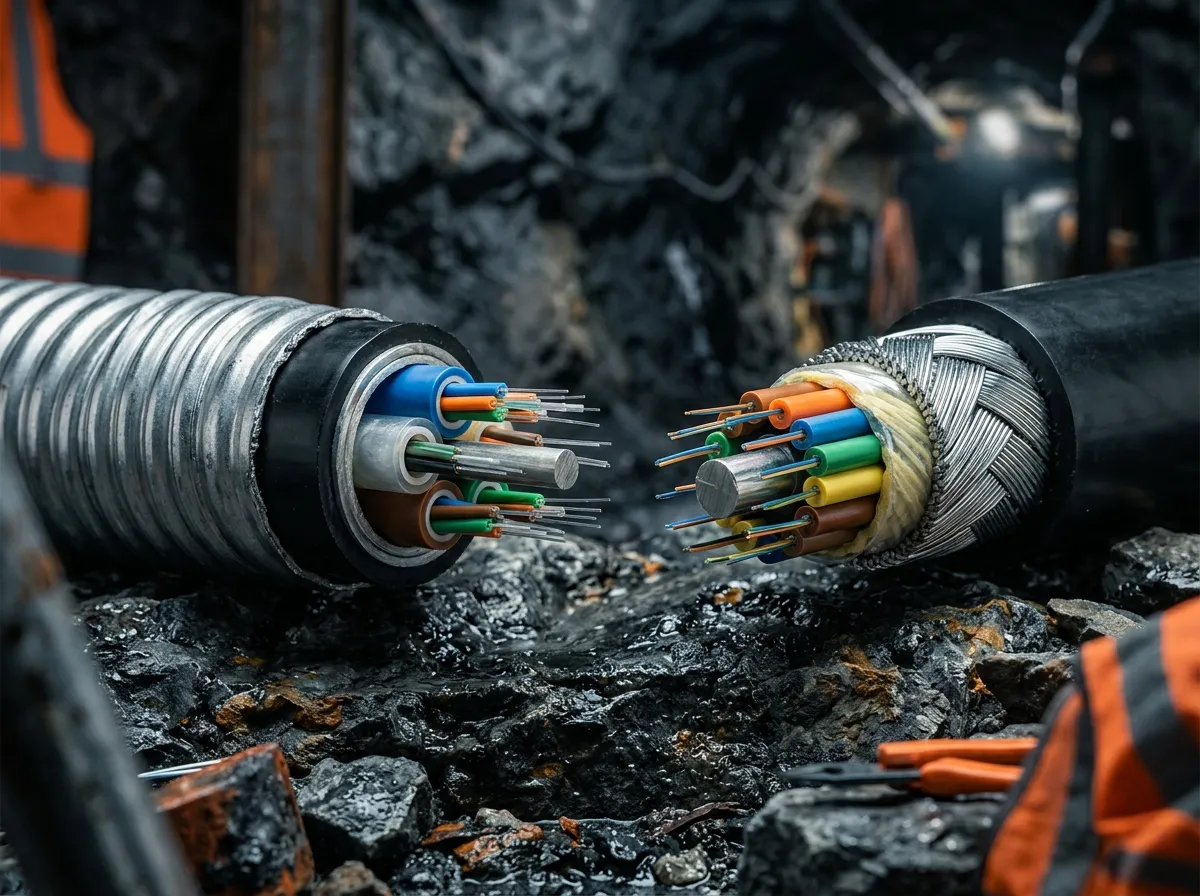
Construction decides survivability: tight-buffered fibers terminate easily, loose tube handles crush and temperature, and armor takes the abuse that kills unarmored cable in mines.
Step 4: Size Fiber Count and Pick Single-Mode or Multimode
Now decide how many fibers, and which type. Count first: walk the route and add up every endpoint — environmental monitoring stations, gas sensors, IP cameras, automation and control networks, voice and data for crews, plus 20–30% growth headroom. Typical mine backbones start at 12–24 fibers and scale to 48–144 for fully monitored operations. Fiber is cheap compared to the labor of pulling it; oversizing by a factor of two costs little and saves a re-pull later.
Then the fiber type:
Fiber type | Typical wavelengths | Realistic reach | Typical use in mining |
|---|---|---|---|
Single-mode (OS2) | 1310 / 1550 nm | 10+ km at 10G, far more at lower rates | Backbones between shafts, long haul, surface links |
Multimode OM3 / OM4 | 850 nm | 300–400 m at 10G (OM3–OM4) | Equipment rooms, short runs, machine links |
For anything spanning between shafts or surface distances, single-mode is the answer. Multimode only makes sense for short, high-bandwidth links inside or near buildings where its cheaper optics win. Our single-mode vs. multimode guide walks through the trade-offs with distance tables if your runs sit near the boundary.
Step 5: Plan Installation: Splicing, Breakout Kits, and Dust-Moisture Protection
The best spec fails in the field if installation isn't planned. Four things decide whether your mining fiber optic cable survives deployment:
Splice or pre-terminate. Fusion splicing gives the lowest loss and is standard for long backbone runs, but needs a clean environment and skilled hands. Pre-terminated and plug-and-play assemblies trade a little loss for speed — valuable where downtime is measured in hours and where crews rotate. Breakout kits let you terminate individual fibers on rugged cable without a full splice trailer.
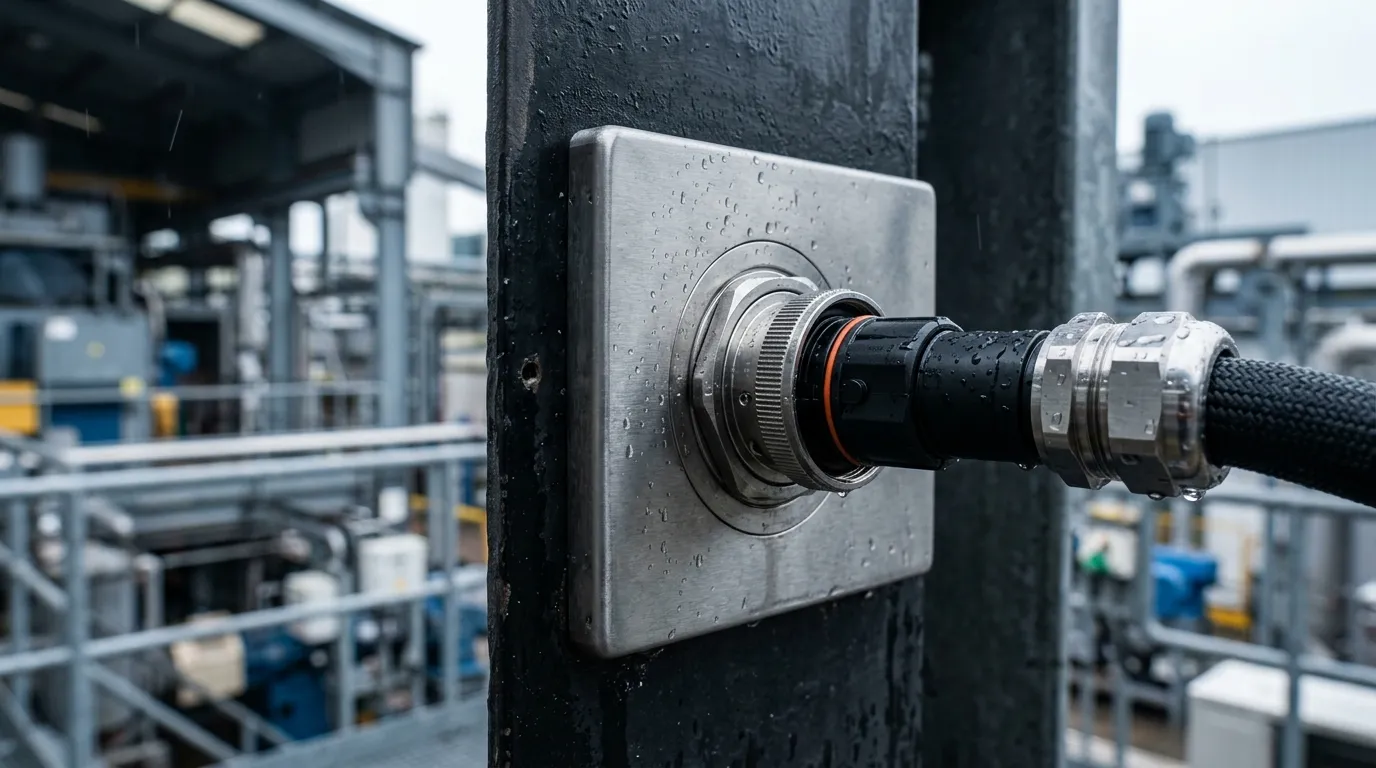
Protect every connection. In mines, the connector is the weak point: dust, water spray, and vibration degrade unsealed terminations fast. Use sealed splice closures and IP-rated enclosures at every transition, and keep spare breakout kits on site. We cover enclosure and closure selection in our industrial fiber optic cable guide, which frames the same decisions for harsh environments generally.
Respect the bend radius. Dynamic bending during pulls — not static installed radius — is what breaks fibers. Spec cable and installation practices with generous bend-radius margins, and use armored or breakout designs where tight radiuses are unavoidable.
Plan for redeployment. If the network moves with the working face, budget for reeling-friendly cable, ruggedized connectors that survive repeated mating, and labeled spares. OCC's deployable reel systems and Mining.com's overview of deployable fiber in mining both make the case that planned redeployment is cheaper than emergency re-pulls.
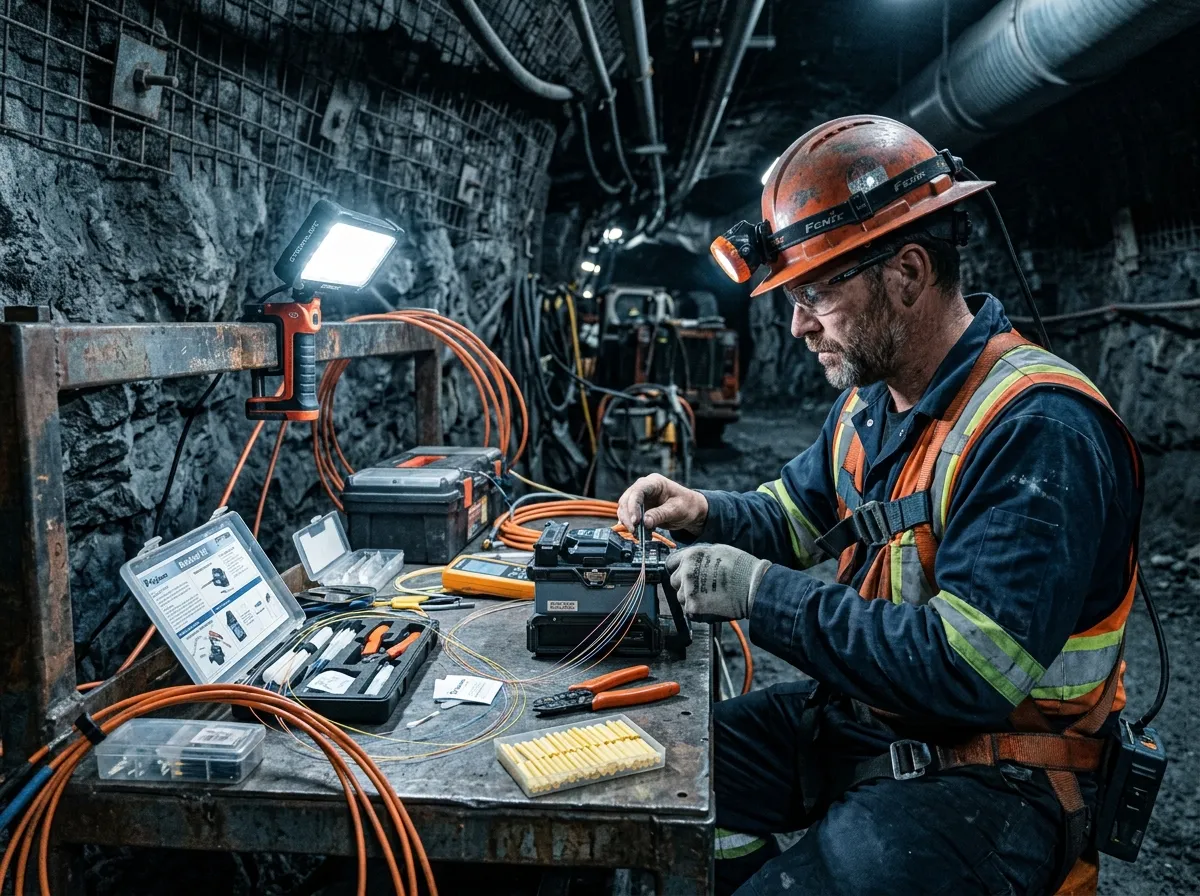
Field termination is where mining fiber networks live or die: sealed enclosures, breakout kits, and bend-radius discipline decide link reliability.
A 12-Point Spec Checklist for Your Mining Fiber Optic Cable Order
Hand this list to any cable supplier, and you will get a comparable quote instead of a brochure:
- Mine environment and route class (underground / surface / wet / aerial / reeling)
- Certifications required for the region (MSHA-rated, MA mark, IEC 60331, LSZH, CPR class)
- Construction (tight-buffered / loose tube) with rationale
- Breakout vs. distribution
- Armor type (steel tape / steel wire / interlocked / none / dielectric)
- Water blocking (gel-free dry or gel-filled)
- Fiber count with 20–30% growth margin
- Fiber type (single-mode OS2 or multimode OM3/OM4)
- Operating temperature range for the site
- Dynamic and static bend radius limits for your pulling method
- Termination plan (fusion splice / pre-terminated / breakout kits)
- Spares and redeployment strategy
Every reputable manufacturer can quote against these twelve lines. If a supplier cannot or will not commit on any of them, that is your answer. For more depth on the broader industrial picture — temperature ratings, jacket materials, and spec-sheet traps — the industrial fiber optics hub collects everything this series covers, including substation cabling for neighboring harsh-environment sites.
FAQ: Mining Fiber Optic Cable Questions
Is there any metal in mining fiber optic cable? The fibers and most jackets are dielectric — no copper conductor. But armored cables deliberately add steel tape or steel wire for protection. If a fully dielectric cable is required (lightning-prone surface routes, strict grounding rules), specify all-dielectric construction with aramid strength members.
How deep should mining fiber optic cable be buried? For surface sections, burial depth follows the same rules as any outdoor plant — deep enough to clear equipment traffic and frost, and armored or ducted where disturbance is likely. Underground, cable runs in drifts and shafts, where armor and water blocking matter more than depth.
What is the difference between mining fiber cable and regular fiber optic cable? Mining-specific cable adds flame-retardant and often anti-rodent sheaths, mechanical armor, and water blocking to survive mine conditions — plus regional certifications like MSHA-rated or MA-marked designs that regular outdoor cable does not carry.
How long does mining fiber optic cable last? Installed and protected correctly, fiber itself is rated for 20–30 years of service. In mines, the practical lifetime is set by mechanical abuse — which is why armor, water blocking, and planned redeployment, not the glass, determine how often you replace cable.
Getting the Cable Right: Next Steps
Five decisions — environment, certification, construction, fiber count and type, and installation — cover most of the common mistakes made in mining cable selection. Write your twelve-point spec, get three comparable quotes, and verify every certification claim against the standards bodies before you sign.
If you are sourcing mining fiber optic cable and want to skip the trial-and-error, TTI Fiber manufactures armored, breakout, and flame-retardant fiber optic cable for harsh environments, and our engineers can sanity-check your spec sheet against your actual route. Send us your checklist and we will come back with a construction recommendation, not a sales pitch.