Fibre Optic Connector Types: SC, LC, ST & FC
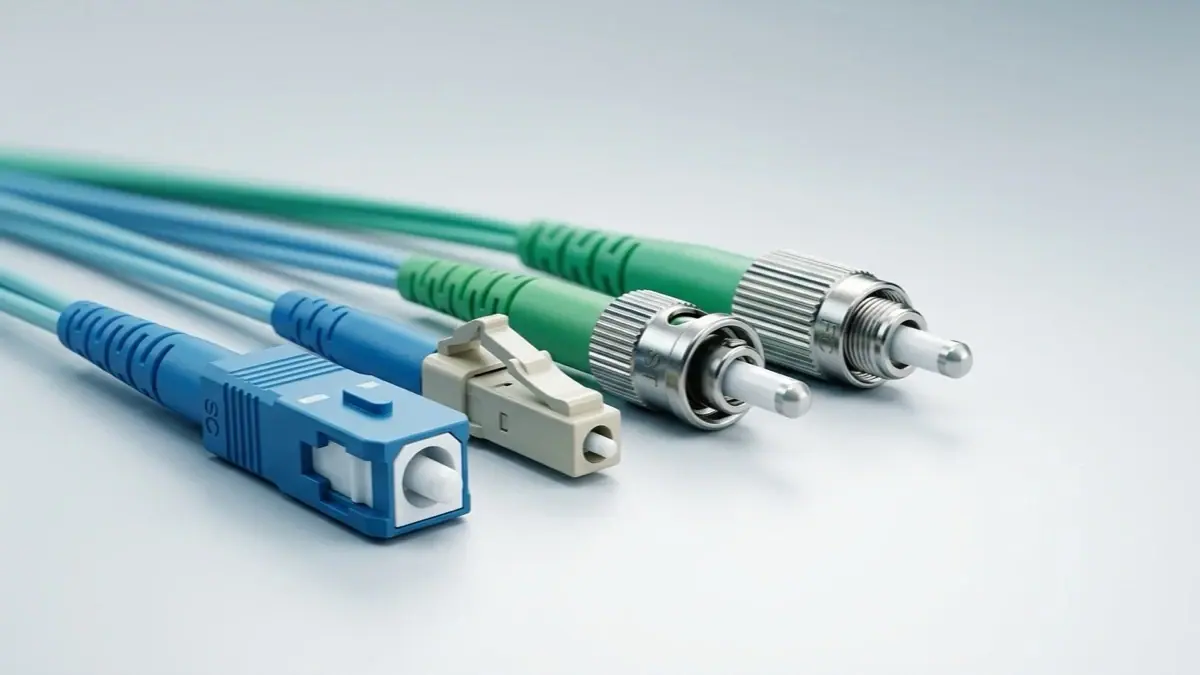
Ask ten network engineers to name the fibre optic connector types they meet in the field, and you will hear the same four acronyms first: SC, LC, ST and FC. They cover the overwhelming majority of terminated fibre in telecoms, FTTH and enterprise networks — yet they are constantly confused, because on a patch panel a bank of them can look almost identical. Pick the wrong one and a link either will not mate, or it mates and quietly bleeds signal through a polish mismatch you cannot see with the naked eye.
This guide compares fibre optic connector types (also spelled fiber optic in the US) the way someone specifying or terminating a link actually has to think about them: by ferrule size, coupling mechanism, endface polish, colour code, and — the part most guides skip — a clear framework for choosing the right connector for the job. We cover the big four in depth, the high-density MPO/MTP and emerging small-form-factor connectors above them, and the international standards (IEC 61754, TIA-604/FOCIS, Telcordia GR-326) that govern them.
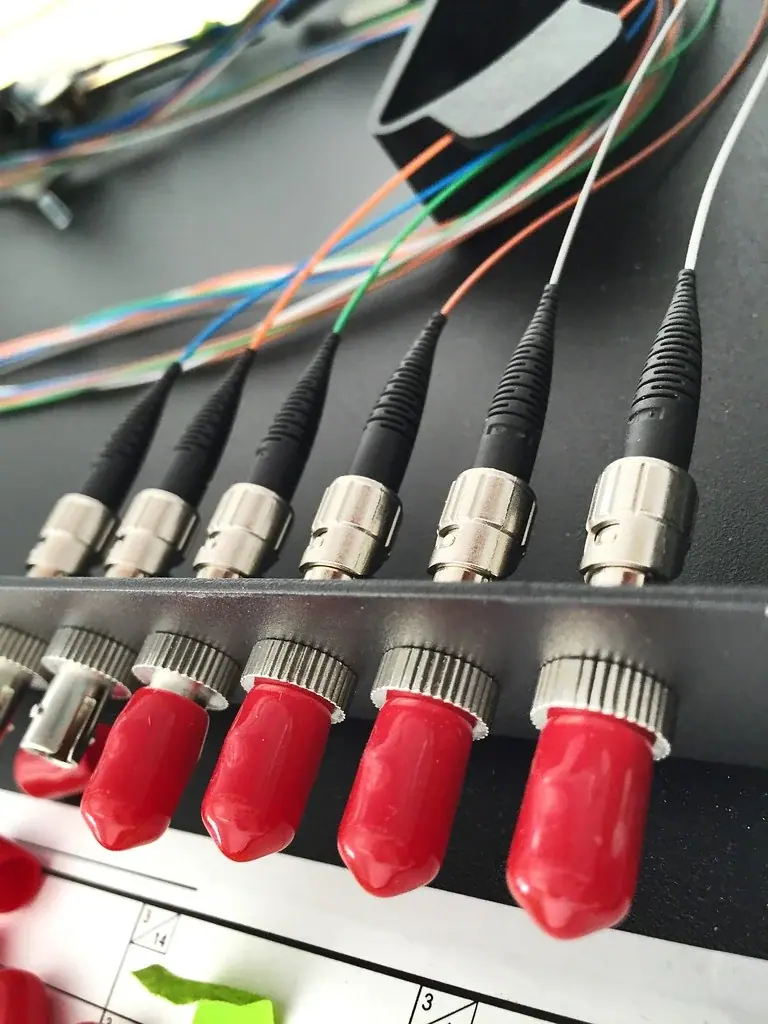
Metal-ferrule fibre optic connectors and pigtails terminated in a real distribution frame — the environment where connector choice actually plays out. The red caps protect unmated ferrules from dust and scratches. *Photo by Jonathan Cutrer via Flickr, CC BY 2.0*
The Main Fibre Optic Connector Types at a Glance
If you read nothing else, read this table. The rest of the article explains why each row reads the way it does — and where the simple numbers hide a decision that can cost you a re-termination.
Attribute | SC | LC | ST | FC |
|---|---|---|---|---|
Full name | Subscriber / Square Connector | Lucent Connector | Straight Tip | Ferrule Connector |
Ferrule diameter | 2.5 mm | 1.25 mm | 2.5 mm | 2.5 mm |
Coupling mechanism | Push-pull | Push-pull latch | Bayonet (twist-lock) | Screw / threaded |
Form factor | Standard | Small form factor (SFF) | Standard | Standard |
Simplex / duplex | Both | Both (clipped pair) | Simplex | Simplex |
Typical insertion loss (grade-dependent) | ≤ 0.30 dB | ≤ 0.30 dB | ≤ 0.30 dB | ≤ 0.30 dB |
IEC interface standard | IEC 61754-4 | IEC 61754-20 | IEC 61754-2 | IEC 61754-13 |
Best-fit application | FTTH / PON, datacom | High-density data centres, SFP/SFP+ | Multimode LANs, campus, legacy | Test & measurement, high-vibration |
The headline takeaway: LC is the odd one out on ferrule size (1.25 mm vs 2.5 mm for the other three), and that single fact is why LC won the data centre — you can fit twice as many LC ports in the same panel width. Everything else is a story of how the connector locks: push-pull, twist, or screw.
Anatomy of a Fibre Optic Connector
Before comparing types, it helps to see what every connector shares. Strip away the housing and all four of these connectors do the same three jobs.
- The ferrule is the precision cylinder — almost always ceramic (zirconia) — that holds the bare fibre dead-centre and presents its polished endface for mating. Ferrule diameter is the single most important spec: 2.5 mm (SC, ST, FC) or 1.25 mm (LC, and MU). Two connectors with different ferrule sizes cannot mate through a standard adapter.
- The coupling mechanism holds two ferrules in contact under spring pressure. This is what your eyes and fingers use to tell connectors apart: push-pull (SC, LC), bayonet twist (ST), or threaded screw (FC).
- The endface polish — PC, UPC or APC — controls how cleanly light crosses the joint. More on this below; it is where most avoidable loss hides.
Two more terms you will meet constantly: a connector can be simplex (one fibre) or duplex (two fibres clipped together for transmit/receive), and it always mates through an adapter (also called a mating sleeve or coupler) that aligns the two ferrules tip-to-tip. When a connector is factory-fitted to a short cable it becomes a patch cord (both ends connectorised) or a pigtail (one end connectorised, the other spliced).
SC, LC, ST and FC Connectors Explained
SC Connector (Subscriber Connector)
The SC connector is a square-bodied, 2.5 mm ferrule connector with a simple push-pull coupling — push to seat, pull the housing to release. That snap-in action, plus a low and repeatable insertion loss, made SC the workhorse of FTTH and PON access networks, where the vast majority of subscriber drops terminate on an SC/APC (green) connector — in the UK, for example, Openreach's FTTP network standardises on SC/APC at the customer premises. It is also common in datacom uplinks and older telecom frames. SC is standardised as IEC 61754-4. Its one drawback is size: at 2.5 mm it takes up roughly twice the panel space of an LC, which is why it never migrated into high-density data centre switching.
LC Connector (Lucent Connector)
The LC connector is the small-form-factor champion. It uses a 1.25 mm ferrule — half the diameter of SC — and a retaining latch similar to an RJ45 clip. That halving of ferrule size is the whole point: an LC duplex occupies the same footprint as a single SC, so switch and server faceplates can pack far more ports. LC is the default connector on SFP, SFP+, SFP28 and QSFP breakout transceivers, which is why it dominates modern data centres and enterprise cores. It is governed by IEC 61754-20. If you are building anything high-density today, LC is the safe default.
ST Connector (Straight Tip)
The ST connector is instantly recognisable by its round body and bayonet coupling — push in and twist a quarter turn to lock, like a BNC. It carries a 2.5 mm ferrule and is overwhelmingly a multimode connector, still found across campus LANs, building risers and legacy security/CCTV runs. Its weakness is the twist-lock itself: in a dense panel it is fiddly to grip, and the spring-loaded bayonet can back off under vibration. New installs rarely specify ST, but any technician working on existing infrastructure meets it constantly. For a deeper look at where ST still earns its place, see our guide on what an ST (straight tip) connector is.
FC Connector (Ferrule Connector)
The FC connector uses a threaded screw coupling — you literally screw the connector onto the adapter. That makes it slow to mate but exceptionally stable: it will not vibrate loose and it holds the ferrule alignment rock-steady, which is why FC survives in test and measurement (OTDR test leads), high-vibration industrial settings, and precision single-mode applications long after it disappeared from mainstream telecoms. It is standardised as IEC 61754-13 (the FC-PC family). Think of FC as the connector you choose when repeatability matters more than speed.
SC vs LC vs ST vs FC: The Key Differences
Line the four up and the decision almost always comes down to three questions.
1. How much space do you have? This is the LC-vs-everything divide. LC's 1.25 mm ferrule means twice the port density of SC/ST/FC. In a data centre or a crowded patch panel, density wins and LC is the answer. In an access network or a wall box where space is not tight, SC's larger, more forgiving connector is easier to handle in the field.
2. How is it locked, and does that matter? Push-pull (SC, LC) is fastest and best for dense panels. Bayonet (ST) is quick but can loosen under vibration. Screw-thread (FC) is slowest but the most secure — the right choice for test leads and moving machinery.
3. Single-mode or multimode? ST is historically a multimode connector; FC leans single-mode/precision; SC and LC are equally at home on both. The connector body does not change the fibre inside it, but the application strongly predicts which connector you will find.
SC vs LC is the comparison people search for most, because it is the real-world choice in modern networks: SC for access/FTTH, LC for high-density switching. They are not interchangeable — different ferrule sizes and housings mean you cannot mate an SC to an LC without a hybrid patch cord that has one of each connector on its two ends.
Endface Polish and Colour Codes: PC, UPC and APC
Two connectors of the same type can still perform very differently depending on how their ferrule endface is polished. This is the detail that separates a clean link from an intermittent one.
- PC (Physical Contact) — a lightly domed polish so the fibre cores touch. Baseline performance; return loss around 40 dB (higher is better — return loss is a positive figure).
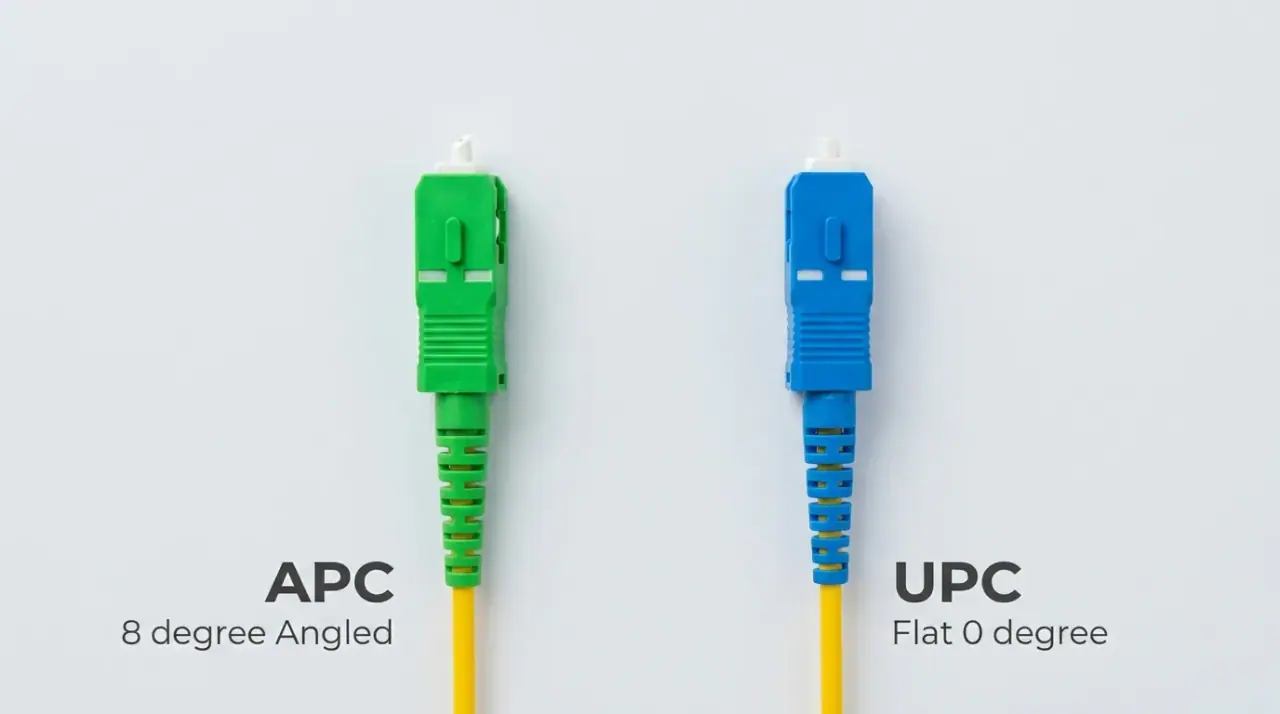
- UPC (Ultra Physical Contact) — a finer, more precise dome. Lower back-reflection, typically return loss ≥ 50 dB. Identified by a blue connector body/boot on single-mode.
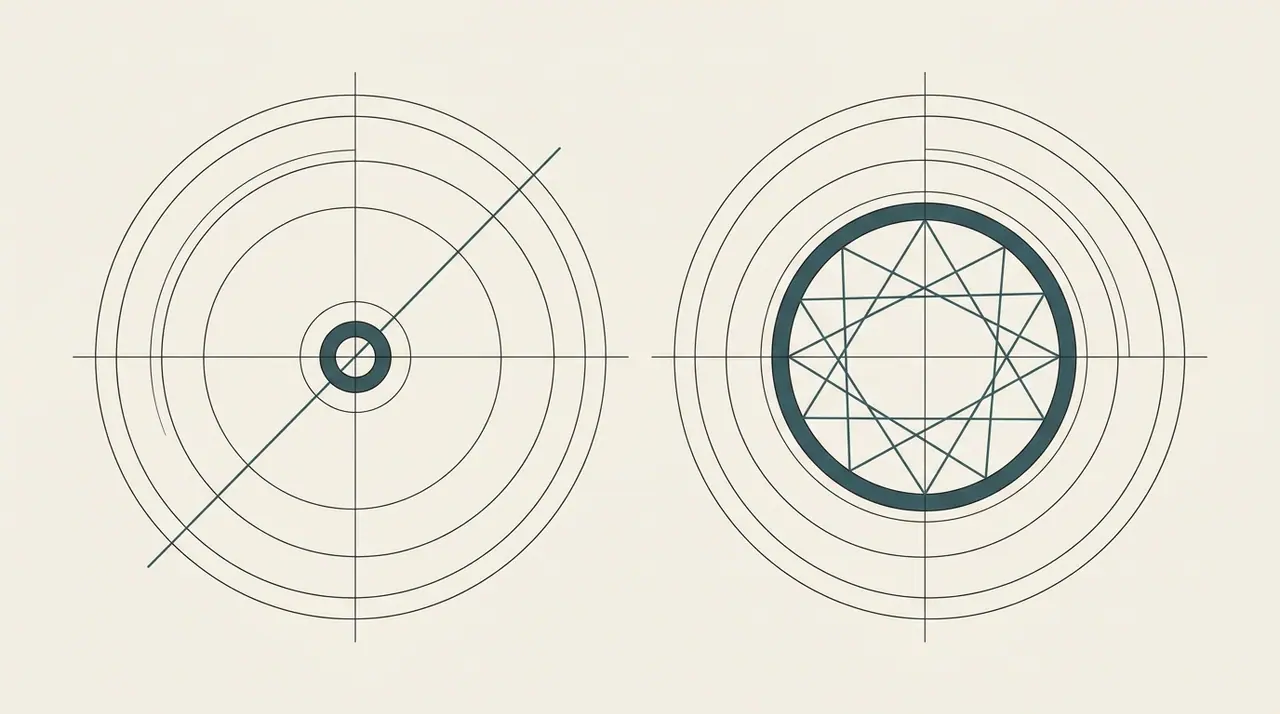
- APC (Angled Physical Contact) — the endface is polished at an 8° angle so any reflected light bounces into the cladding instead of straight back up the fibre. Best back-reflection performance, return loss ≥ 60 dB, and mandatory for RF-over-glass, PON and any high-bit-rate or analogue-video link. Identified by a green body/boot.
A quick word on the numbers: return loss is quoted as a positive dB value and bigger is better (APC ≥ 60 dB beats UPC ≥ 50 dB). You will sometimes see the same thing written as a negative reflectance (−60 dB, −50 dB) — it is the same measurement, just the opposite sign convention. Insertion loss is the loss added by the mated pair and smaller is better.
Putting it together, here is the specification table that spec sheets rarely lay out in one place — typical values for a quality single-mode connector (exact figures are grade-dependent; a connector's grade under IEC 61753 or Telcordia GR-326 sets the guaranteed maximum):
Polish | Endface | Typical insertion loss | Typical return loss | Body colour | Where it's used |
|---|---|---|---|---|---|
PC | Domed, flat contact | ≤ 0.50 dB | ≥ 40 dB (single-mode) | beige / black | Legacy, multimode |
UPC | Ultra-domed | ≤ 0.30 dB | ≥ 50 dB | blue | Digital single-mode, most datacom |
APC | Angled 8° | ≤ 0.30 dB | ≥ 60 dB | green | PON / FTTH, RF-over-glass, analogue video |
For multimode links the return-loss requirement is far looser (typically ≥ 20–30 dB), which is why multimode connectors are almost always PC-polished rather than APC.
The colour code is not decorative — it is a safety interlock. Blue = UPC, green = APC, and the two must never be mated: an APC's angled ferrule pressed against a flat UPC ferrule makes poor contact and can physically damage both endfaces. On multimode, connector bodies are typically beige/black (PC). This convention follows the TIA-568 colour scheme, and the Fiber Optic Association's connector identifier is the reference technicians use in the field.
Why does this matter for a real link budget? Because insertion loss and return loss are what you are actually buying with a good connector. If you are unsure what "good" looks like on a test report, our explainer on what counts as a good dB loss for fibre optics puts the numbers in context.
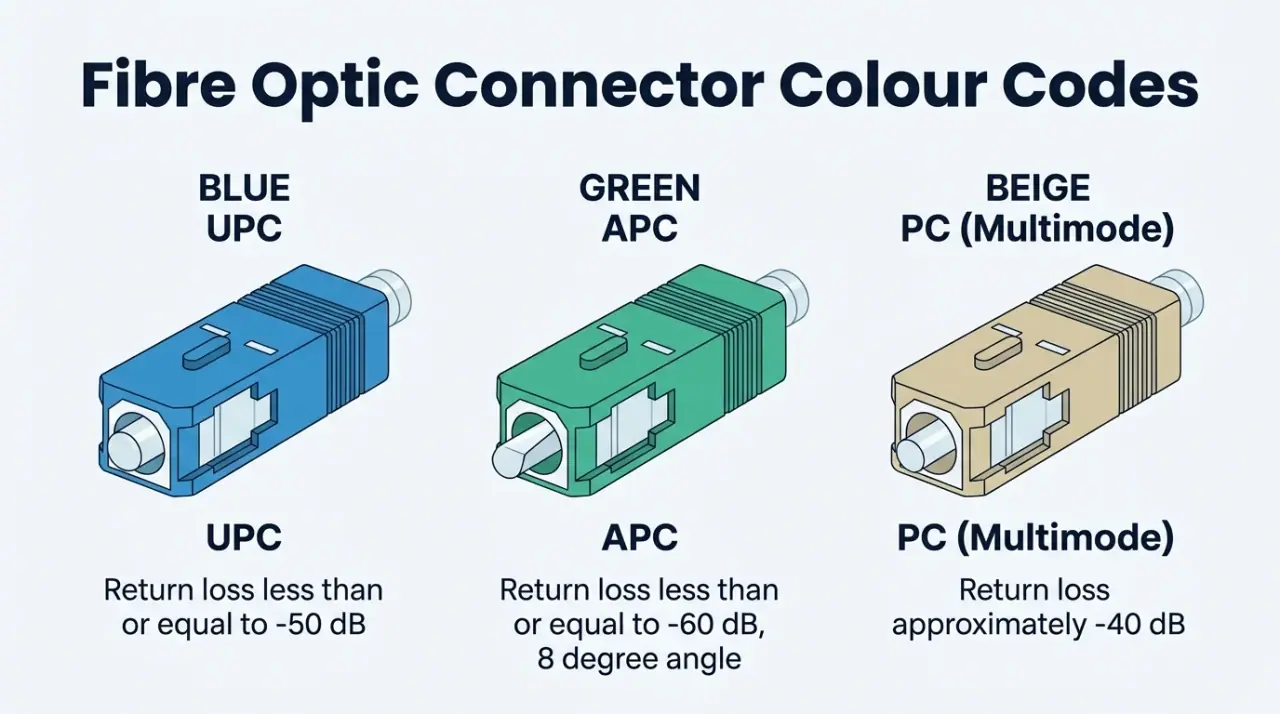
Endface polish drives back-reflection: blue UPC ferrules are flat-domed, green APC ferrules are angled 8° so reflected light escapes into the cladding. Never mate a green APC to a blue UPC.
Single-Mode vs Multimode Connectors
A common misconception is that "single-mode connectors" and "multimode connectors" are different parts. Mechanically, an SC is an SC whether it terminates single-mode or multimode fibre — the housing and ferrule are the same. What changes is:
- Colour and polish. Single-mode links use blue (UPC) or green (APC) bodies; multimode uses beige/aqua. Single-mode demands the tighter alignment tolerances and often APC polish because its 9 µm core is far less forgiving of back-reflection.
- Which connectors you actually meet. ST is overwhelmingly multimode; APC-polished connectors are almost always single-mode. SC and LC span both.
If you need to work out which fibre you are terminating in the first place, our guide to the OM1–OM4 multimode grades explains the mode types and their colour coding. The connector you choose should always match the fibre and the polish the link was designed around.
Beyond the Big Four: MPO/MTP, VSFF and Legacy Connectors
SC, LC, ST and FC cover single- and dual-fibre links, but two other families matter.
MPO / MTP (multi-fibre). An MPO connector carries 12, 24 or more fibres in a single rectangular ferrule, mated with keyed push-pull coupling and polarity managed by a key-up/key-down convention. MTP is a high-performance branded MPO. This is the backbone of 40G, 100G and 400G data centre trunking, where a single connector replaces a dozen LCs. If you deal with high-speed links, our overview of fibre optic data rate shows why parallel-fibre MPO became necessary.
VSFF (very-small-form-factor). As switch faceplates fill up, connectors even denser than LC are emerging: SN, MDC, CS and MMC. They shrink the ferrule pitch further to feed 400G/800G breakout without growing the panel. You will not meet these in access networks yet, but they are the direction data centres are heading.
Legacy and specialist. For completeness you may still encounter E2000/LSH (spring-loaded dust shutter, telecom/high-power), MT-RJ (duplex SFF with pin alignment), MU (1.25 mm, popular in Japan), SMA (metal-ferrule, industrial/laser) and the obsolete Biconic and D4. These rarely appear in new designs but keep turning up in brownfield sites.
How to Choose the Right Fibre Optic Connector
Most guides end with a vague "it depends." Here is the decision the way it actually plays out, by scenario.
Your scenario | Recommended connector | Why |
|---|---|---|
FTTH / PON access drop | SC/APC (green) | Industry-standard for subscriber terminations; APC controls back-reflection on RF/video overlays |
Data centre / high-density switching | LC (duplex) or MPO/MTP for 40G+ | Maximum port density per rack unit; MPO for parallel-optics trunks |
Campus / enterprise multimode LAN | LC, or ST on legacy runs | LC for new build; match ST where the existing panel uses it |
Test & measurement / OTDR leads | FC | Threaded coupling holds alignment stable through repeated mating |
High-vibration / industrial | FC or E2000 | Screw or latched coupling resists loosening |
Long-haul / analogue video | Any type, APC polish | The polish (APC) matters more than the connector body here |
Two rules cut through almost every choice:
- Match the installed base. In a brownfield network, the connector already on the panel usually decides for you — mixing types multiplies adapters and hybrid leads.
- Let the application pick the polish. Choose APC for PON, RF-over-glass and any analogue/high-bit-rate link; UPC is fine for most digital single-mode; multimode stays PC.
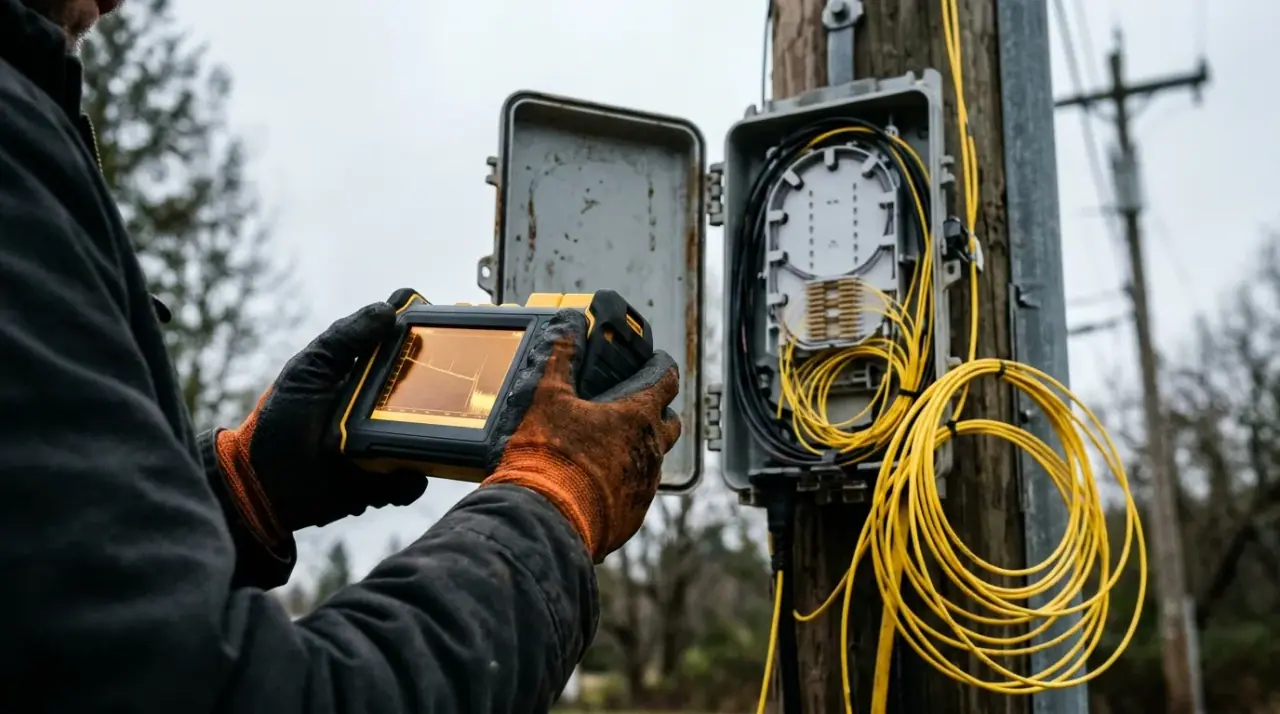
Where these connectors physically live — the splice closures, ODFs and patch panels that host them — is its own subject. If you manage outside-plant terminations, our guide to common issues with outdoor fibre termination boxes covers the enclosure side of the link, and our FTTP / FTTH / FTTB / FTTD breakdown maps where each connector type sits in the access network.
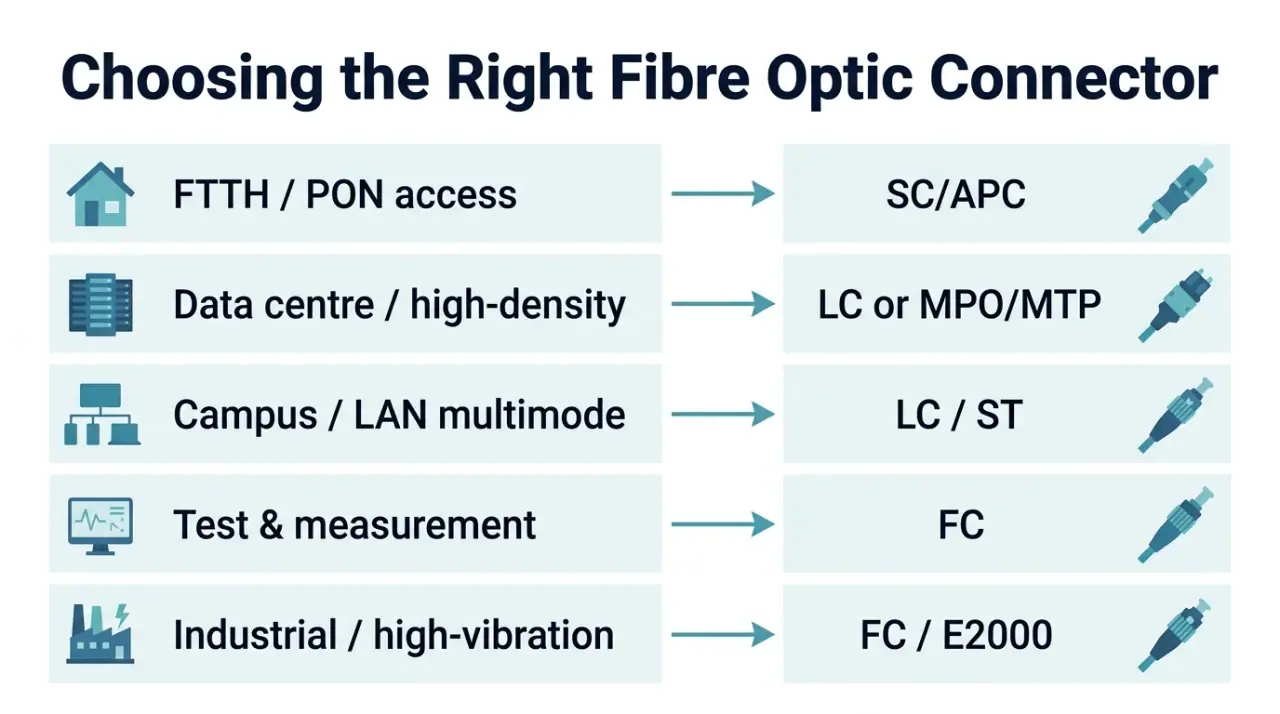
Match the connector to the job: SC/APC for FTTH, LC or MPO for the data centre, FC for test leads, and let the application decide the polish.
How to Identify a Fibre Optic Connector
Faced with an unlabelled patch cord, work through it in this order:
- Look at the coupling. A twist-and-lock round body is an ST. A screw thread is an FC. A square push-pull body is an SC. A small connector with an RJ45-style latch, usually in clipped pairs, is an LC.
- Check the ferrule size. 2.5 mm = SC/ST/FC; 1.25 mm = LC/MU.
- Read the colour. Blue body = single-mode UPC; green = single-mode APC; beige/black = multimode; aqua = OM3/OM4 multimode.
- Count the fibres. One = simplex; a clipped pair = duplex; a wide rectangular ferrule with many fibres = MPO/MTP.
Those four checks identify better than 95% of connectors you will meet in the field.
The Standards Behind the Connectors
For anyone writing to a specification, the connector families are governed by international standards — the layer almost no vendor guide mentions:
- IEC 61754 series defines the physical connector interface per family: IEC 61754-4 (Type SC), IEC 61754-20 (Type LC), IEC 61754-2 (Type ST/BFOC) and IEC 61754-13 (Type FC-PC). These guarantee that a connector from one maker mates with an adapter from another. In the UK and Europe the same documents are adopted as BS EN 61754 / EN 61754, so a British specification referencing the connector interface points to the identical dimensions.
- TIA-604 / FOCIS (Fibre Optic Connector Intermateability Standards) is the North American equivalent, ensuring cross-vendor intermateability.
- Telcordia GR-326-CORE is the single-mode connector reliability benchmark — the most rigorous spec for insertion loss, return loss, durability (500–1,000 mating cycles) and environmental endurance. When a datasheet claims "GR-326 compliant," that is what it is promising. The full connector taxonomy is catalogued in the Wikipedia optical fibre connector reference.
Frequently Asked Questions
What are the four main types of fibre optic connector? SC, LC, ST and FC. SC and LC use a push-pull coupling, ST uses a bayonet twist, and FC uses a threaded screw. LC is the only one of the four with a 1.25 mm ferrule; the rest use 2.5 mm.
What is the most common fibre optic connector? It depends on the network. SC/APC dominates FTTH and PON access, while LC dominates data centres and anything using SFP transceivers. Between them they account for most terminated single-mode fibre today.
What is the difference between SC and LC connectors? Both are push-pull, but LC uses a 1.25 mm ferrule (half the size of SC's 2.5 mm), giving roughly double the port density. SC is easier to handle in the field and standard for FTTH; LC is the default for high-density switching. They are not directly interchangeable.
Are APC and UPC connectors compatible? No. APC ferrules are angled 8°, UPC ferrules are flat-domed. Mating them makes poor optical contact and can damage both endfaces. Match blue (UPC) to blue and green (APC) to green, and use a hybrid patch cord if you must cross between them.
How do I identify a fibre optic connector? Check the coupling (twist = ST, screw = FC, square push-pull = SC, latch = LC), then the ferrule size (2.5 mm vs 1.25 mm) and the body colour (blue = UPC, green = APC, beige = multimode).
Can I use a multimode connector on single-mode fibre? The connector housing is the same, but you should always match the connector's polish and rating to the fibre and the link design. Single-mode links typically need UPC or APC polish and tighter tolerances; using a loosely toleranced multimode-grade connector on single-mode fibre risks unacceptable loss.
The Bottom Line
Fibre optic connector types come down to a small set of decisions you can make with confidence once you know what to look at: ferrule size (LC's 1.25 mm vs everyone else's 2.5 mm), coupling (push-pull, bayonet or screw), and polish (blue UPC vs green APC). Get those three right for your application and the connector almost chooses itself — SC/APC for FTTH, LC or MPO for the data centre, FC for test and vibration, ST where the legacy panel demands it.
Connectors are the visible endpoints of a link, but the performance you actually get is set upstream — by the fibre grade, the cable build and the terminations that carry the signal to them. At TTI Fiber we manufacture the outdoor and outside-plant fibre cable that these connectors terminate, from FTTH distribution to ADSS aerial routes. If you are specifying a network end to end and want the cable side to match the connector choices above, talk to our engineering team about the right cable for your deployment.