15 Global Fiber Optic Manufacturers: Products and Project Fit
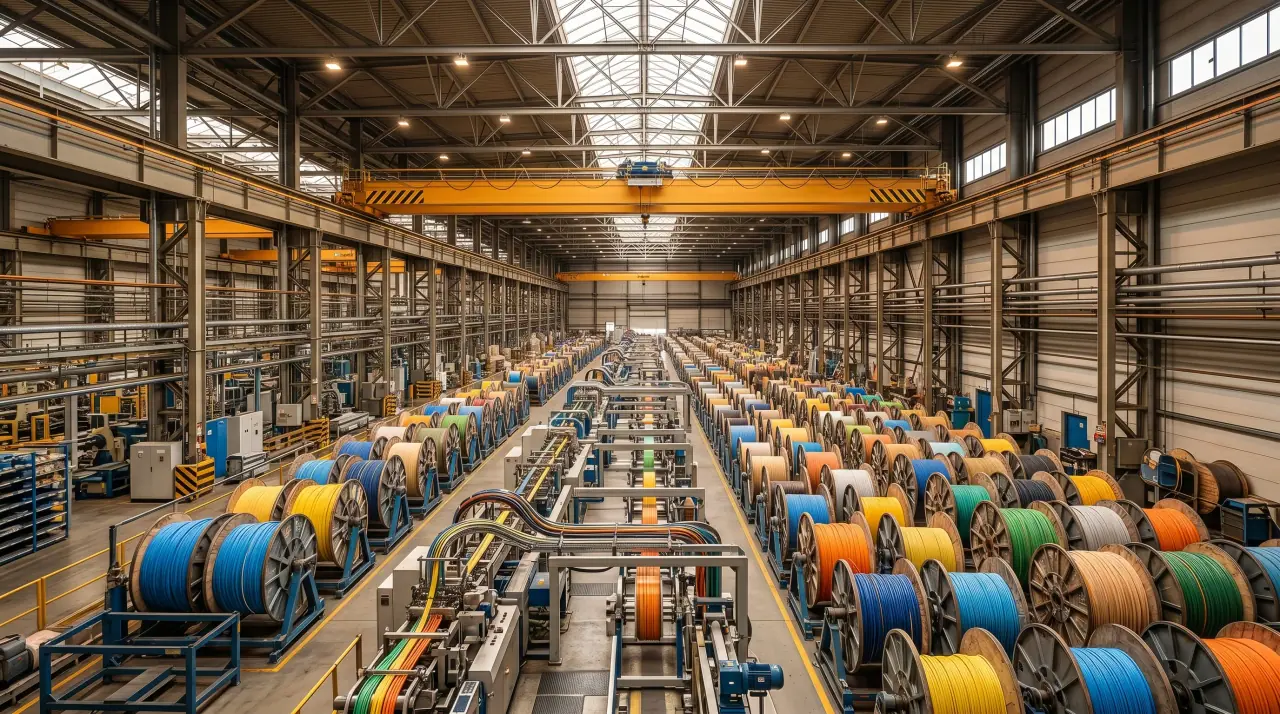
A fiber optic project rarely buys from one layer: preform and fiber producers sell the glass, cable plants jacket and reel it, connector and panel makers terminate it. Most large groups span two or three of them, so a list that ignores your layer cannot produce a workable shortlist.
This guide sorts fifteen manufacturers and brand groups by that layer — fiber and preform, cable, connectivity — using the same four fields: supply scope, project fit, a link to the company's own documentation, and what to confirm before price.
Order within each group is alphabetical and carries no ranking meaning; this is an editorial comparison of published scope, not revenue, capacity or performance. TTI Fiber publishes this guide and appears under the same fields and evidence standard as every other entry.
Global fiber optic manufacturers at a glance
Three tables, one per layer. Each company appears once, in the layer where a buyer would normally compare it; groups that sell across several layers are placed at their main comparison point and their other products are noted in the profile.
Fiber and preform
| Company / brand group | Supply focus | Project fit | Official evidence |
|---|---|---|---|
| Corning | Optical fiber, outdoor and indoor cable, connectivity hardware; ALTOS loose-tube, gel-free, all-dielectric duct cable published with SMF-28 Ultra fiber | Duct routes where a dry, all-dielectric construction and mid-span access help; the named construction is not a description of the whole catalogue | Corning eCatalog: ALTOS loose-tube cable |
| Furukawa Electric / Lightera | Fiber, cable and connectivity components; the group's fiber and cable businesses were brought under the Lightera brand in 2025 | Multi-country projects that want one fiber specification across regions, once the quoting entity and plant are named per line item | Furukawa Electric: integration notice, April 2025 · release, March 2025 |
| Hengtong | Outdoor, indoor and FTTx cable types | Aerial, duct and drop cable in one bill of materials, where fiber type, count, jacket and armour are settled item by item | Hengtong: product page |
| STL | Bare fiber, cable and optical interconnect from a preform-to-assembly chain, including Celesta ribbon constructions | Duct densification and pre-connectorised builds, with the Celesta variant matched to its current datasheet | STL: optical connectivity |
| Sumitomo Electric | Fiber families (PureBand and PureAccess, PureAdvance, Z Fiber), cable, and the fusion splicers that join them | Long-haul and high-capacity routes where the fiber series drives the link design | Sumitomo Electric: optical fibers |
| YOFC | Preform, fiber and cable | Buyers comparing upstream supply, or buying raw material and finished cable from one chain | YOFC: fiber and cable listings · product index |
Cable
| Company / brand group | Supply focus | Project fit | Official evidence |
|---|---|---|---|
| Aginode | LAN fiber systems including LANmark-OF; the business Nexans sold in 2023 | Enterprise and campus LAN work where channel components are bought as one system | Nexans: completion of the Telecom Systems sale · Aginode fibre LAN systems |
| Fujikura / AFL | Wrapping Tube Cable (WTC) and SpiderWeb Ribbon (SWR) from Fujikura; ADSS and OPGW cable from AFL | WTC and SWR for duct routes; ADSS and OPGW for aerial spans where span and loading data are already known | Fujikura: fiber optic cable · AFL: aerial cable |
| LS Cable & System | FTTH drop, duct and direct-buried fiber cable, alongside power cable | Three installation conditions that are specified and quoted separately | LS Cable: drop cable · underground cable |
| Prysmian | Sirocco microduct and air-blown cable families, plus conventional outside-plant cable | Congested urban ducts where cable is blown rather than pulled | Prysmian: Sirocco cable |
| Superior Essex Communications | Building and outside-plant cable, including hybrid fiber-power constructions | Campus and in-building routes where data and remote power share one jacket | Superior Essex: power over Ethernet · product search |
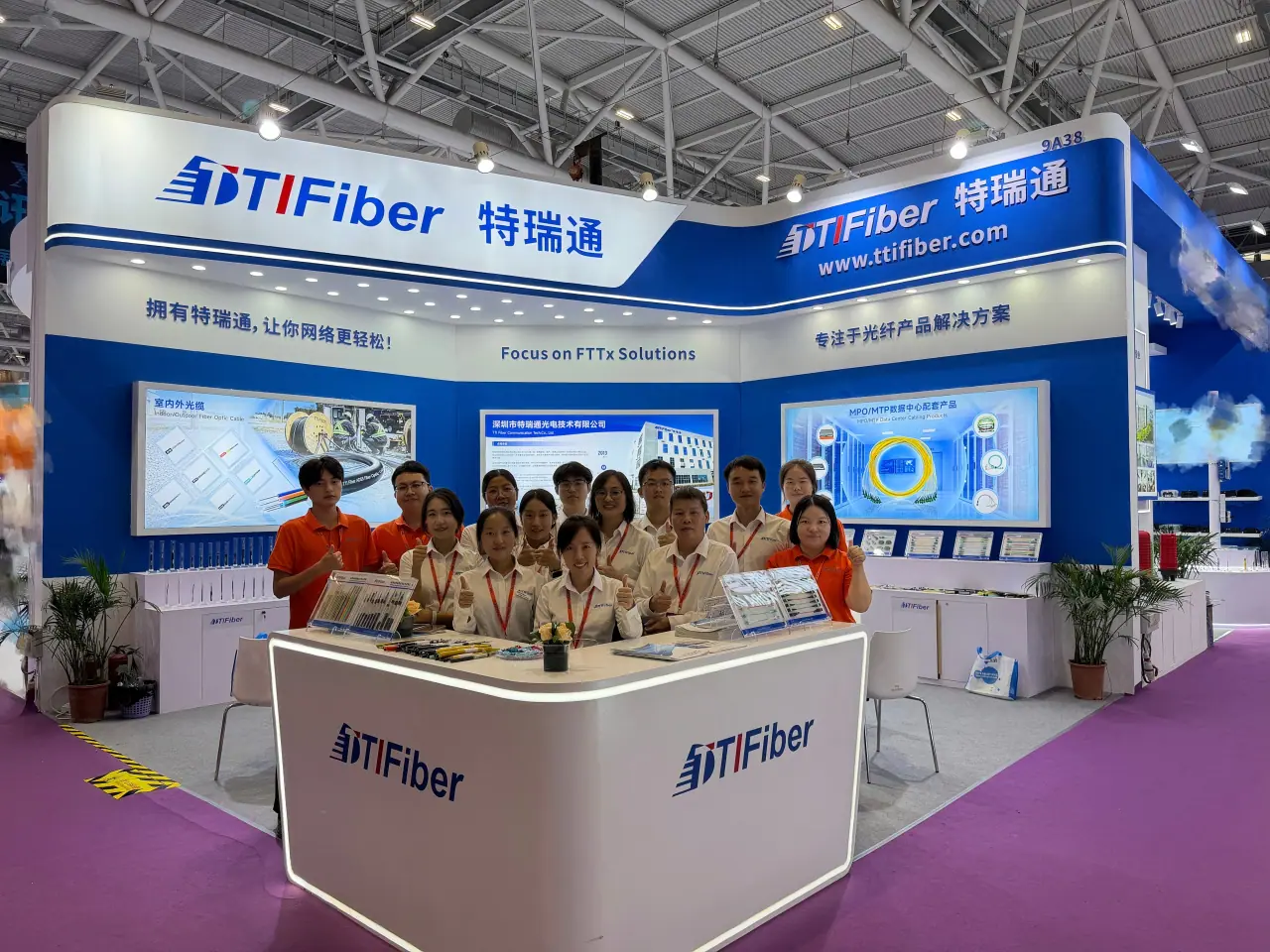
| TTI Fiber (publisher) | Outdoor, FTTH drop and indoor cable; MPO/MTP assemblies, patch panels and distribution boxes | Export projects that need cable and passive connectivity quoted together | TTI Fiber products · factory tour |
Connectivity and patching
| Company / brand group | Supply focus | Project fit | Official evidence |
|---|---|---|---|
| Amphenol / CommScope | Propel modular fiber system, MPO connectivity and structured cabling; the CommScope connectivity and cable business acquired by Amphenol in January 2026 | Data centre and enterprise links where modules change the speed rather than the backbone | CommScope: Propel · Amphenol: transaction announcement |
| Belden | FiberExpress and DCX patching and pre-terminated systems, industrial and enterprise cable | Industrial and enterprise racks where jacket ruggedness and cassette compatibility both matter | Belden: fiber systems |
| Panduit | QuickNet trunk assemblies, PanMPO connectors and HD Flex high-density systems | High-density racks where pre-terminated trunks and polarity management are bought as one system | Panduit: fiber trunk cable assemblies |
Shortlist suppliers for your project
Most procurement teams need two or three suppliers, not fifteen. The filter is the layer you are buying plus the installation method, because a cable that is correct for a duct is often wrong for a span and a connector system that suits a hyperscale hall is over-specified for a small campus.
FTTH and outside plant
Decide the route first: aerial on existing poles, buried in duct, or direct-buried. That single choice fixes the construction, the armour, the water-blocking method and often the fire or rodent requirement. Then decide whether drop cable arrives pre-connectorised, because that changes the installer skill and the splice count on site. Hengtong, LS Cable & System, Prysmian and TTI Fiber all publish outside-plant ranges; compare outdoor cable construction options against the route before shortlisting, and ask each vendor whether the drop and the feeder come from the same plant.
Data center and high-density inside plant
Here the buying unit is a system, not a cable: trunk or assembly, cassette or module, panel, and the polarity convention that ties them together. Amphenol with CommScope, Panduit, Belden, Corning and Fujikura all publish modular platforms, and they are not interchangeable across brands. Shortlist on port density and on whether the module lets you change speed without re-pulling the backbone; then confirm that the MPO/MTP assemblies for data centers you price match the panel's polarity and pin convention.
Industrial, utility and harsh environments
Utility work usually means ADSS or OPGW, and both are structural products: the span, the ice and wind loading and the hardware set decide whether the cable survives, not the fiber count. AFL publishes both categories. Industrial plants and tunnels shift the question to fire performance and to jacket behaviour under heat, oil and flexing, where Belden and Aginode publish specific ranges. Treat every datasheet claim as conditional on the installation standard your project is built to.
OEM and private-label programmes
If you need your own part numbers, the question is not who has the largest catalogue but who will build to your drawing and hold the specification across repeat orders. Ask for the drawing, the test regime and the change-notification process before price. Export-oriented manufacturers such as TTI Fiber, Hengtong and STL describe OEM or full-passive portfolios; review custom patch cord configurations as a template for the level of detail an OEM quotation should carry.
Regional sourcing constraints
Where a project carries local-content or tariff conditions, factory location becomes a filter before product performance. Our U.S. cable supplier comparison and European cable sourcing options cover the qualification detail for those two markets; this page stays at the product-scope level.
How this guide compares manufacturers
Selection. A company is included when it manufactures at least one layer of the optical path — preform or fiber, cable, connector, panel or a complete passive system — sells outside its home market, and publishes product documentation a buyer can read. Distributors, installers and brand owners without manufacturing are out of scope. So are transceivers, optical engines and other photonic devices: the scope here is the fiber, cable and passive connectivity layers that a network is built on.
Placement. Each company is listed once, in the layer where a buyer would normally compare it, and the tables are alphabetical within that layer. No number, position or grouping implies size, revenue or capability. Several of these groups sell across two or three layers, so a company's absence from a table is not a statement that it does not make that product.
Group relationships. Some entries are groups rather than single companies, and the difference matters at contract stage. Furukawa Electric and AFL are the same group and appear once, because listing a parent and its subsidiary separately would double-count one supply base. Amphenol's 2026 acquisition covered CommScope's connectivity and cable business, not the whole of legacy CommScope. Aginode is the business Nexans sold in 2023; Nexans continues as a separate cable group and did not change its name.
Evidence boundary. Every entry links to the manufacturer's own product or corporate documentation, and the facts in each profile are limited to what that documentation states. This guide has not audited any factory, tested any sample, or verified any certificate. Two of the linked pages sit behind automated bot checks and may not open in every browser or fetch tool: the Aginode fibre LAN systems page and the Belden fiber systems page. Both are live product pages, not withdrawn ones — if a check fails, request the current datasheet directly.
What is deliberately absent. No revenue, capacity, output, market-share, plant-count, price-per-kilometre, MOQ or lead-time figure appears in this guide, because none of it can be verified from public manufacturer documentation in a form that is comparable across companies. Those are quotation-stage questions, and the sections below turn them into questions you can send.
Manufacturer profiles
Each profile answers the same four things in the same order, so entries can be read side by side: what the company publicly supplies, which projects that fits and where it stops fitting, the official documentation behind the claim, and what to confirm before you request a price.
Fiber and preform
Corning (United States)
Supply scope. Optical fiber, cable and connectivity hardware. A published example is the ALTOS loose-tube, gel-free, all-dielectric outdoor duct cable with FastAccess technology, listed with SMF-28 Ultra fiber and aimed at duct routes that need mid-span access without gel cleanup.
Project fit. That construction suits duct work where a dry, all-dielectric design and fast access are worth paying for. It is one catalogue item, not a description of every Corning cable: aerial, direct-buried and in-building products are separate designs with separate datasheets.
Official evidence. Corning eCatalog: ALTOS loose-tube, gel-free, all-dielectric cable.
Confirm before quoting. The exact cable model and part number; whether the link needs SMF-28 Ultra or an ultra-low-loss fiber, which are different products and not interchangeable in a design; the installation environment; and whether your region's catalogue carries the same construction under the same code.
Furukawa Electric / Lightera (Japan and United States)
Supply scope. Fiber, cable and connectivity components. In 2025 the group brought its fiber and cable businesses — the Japanese fiber cable division, OFS Fitel in the US and the Latin American operation — under the single Lightera brand. OFS is the earlier identity of that business, not a separate competitor.
Project fit. The reason to shortlist the group is continuity: one fiber specification available across several regions, simplifying a multi-country bill of materials. The limit is organisational: a shared brand does not mean every product is made in one place.
Official evidence. Furukawa Electric: Lightera integration notice and the March 2025 release.
Confirm before quoting. Which legal entity issues the quotation; which plant will produce the specific item; and whether the datasheet is the same revision in every region you buy for. The operational headquarters is not the production origin of a given cable.
Hengtong (China)
Supply scope. Outdoor, indoor and FTTx cable types. The published range covers aerial, duct and drop constructions, which is why the group appears in outside-plant shortlists as well as in fiber sourcing.
Project fit. Fits projects that want feeder, distribution and drop cable from one supplier under one test regime. It stops fitting when a specification is written around one plant's capability: with this many constructions under one brand, the datasheet has to be read per item, not per company.
Official evidence. Hengtong: cable product page.
Confirm before quoting. Fiber type and core count per line item; jacket compound and whether it is specified as LSZH or PE; armour and rodent protection; tensile, crush and bend requirements for the actual installation; and which production site will make each item.
STL (India)
Supply scope. Bare fiber, cable and optical interconnect from a chain that starts at preform, including Celesta ribbon constructions and pre-connectorised assemblies. That spread is useful precisely because the same supplier can quote two adjacent layers.
Project fit. Duct densification and pre-connectorised builds where ribbon handling and field splice count drive cost. The limit is documentation age: product families get revised, and an older or provisional datasheet is not evidence for a current model.
Official evidence. STL: optical connectivity.
Confirm before quoting. The current datasheet revision for the exact Celesta variant, with its fiber count and diameter; whether you are buying bare fiber, cable or a terminated assembly; and which of the three the quoted price actually covers.
Sumitomo Electric (Japan)
Supply scope. Several fiber families with different jobs — PureBand and PureAccess, PureAdvance, and Z Fiber — plus cable and the fusion splicers used to join them. Selling fiber and the splicing tooling together is unusual and can simplify acceptance testing.
Project fit. Long-haul and high-capacity routes where the choice of fiber series, rather than the cable construction, drives the link design. Where it stops fitting: a series optimised for one application is not automatically the right choice for a short campus link.
Official evidence. Sumitomo Electric: optical fibers.
Confirm before quoting. Whether the quote is for bare fiber or finished cable, which series and which variant, and the measurement conditions behind any attenuation figure. Attenuation values taken from different series under different test conditions cannot be compared directly.
YOFC (China)
Supply scope. Preform, fiber and cable, which puts the group at the upstream end of this list. Buyers meet it either as a fiber source behind someone else's cable or as a cable supplier in its own right.
Project fit. Useful when you are comparing upstream supply, or when you want raw material and finished cable traceable to one chain. Its place here is a product-tier judgement: it is the entry that covers preform, and nothing in this guide rests on output or market position.
Official evidence. YOFC: fiber and cable listings and the product index.
Confirm before quoting. Whether the quotation is for preform, fiber or cable — the three are priced and specified differently; the fiber specification and its compliant standard; and which site will produce the order.
Cable
Aginode (France)
Supply scope. LAN fiber systems, including the LANmark-OF range, for enterprise and campus networks. Aginode is the business Nexans sold in 2023; it trades under its own name, and Nexans continues separately as a cable group. The sale did not rename Nexans, and the two should not be treated as one supplier in a tender.
Project fit. Enterprise and campus LAN work where cable, connectors and patch panels are bought as a compatible channel rather than as separate parts. It is not the entry for long-haul or utility cable.
Official evidence. Nexans: completion of the Telecom Systems sale to Syntagma Capital and the Aginode fibre LAN systems page.
Confirm before quoting. The current product family and part numbers, since ranges are revised after a change of ownership; channel and connector compatibility across the components you plan to mix; and regional availability of the exact item.
Fujikura / AFL (Japan and United States)
Supply scope. Fujikura publishes Wrapping Tube Cable and SpiderWeb Ribbon cable, both built around intermittently bonded ribbon for high fiber counts in small ducts. AFL, in the same group, publishes ADSS and OPGW cable for aerial and utility work. They are one supply base, so this guide lists them once.
Project fit. WTC and SWR suit duct routes that need density; ADSS and OPGW suit aerial spans on utility structures. These are not interchangeable: an aerial self-supporting cable carries mechanical load that a duct cable was never designed for.
Official evidence. Fujikura: fiber optic cable and AFL: aerial cable.
Confirm before quoting. Which entity contracts and ships; the span, ice and wind loading for any aerial design; the hardware and dead-end set that goes with it; and whether your splicers handle the ribbon type supplied.
LS Cable & System (South Korea)
Supply scope. FTTH drop cable, duct cable and direct-buried fiber cable, alongside power cable and submarine cable. The three fiber constructions are separate products with separate installation assumptions.
Project fit. A single project often needs all three, which is where one supplier helps. Where it stops fitting: each construction has to be specified on its own terms — a drop cable is not a short duct cable, and a direct-buried design is not a substitute where duct exists.
Official evidence. LS Cable: drop cable and underground cable.
Confirm before quoting. Which construction applies to each route segment; whether the drop cable is supplied pre-connectorised; jacket and armour for the buried sections; and where the fiber cable itself is manufactured, which is a separate question from where the group's power cable is made.
Prysmian (Italy)
Supply scope. Sirocco microduct and air-blown cable families, plus conventional outside-plant cable. The group became independent in 2005 and listed in 2007, and its cable portfolio now spans energy and telecom.
Project fit. Congested urban ducts, where blowing a small cable into an existing microduct beats pulling a larger one. It stops fitting where duct geometry or route length rules out air blowing, or where the local standard calls for a different construction.
Official evidence. Prysmian: Sirocco cable and the group's company history.
Confirm before quoting. Which Sirocco variant: the base, HD and XT families differ in size and application, and none is region-neutral; the duct inner diameter and installed length; the blowing equipment available to the installer; and the regional specification the cable must meet.
Superior Essex Communications (United States)
Supply scope. Building and outside-plant cable, including hybrid fiber-power constructions that carry data and remote power in one jacket. PowerWise Fiber is one such published construction; the range also contains variants that are not fiber, so the name alone does not identify the product.
Project fit. Campus and in-building routes where a remote device needs power and data at a distance copper cannot reach reliably. The limit is that hybrid constructions are SKU-specific: conductor size, fiber count and distance budget differ between them.
Official evidence. Superior Essex: power over Ethernet and the product search.
Confirm before quoting. The SKU-level datasheet for the hybrid you intend to buy; fiber count and conductor size; the power and distance budget for the devices at the far end; and the fire-performance classification the building requires.
TTI Fiber (China) — publisher
Supply scope. Outdoor, FTTH drop and indoor cable, plus MPO/MTP assemblies, patch panels and distribution boxes. The range covers cable and passive connectivity, not preform or fiber production, and does not claim to.
Project fit. Export projects that want cable and the passive bill of materials quoted together, so that connector, panel and cable compatibility is one supplier's responsibility. Where it stops fitting: a project that specifies a particular upstream fiber brand or a construction outside the published range needs a different supplier for that line.
Official evidence. TTI Fiber products and the factory tour.
Confirm before quoting. The fiber source and specification for each cable; jacket compound and fire rating; the test reports supplied with the order; and the compliance documents the destination market requires. TTI Fiber is the publisher of this guide; it is not an agent or distributor for any other company listed here.
Connectivity and patching
Amphenol / CommScope (United States)
Supply scope. The Propel modular fiber system, MPO connectivity and structured cabling. Amphenol completed its acquisition of CommScope's connectivity and cable solutions business on 9 January 2026; the closing press release is dated 12 January 2026. The transaction covered that business, not the whole of legacy CommScope.
Project fit. Data centre and enterprise links where the module, not the backbone, is what changes when the speed changes — so a port upgrade does not mean re-pulling cable. Where it stops fitting: outside-plant and utility cable sit outside this product family.
Official evidence. CommScope: Propel and Amphenol's announcement of the completed transaction.
Confirm before quoting. Which legal entity and brand now sells the part you are specifying, since the ownership change moved product lines between companies; module and cassette compatibility with the panels already installed; and the polarity and pin convention of the assemblies.
Belden (United States)
Supply scope. FiberExpress and DCX patching and pre-terminated systems, with industrial and enterprise cable behind them. The emphasis is on the rack end of the link: panels, cassettes and cords that arrive terminated rather than field-built.
Project fit. Industrial and enterprise installations where the jacket has to survive heat, flexing or contamination and where the cassette system has to match panels already in service. It is not the entry for long outside-plant runs.
Official evidence. Belden: fiber systems — this page sits behind an automated bot check and may not open in every browser; request the datasheet directly if it does not.
Confirm before quoting. Cassette and panel compatibility with the installed base; the jacket and fire rating the environment requires; whether the assembly is factory-terminated and tested, and to what loss budget; and the current part numbering for the system you are extending.
Panduit (United States)
Supply scope. QuickNet trunk cable assemblies, PanMPO connectors and HD Flex high-density systems. The offer is built around pre-terminated trunks and around connectors that can be reconfigured in the field rather than reordered.
Project fit. High-density racks where trunk assemblies, polarity management and cable management are bought as one system, and where moves and changes are frequent enough that field reconfiguration pays for itself. It stops fitting where a project has standardised on another brand's cassettes: the systems are not cross-compatible.
Official evidence. Panduit: fiber trunk cable assemblies.
Confirm before quoting. Pin and gender configuration; the polarity method the design assumes; fiber count and length tolerance; jacket rating; and cassette or panel compatibility. Confirm the assembly against the transceiver and reach you actually plan to deploy rather than assuming one trunk covers every rate.
Qualify the factory and quoted product
Two questions separate a supplier from a quotation: who makes the item, and where. Both are answered on paper, before price.
Selling entity versus manufacturing site. The company that issues the quotation is often a sales company, a regional subsidiary or a group entity, and the plant that produces the order may be somewhere else entirely. Ask for the legal entity quoting, the production site for each line item, and written confirmation that the site will not change mid-order without notice. On a multi-country project, the same part number can be supplied from more than one plant, and that is a qualification question, not a detail.
Group capability versus the specific SKU. A group that makes fiber does not necessarily make the fiber inside the cable you are buying, and a brand that publishes a connector system may source parts of it. Ask for the datasheet of the exact part, not the group brochure. Where a family has several variants — microduct cable, ribbon cable, hybrid cable — confirm which variant the quotation covers.
Documents to request. A current datasheet with a revision date; the test report for the tests you care about, stating sample size and conditions; declarations for RoHS and REACH where the destination requires them; the fire-performance classification against the standard your project is built to, not a generic claim; and the traceability scheme, meaning what a reel or carton label lets you trace back to. If a certificate is shown, ask what it covers — a plant, a process or a product range — because those are different scopes.
Comparisons that mislead. Attenuation figures quoted at different wavelengths or by different methods, loss budgets measured on different sample lengths, and fiber counts quoted per cable versus per tube are the three most common false comparisons in this category. Ask each supplier for the measurement conditions alongside the number.
Prepare an RFQ the supplier can answer
A quotation is only as good as the specification behind it. The list below is a menu: use the parts that apply to your product, and skip the rest rather than filling every field with a guess.
Layer and product. State whether you are buying fiber, cable, a terminated assembly, or a combination. Mixed enquiries usually get answered on the easiest line only.
Application and installation. Aerial on poles, buried in duct, direct-buried, in-building riser or plenum, submarine. Include span length and loading for aerial, duct inner diameter and route length for blown or pulled cable, and the ambient conditions the cable will see.
Fiber and cable. Fiber type and standard (for example G.652.D, G.657.A1 or A2, or a multimode grade), core count, length per reel or drum and total quantity; jacket compound; armour; whether water-blocking is gel-filled or dry; and the mechanical requirements — tensile, crush, impact, bend radius — that the installation imposes.
Assemblies. Connector type and polish (APC or UPC), pin and gender configuration, polarity method, fiber count, length and length tolerance, loss budget per assembly and per channel, labelling scheme, and the panel or cassette the assembly has to mate with.
Commercial context. Destination country, project stage, required delivery date, incoterms, and whether the order is a one-off or a programme with repeat releases. These change the answer more than most specification details do.
Documentation. Say up front which documents the quotation must include: datasheet revision, test reports, declarations, type approvals, and the packing and labelling standard. Suppliers who cannot supply them at quotation stage usually cannot supply them later either.
For a cable or connectivity project, share the installation method, fiber type and count, length or quantity, destination and required date. TTI Fiber can review the request against its available product range and clarify the information needed for a quotation.
FAQ
Is there one largest fiber optic manufacturer? No single company is largest on every measure. Revenue, fiber output, cable volume and connectivity share rank differently, and no public dataset settles the question across all four. Choose by the layer you are buying and the installation your project requires.
What is the difference between a manufacturer and a distributor here? A manufacturer makes at least one layer of the product in its own facilities; a distributor stocks and resells other companies' products. The practical test is a simple question: who makes this item, and at which plant? A distributor may still be the right commercial partner, but the qualification evidence has to come from the maker.
Why can't I compare a price per kilometre across these suppliers? Because a per-kilometre figure is not a product. It depends on fiber type and count, jacket and armour, reel length, test regime, quantity, destination and delivery terms. Two suppliers quoting the same number per kilometre may be quoting different cables. Fix the specification first, then compare.
Does appearing in this guide mean TTI Fiber supplies or represents these brands? No. TTI Fiber publishes this guide and appears in it as one manufacturer among fifteen, under the same fields. No agency, distribution or endorsement relationship with any other company listed here is implied, and nothing in this guide should be read as a claim to supply another brand's products.
Why is there no capacity or market-share table? Because those numbers cannot be verified from public manufacturer documentation on a consistent basis across fifteen groups. Quoting them would mean repeating figures of unknown provenance. Capacity, output and price belong in the quotation, where the supplier is accountable for them.
Sources
Product and corporate documentation referenced in this guide, as published by each company:
- Corning — ALTOS loose-tube, gel-free, all-dielectric cable
- Furukawa Electric — Lightera integration notice, March 2025 release
- Hengtong — cable products
- Prysmian — Sirocco cable, company history
- STL — optical connectivity
- Sumitomo Electric — optical fibers
- YOFC — fiber and cable listings, product index
- Nexans and Aginode — completion of the Telecom Systems sale, Aginode fibre LAN systems
- Fujikura — fiber optic cable, company history
- AFL — aerial cable
- LS Cable & System — drop cable, underground cable
- Superior Essex Communications — power over Ethernet, product search
- Amphenol and CommScope — Propel, transaction announcement
- Belden — fiber systems
- Panduit — fiber trunk cable assemblies
- TTI Fiber — products, factory tour
For supplier selection in a specific region, the cable sourcing and supplier guides cover national qualification requirements.
Compiled from manufacturer documentation published up to February 2026. Product ranges and part numbers change; confirm the current datasheet before specifying.