FTTP vs FTTH vs FTTB vs FTTD: What Each One Means
FTTP, FTTH, FTTB & FTTD at a Glance
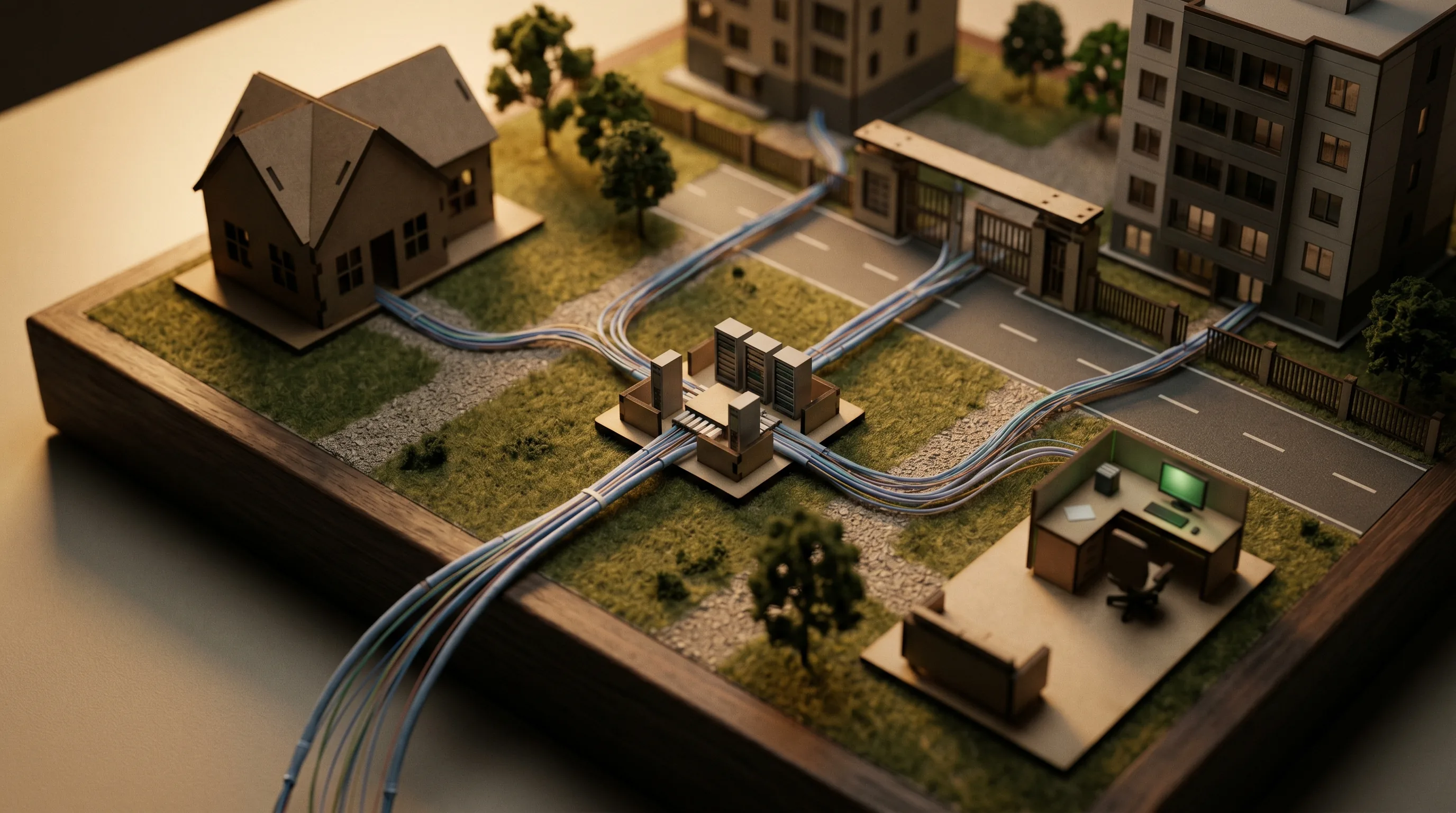
FTTP vs FTTH vs FTTB vs FTTD — the difference is how far the fiber runs toward the user. FTTP (Fiber to the Premises) stops at the property boundary; FTTH (Fiber to the Home) is the subset of FTTP that reaches all the way inside a living unit; FTTB (Fiber to the Building) stops at the building's telecom room, with copper or Ethernet covering the last leg; and FTTD (Fiber to the Desk) extends fiber past the telecom room to each individual workstation. Same glass, four different stopping points — and that single variable drives the speed, upgrade path and installation cost of each design.
This page compares the four deployment models side by side so you can pick between them. If you only need the building-level case in depth, the FTTB meaning and definition is covered on its own page; here the focus is the comparison. If you are planning a full residential or enterprise rollout, our FTTH / FTTx solution overview ties these deployment models to the products TTI Fiber manufactures for each stage.
1. What Do FTTP, FTTH, FTTB & FTTD Really Mean?
Let's start with the basics. These acronyms all describe how far the fiber-optic cable runs toward the end user:
- FTTP — Fiber to the Premises: Fiber cable runs all the way to your property (home or office).
- FTTH — Fiber to the Home: A subset of FTTP, where fiber is brought directly inside your residence.
- FTTB — Fiber to the Building: Fiber terminates at the building's communication room or basement, then copper or Ethernet cables connect individual units.
- FTTD — Fiber to the Desk: Fiber extends beyond the building's entrance or communications room all the way to each individual desk or workstation.
2. FTTP (Fiber to the Premises): The Full Fiber Delivery Solution
FTTP is the gold standard for fiber deployment. It means that fiber cable runs all the way to your property line or building entrance, allowing for the highest speeds and future upgrades.
- Product design: Typically involves outdoor-rated single-mode fiber cables with strong UV-resistant jackets (often PE or LSZH for safety).
- Construction: These cables are armored to withstand environmental stress like moisture, temperature changes, and rodents.
- Raw materials: High-purity silica glass cores combined with durable jacketing materials ensure signal integrity over long outdoor runs.
Because the fiber goes right to the premises, ISPs can deliver symmetrical speeds of 1 Gbps and beyond without degradation. See our deeper dive on how FTTH and FTTP compare in practice for the nuance between "premises" and "home."
3. FTTH (Fiber to the Home): Bringing Light Speed Direct to Your Living Room
FTTH is a specific type of FTTP where the fiber extends inside the home itself.
- Cable design: Indoor/outdoor hybrid fiber cables are used to transition from outdoor environments into the home. These cables often have a tight buffer coating for flexibility and easier handling during installation.
- Construction: Inside the home, cables are typically less armored but still feature protective coatings to prevent microbends that cause signal loss.
- Raw materials: The fiber core inside remains ultra-pure silica, but coatings and buffer materials are optimized for flexibility and indoor durability.
This design supports extremely low attenuation and high speeds right up to the optical network terminal (ONT) inside your home.
4. FTTB (Fiber to the Building): Shared Fiber for Apartments or Offices
FTTB is common in multi-dwelling units (MDUs) like apartments or office buildings. For a deeper operational view of this deployment model, see what FTTB is and how it works.
- Design: Fiber cables run to a central point in the building — usually a telecom room or basement. From there, existing copper or Ethernet cabling serves individual units.
- Construction: The fiber cables used for FTTB are often multi-fiber trunks with robust outdoor jackets, designed to handle building entry and riser applications.
- Materials: These cables must be flexible enough for internal building runs but also sturdy to handle vertical risers and potential pulling during installation.
While speeds can still be fast, the last leg over copper can limit bandwidth and introduce signal degradation.
5. FTTD (Fiber to the Desk): For Workspaces That Need Maximum Performance
FTTD takes fiber one step further by bringing it directly to each user's desk or workstation in an office environment. If you are evaluating this model for modern offices, read our primer on what FTTD is and why it is gaining popularity.
- Cable design: Uses multi-fiber breakout cables or individual patch cords designed for maximum flexibility and minimal attenuation.
- Construction: These cables have tight-buffer coatings for easy termination and frequent bending without damage. They may use low-smoke zero-halogen (LSZH) jackets for indoor safety.
- Raw materials: Premium-grade silica cores and high-quality connectors are essential to maintain signal quality across all endpoints.
FTTD is ideal for data centers or offices requiring high bandwidth and low latency on every desk.
6. The Real Differences Between These Fiber Types — Technically and Physically
| Deployment | Fiber Extent | Cable Type | Typical Environment | Impact on Speed |
| FTTP | Property line or building entrance | Outdoor single-mode armored | Homes, small businesses | Highest speed, future-proof |
| FTTH | Inside the home | Indoor/outdoor hybrid fiber | Residential | Direct fiber speed inside home |
| FTTB | To building's telecom room | Multi-fiber trunks + copper/Ethernet | MDUs, offices | Limited by last copper leg |
| FTTD | To each desk/workstation | Breakout cables, patch cords | Offices, data centers | Max speed and low latency |
7. Inside the Cable: What's Different in Design and Materials?
Fiber cable design varies greatly depending on where it will be installed:
- Outdoor cables feature thick polyethylene (PE) jackets, water-blocking gel or tape, and armored layers for protection against environmental damage.
- Indoor cables have thinner jackets, tight-buffer coatings, and flame-retardant materials (LSZH) for safety.
- Hybrid indoor/outdoor cables combine these properties to transition seamlessly from outside to inside.
- Fiber cores remain consistent — usually ultra-pure silica glass with diameters optimized for single-mode or multimode transmission.
Choosing the right cable depends on the installation environment, required durability, and speed targets.
8. Installation Requirements: What to Expect Based on Fiber Type
- FTTP & FTTH: Requires trenching or aerial installation outside, then careful routing inside the home. Specialized connectors and ONTs are installed indoors.
- FTTB: Installation focuses on the building's telecom room, with fiber trunks pulled vertically and copper or Ethernet distributed horizontally.
- FTTD: Involves complex cable management within offices, requiring patch panels and precise termination to ensure speed.
All installations require quality fiber cables and professional splicing or connectorization to minimize loss. Even the best cable design can be undone by poor termination, bend radius violations, or contaminated connector end-faces — which is why every FTTP, FTTH, FTTB, or FTTD project should budget for trained installers and regular OTDR verification.
9. Which Type of Fiber Setup Is Right for You?
- Home users: FTTH or FTTP offers the best speed and future-proofing.
- Apartment dwellers: FTTB may be common but check if fiber is brought closer inside units.
- Small businesses: FTTP or FTTD setups provide the speed and reliability needed for cloud apps and video conferencing.
- Enterprises and data centers: FTTD is often preferred to connect individual workstations or servers directly.
10. Cost Comparison and Long-Term Value
FTTP and FTTH installations tend to cost more upfront due to cabling and labor but offer higher speeds and less maintenance over time.
FTTB and FTTD can be more cost-effective in shared buildings but may introduce speed bottlenecks or additional equipment needs. In FTTB, the shared fiber backbone lowers the per-unit cost across many tenants, while in FTTD the cost of running individual fibers to every desk is offset by the elimination of copper patch panels, intermediate switches, and future re-cabling whenever bandwidth expectations rise.
Investing in quality fiber cables — like those from trusted manufacturers such as TTI Fiber — ensures durability, compliance with safety standards, and consistent high performance.
11. How TTI Fiber Products Fit Into FTTP, FTTH, FTTB, and FTTD Networks
TTI Fiber provides a broad range of fiber optic products engineered for these deployment types:
- Outdoor-rated armored outdoor fiber optic cables for FTTP
- Hybrid indoor/outdoor and FTTH drop cables for FTTH
- Multi-fiber trunk cables ideal for FTTB risers
- High-flexibility patch cords and breakout cables for FTTD
All TTI Fiber products use high-purity silica glass cores, precision manufacturing, and durable coatings/jackets to ensure low attenuation and high-speed connectivity.
12. The Right Fiber Choice Starts with Smart Planning and Quality Gear
Understanding the differences between FTTP, FTTH, FTTB, and FTTD helps you choose the best fiber deployment for your needs — whether it's a lightning-fast home connection or a high-density office network.
The physical design, construction, and raw materials of fiber cables matter just as much as the speed promises from your ISP. Choosing quality cables and equipment from trusted brands like TTI Fiber ensures you maximize your investment in fiber technology.
Ready to upgrade your fiber network?
Explore TTI Fiber's full fiber optic product lineup to find the perfect fiber cables and accessories tailored to your deployment needs, or jump straight to our FTTH / FTTx solution page to see how the pieces fit together.